Arisaema seed germination can feel like a bit of a waiting game, but trust me - it’s worth it.
If you’ve ever fallen in love with the exotic look of cobra lilies (that’s the common name for Arisaema), you’ll understand why gardeners like me are willing to put in the time.
These aren’t your average garden perennials.
Their unusual leaves, striking hooded flowers, and almost tropical feel make them real conversation pieces in the landscape.
Here in Indiana, I’ve grown several types - some come back faithfully every spring, while others fade away after a few years.
That’s part of the fun (and sometimes frustration) of growing unusual plants: you never know exactly what will thrive until you try.
Starting them from seed gives you a deeper connection to the plant and a little more control over how many you can raise.
Plus, once you understand their growth-and-dormancy cycle, raising them from seed becomes much less mysterious.
What Is Arisaema?
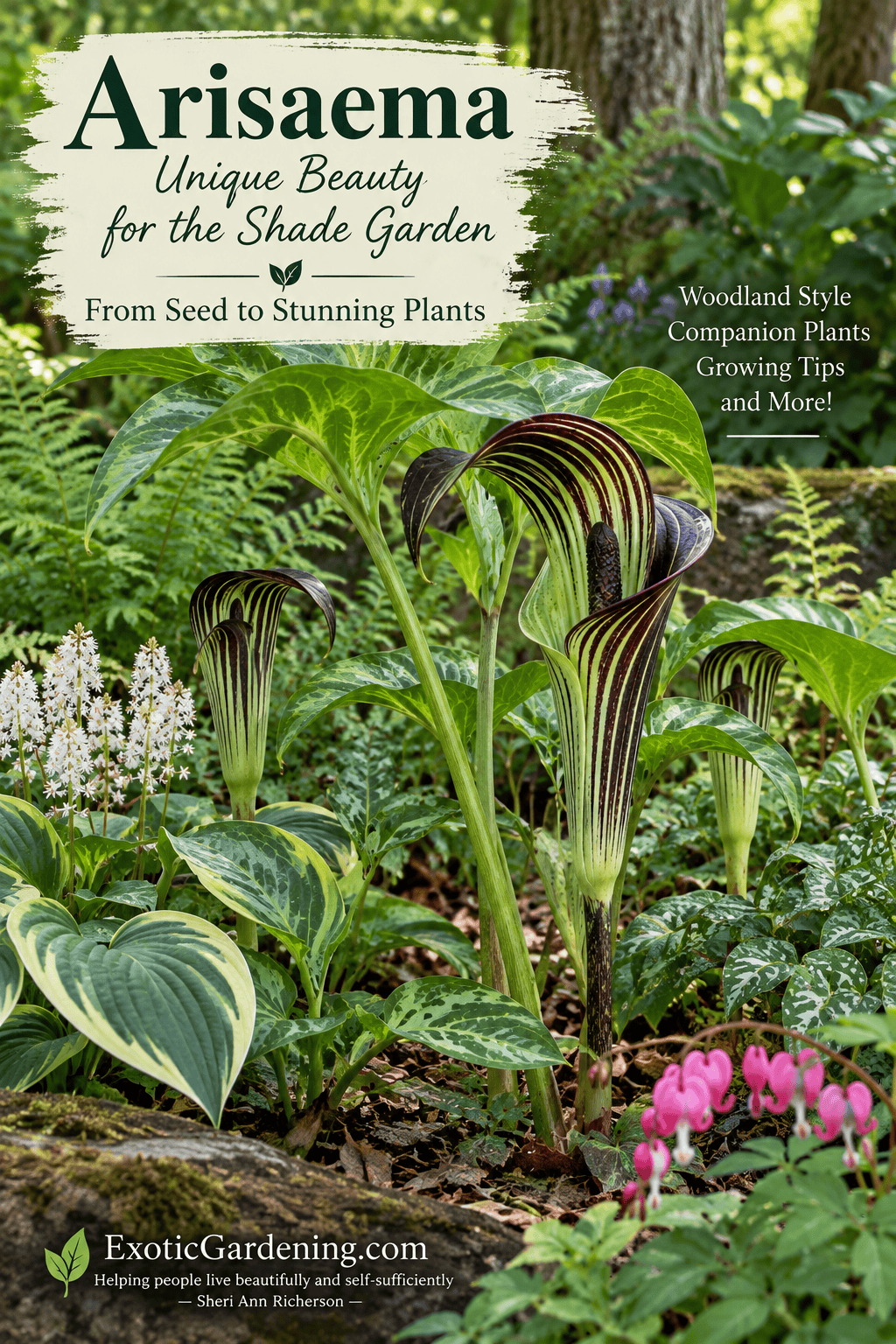
Arisaema is a genus in the Araceae, or aroid, family. Depending on the species and where you live, you may hear these plants called cobra lilies or jack-in-the-pulpits. I use the botanical name because common names can overlap.
What Does That Mean? The dramatic hood is a spathe, a modified leaf. The structure inside it is the spadix, which bears the tiny true flowers. What looks like one strange flower is actually a specialized flowering structure.
These are deciduous, tuberous woodland perennials. They emerge, grow and store energy underground, then the foliage dies back and the plant enters dormancy. That disappearing act is normal and is one of the most important things to understand before assuming a young Arisaema has died.
Sheri’s Growing Notes: I have grown several kinds here in Indiana. Some have returned faithfully each spring while others lasted a few years and disappeared. That firsthand unpredictability is exactly why I prefer to learn the individual plant rather than assume every Arisaema will behave the same way.
🌱 Want the quick overview version?
I’ve put my full indoor seed starting system - lighting, airflow, humidity, soil blocks, and monitoring - all in one place so you can see how it works together.
Germinating Arisaema Seeds
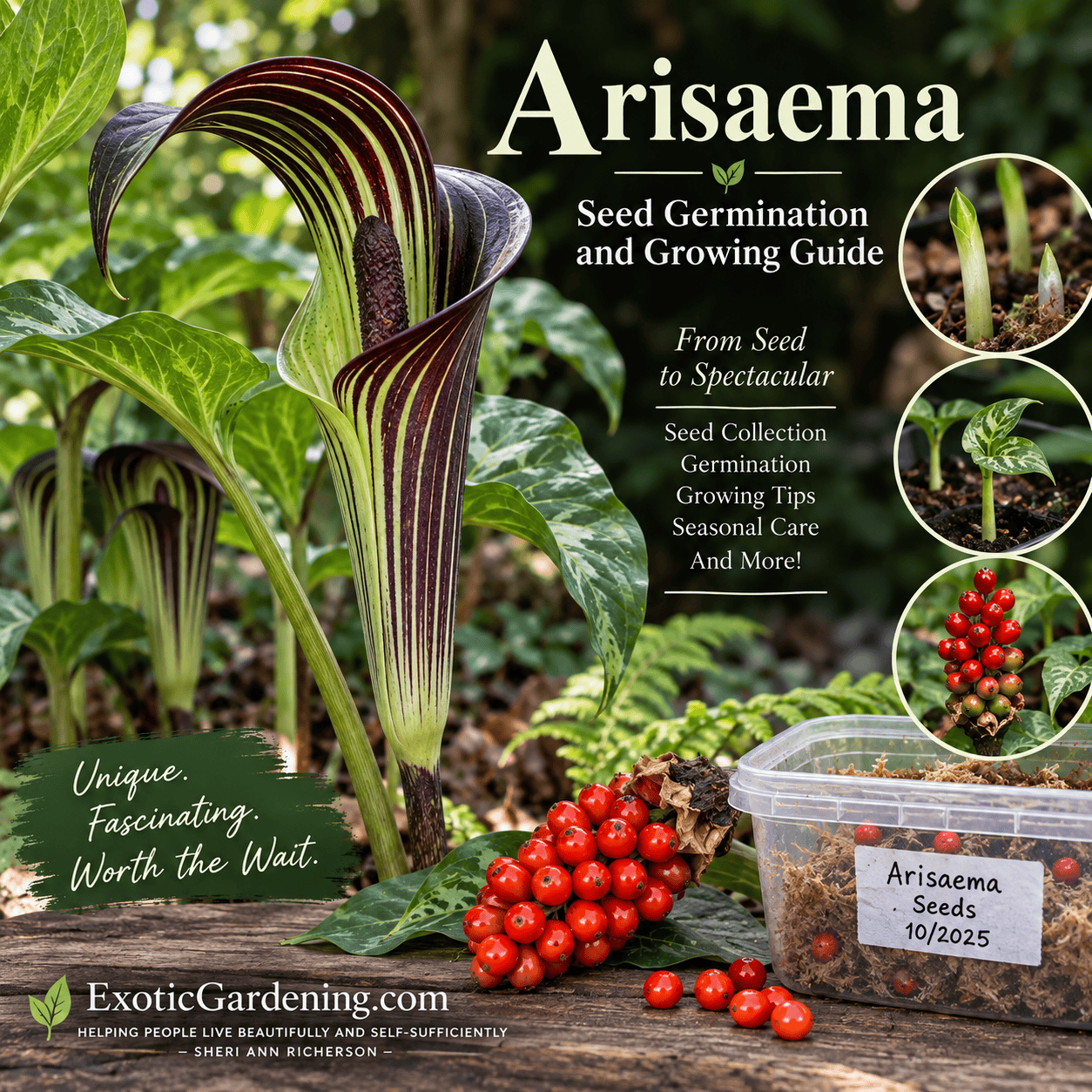
The first step is collecting and cleaning the seeds.
When the berries ripen to bright red, that’s your cue.
Safety Note: Arisaema tissues contain irritating calcium oxalate crystals and should not be eaten. The plant can also irritate skin and eyes, so I wear gloves when cleaning the fleshy berries and wash up afterward. Keep seed and plant material away from children and pets.
Pop them open (wear gloves - the pulp can irritate skin), remove the sticky flesh, and rinse the seeds until they’re clean.
I like to soak them briefly in water to loosen up any clinging bits.
You have two options at this point:
Sow fresh seeds right away. Plant them about ½ inch deep in moist, humus-rich soil in a shady spot. Nature takes care of stratification outdoors.
Or, give them a cold nap indoors. In my own seed-starting experience, I place cleaned seeds in a bag with barely damp peat moss and refrigerate them for about 60 to 75 days. This cold, moist period mimics winter and has worked well for me.
Once planted, my Arisaema seeds usually sprout in about 4 to 6 weeks when conditions are right. That timing comes from my own experience germinating the seeds. Don’t be discouraged if germination is spotty, though - Arisaema can be unpredictable, so I sow plenty to improve my odds.
Speeding Things Up With Artificial Winters
Here’s where the fun comes in.
Normally, an Arisaema seedling grows one season, then goes dormant for winter.
But you can “trick” the plant into thinking it has lived through more seasons than it actually has. This is something I have done with my own seed-grown Arisaema.
After that first dormancy, dig up the tiny corms and store them in the fridge at 35 to 40°F for 1 to 3 months.
Keep them in a perforated bag with just a little damp peat so they don’t dry out.
When you replant the chilled corms, they sprout as though spring has arrived again. In my experience, this can let me squeeze two growing seasons into one year.
This is the trick I have used to speed up the journey from seedling to flowering size. Not every corm responds exactly the same way, but repeating the growth-and-dormancy cycle can move seed-grown plants along faster than simply waiting through one natural season each year.
Not every corm will respond perfectly, but it’s worth experimenting if you’re eager to see those first blooms.
Caring for Tubers During Dormancy
If you leave Arisaema in pots, reduce watering as the foliage dies back.
Reduce moisture substantially during dormancy, but do not let small tubers desiccate. At the other extreme, cold, saturated media can encourage rot. Aim for cool storage with only enough moisture to keep the dormant tuber sound.
For in-ground plants, mulch well in fall to protect them through winter.
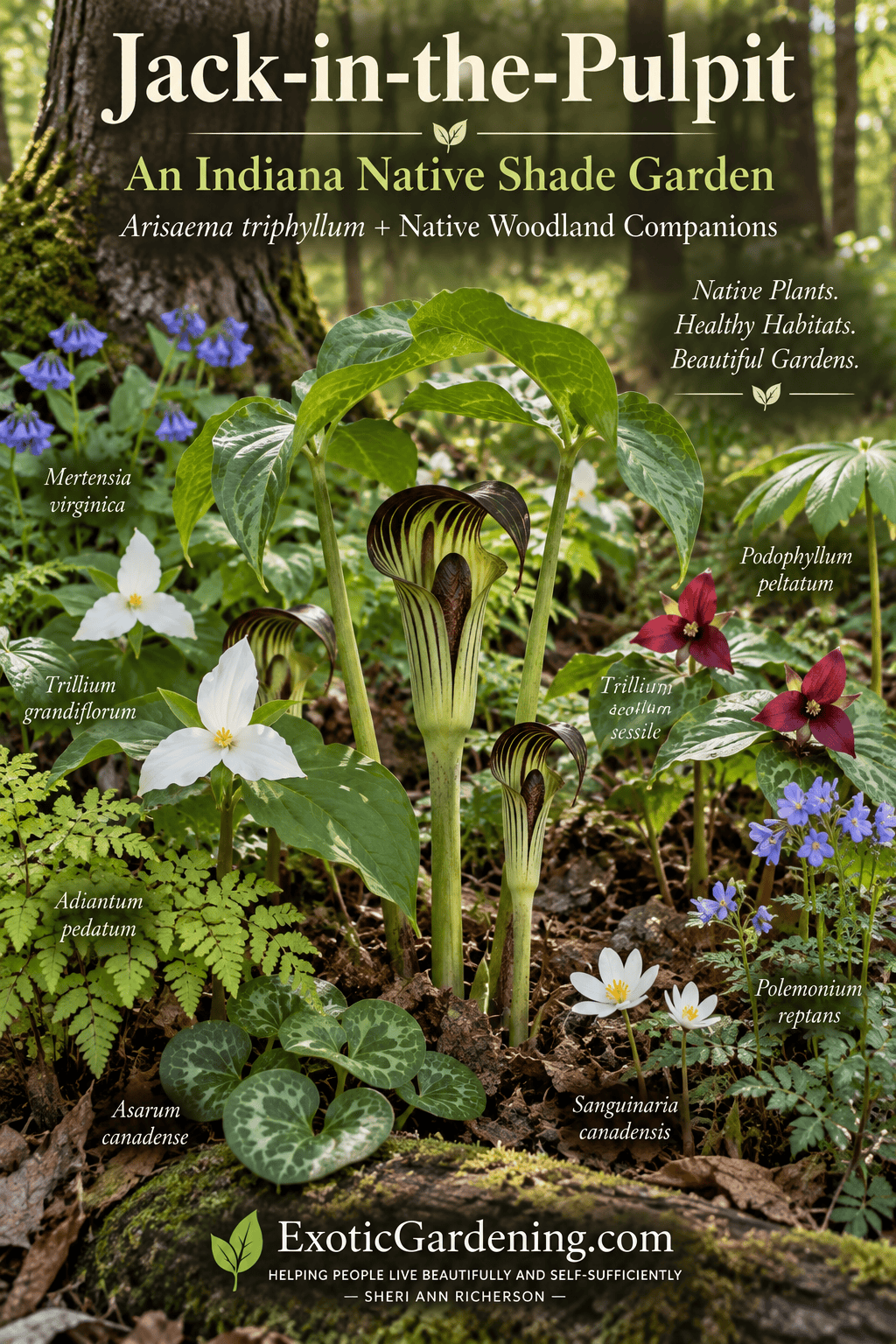
In my Indiana garden, native Arisaema triphyllum (Jack-in-the-Pulpit) and hardy Asian species like A. candidissimum do fine with just mulch.
More tender species may not make it unless lifted and stored cool and slightly moist until spring.
Growing Arisaema in Containers
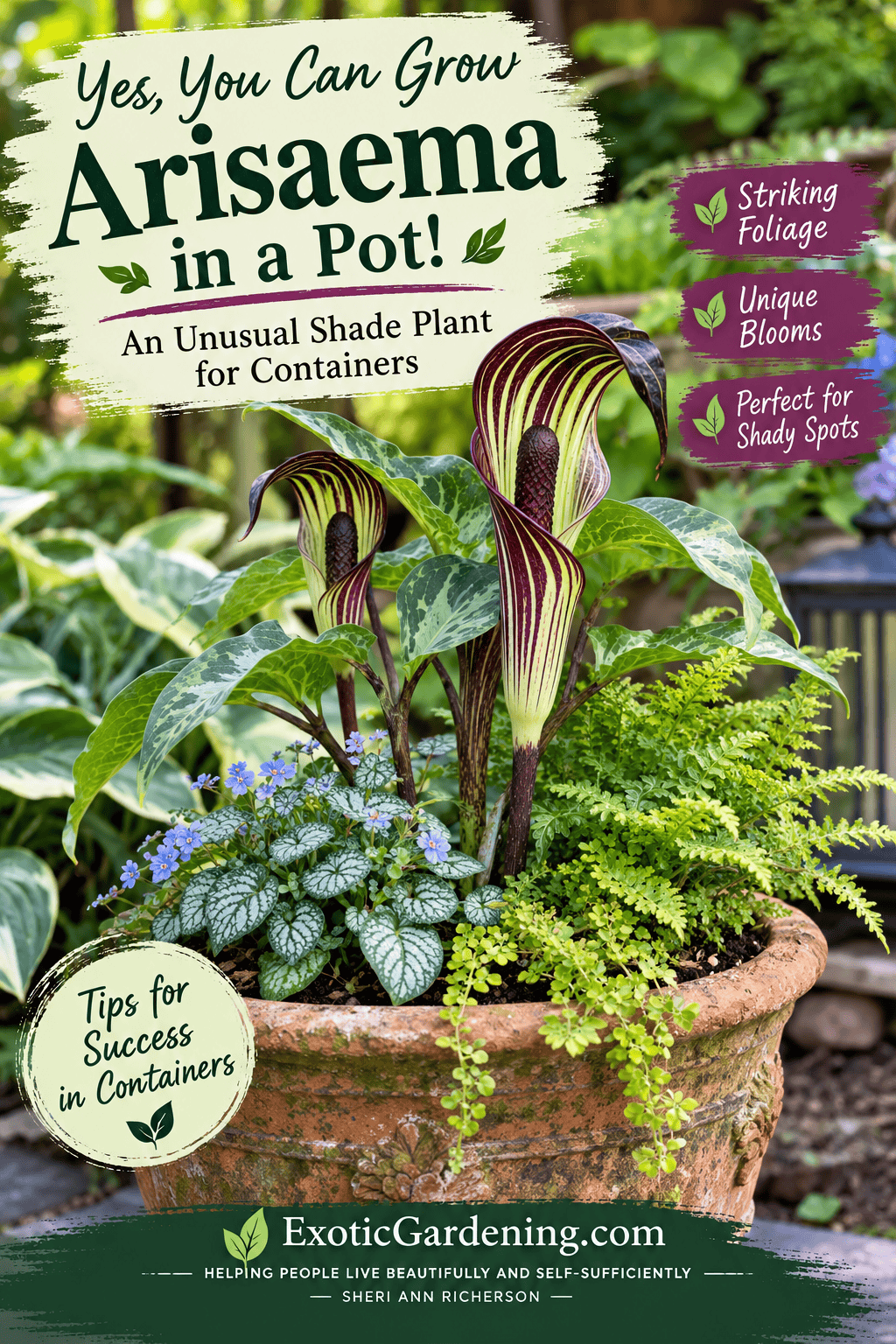
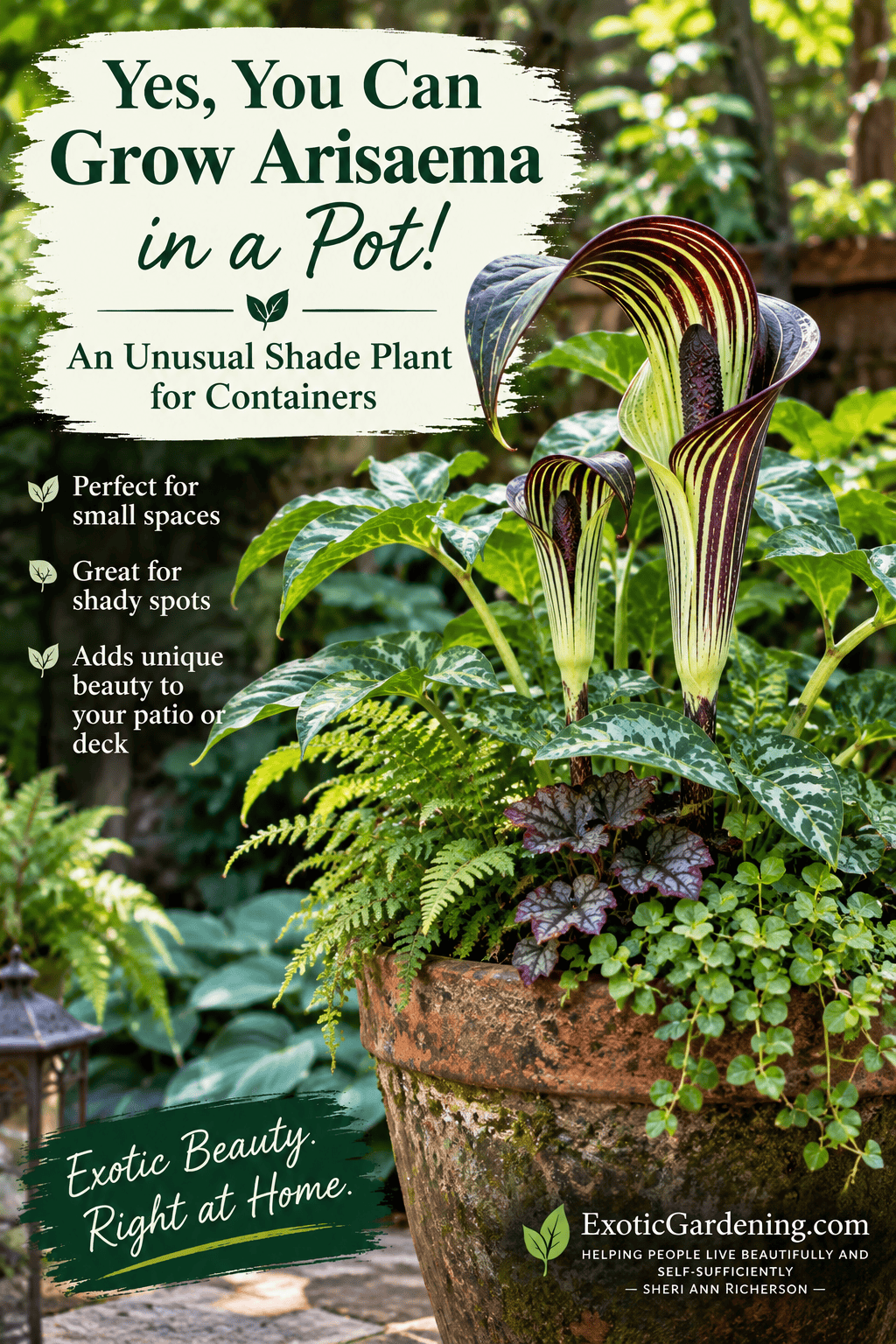
Arisaema do not have to be planted directly in the ground. They can also make fascinating container plants, especially if you have a shady patio, porch or small garden where you want something far more unusual than the typical shade annuals.
Choose a container with drainage holes and enough depth to give the underground tuber room to develop. I would rather use a somewhat generous pot than crowd several developing plants into a shallow container. A moisture-retentive but well-drained potting mix is important. Think woodland soil: rich in organic matter and able to stay evenly moist without remaining waterlogged.
Place the container in bright shade or dappled light rather than baking it in hot afternoon sun. Container-grown plants can dry more quickly than plants growing in the ground, so check the moisture regularly while the Arisaema is actively growing.
Plant Geek Tip: A container is also a practical way to keep track of a prized Arisaema. When the foliage disappears into dormancy, you know exactly where the tuber is instead of wondering whether you accidentally dug into its spot later.
Once the foliage dies back naturally, reduce watering. The tuber is resting underground, but the potting mix should not become either swampy or so bone-dry that a small tuber shrivels. Container hardiness can also differ from in-ground hardiness because the roots and tuber have less insulation. If you are growing a species that is marginal in your climate, protect the container from severe winter temperature swings.
You can grow Arisaema alone as the specimen in a pot, or create a woodland-style container with compatible shade plants. Ferns and other small shade-loving plants can make beautiful companions as long as they do not overwhelm the Arisaema or compete excessively for water and root space. For more container ideas, see my shade-loving plants for containers.
Troubleshooting Germination Problems
Seeds mold in storage: Too much moisture. Try less damp peat or add a pinch of fine sand for airflow.
Seeds won’t sprout: Do not assume cold treatment is always the missing ingredient. The seed may be immature, old, improperly stored, too wet, too dry, or simply following the slower timetable of its species. Check the requirements for the particular Arisaema you are growing and give the pot time.
Foliage disappears after growth: Arisaema naturally go dormant, so disappearing foliage is not automatically a dead plant. Mark the pot or planting spot and protect the underground tuber. If the stem collapses while the plant should still be actively growing, however, check moisture and the tuber rather than automatically blaming dormancy.
Popular Arisaema Varieties
Jack-in-the-Pulpit (A. triphyllum): Native to North America, hardy, and reliable. Takes longer to bloom from seed (about 5 years) but naturalizes well in woodland gardens.
Striped Cobra Lily (A. candidissimum): Hardy to zone 5, with gorgeous pink-and-white striped flowers. A personal favorite of mine.
Japanese Cobra Lily (A. thunbergii ssp. urashima): Compact but dramatic, with a long whip-like spadix. Hardy in zones 5–9.
Green Dragon (A. dracontium): Tall and striking, with unique foliage. Native to North America and very hardy.
Each has its own personality.
Some stick around faithfully year after year in my Indiana beds, while others fade away after a few seasons.
That’s part of the adventure of growing unusual plants.
When Will Arisaema Grown From Seed Bloom?
There is no single bloom-from-seed timetable for the whole genus. Several years is normal, and some species can take around five years or more to reach flowering size. Arisaema triphyllum, our familiar North American jack-in-the-pulpit, is a good example of a plant that rewards patience.
I know that feels like forever when you’re excited to see those first mysterious blooms.
If you’re the impatient type, you may want to buy a plant that’s already growing so you can enjoy flowers sooner.
But for those of us who love the process, growing from seed is its own reward.
By using tricks like artificial winters, you might shave off some time, but patience is still the best tool in your gardening shed.
The payoff is absolutely worth it.
One day you’ll step outside, notice those unusual leaves unfurling, and then catch sight of that strange, beautiful flower - and in that moment you’ll be glad you waited.
That’s the joy of Arisaema: they teach us to slow down, experiment, and savor the journey as much as the destination.
A Gardener’s Reward
Growing Arisaema from seed is not just about adding another plant to the garden - it’s about embracing patience, curiosity, and a little experimentation along the way.
These plants aren’t fast to reward us, but when they finally do, it feels magical.
Whether you’re fascinated by their exotic flowers, their tropical vibe in a woodland setting, or simply the challenge of raising them from scratch, Arisaema have a way of capturing a gardener’s heart.
Even here in Indiana, where some thrive year after year and others don’t last long,
I’ve found the journey to be worth every moment.
If you’re willing to put in the time and try a few tricks, you’ll be rewarded with one of the most unusual and conversation-worthy plants you’ll ever grow.
FAQ: Arisaema Seed Germination
Q. How long does it take for Arisaema to bloom from seed?
A. Most species take 3 to 5 years, sometimes longer. With tricks like artificial winters, you may speed that up.
Q. Do Arisaema seeds need stratification?
A. It depends on the species and the seed. Some are commonly sown fresh, while others are given seasonal temperature changes or a cold-moist period. When you know the species, follow species-specific guidance rather than treating the entire genus as if every seed has the same dormancy.
Q. Can I leave Arisaema in the ground over winter?
A. If you’re in their hardiness zone, yes - just mulch well. Tender species may need to be lifted and stored.
Q. Why didn’t my seeds sprout?
A. They may have been immature, dried out, or simply taking their time. Try longer stratification, and don’t give up too soon.
Q. Are Arisaema hard to grow?
A. Not really, once you understand their cycle. Give them moist, rich soil, dappled shade, and respect their dormancy. They reward patience with unforgettable flowers. For more ideas for low-light garden spaces, see my guide to bulbs for shade gardens.
Seed Starting
Kickstart your gardening journey with our curated Seed Starting Resources! This handy list is packed with everything you need to grow healthy plants from seed, whether you're a beginner or an experienced gardener. Discover essential tools, step-by-step instructions, and expert tips for selecting the best seeds, preparing your soil, and creating the ideal conditions for germination. From seed trays and grow lights to organic fertilizers and watering techniques, this resource has it all. Perfect for planning your next gardening adventure and ensuring success every step of the way!





How To Plant Brugmansia Seeds
Learn how to plant Brugmansia seeds as well as why you might want to start these fragrant night blooming plants from seed.

Product Review: Burpee Eco-Friendly All-In-One 25-Plant Greenhouse Kit
I gave the Burpee Eco-Friendly All-In-One 25-Plant Greenhouse Kit a try. Learn how to use it and what I thought of it.

Seed Starting: Snapdragon
When it comes to seed starting, snapdragon are pretty easy. You can direct sow snapdragons. Learn about growing snapdragons from seed.
Growing Aristolochia baetica from Seeds: A Detailed Guide for Success
A detailed image of Aristolochia baetica with its characteristic pipe-shaped flower and bulbous base, surrounded by green leaves.
Arisaema has its own germination requirements, but the basic decisions about media, moisture, light and temperature still matter. Use my seed starting guide for those fundamentals, and then return here for the Arisaema-specific process.





Leave a Reply