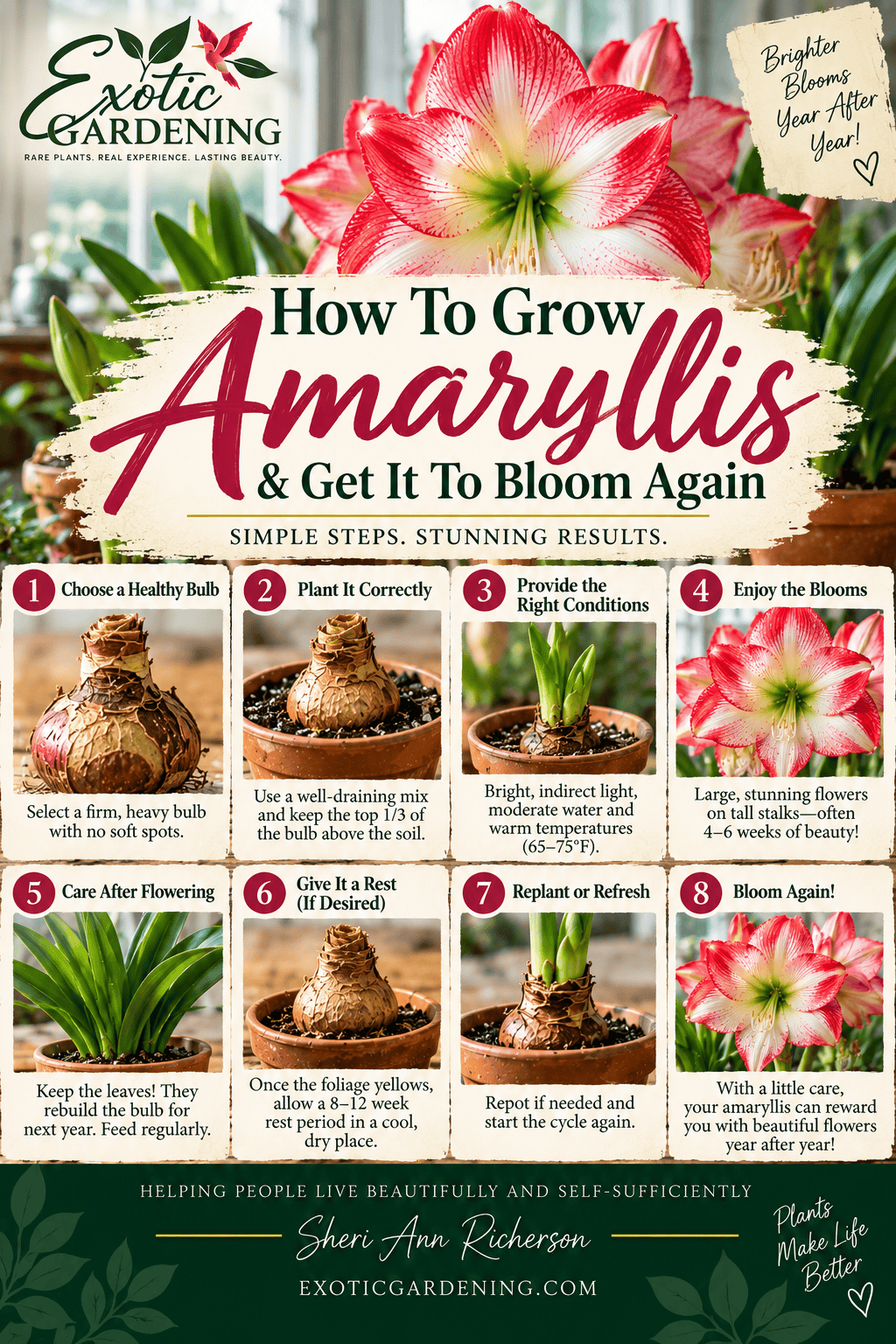
Learning how to grow Amaryllis is one of those projects that looks simple at first: buy a big bulb, put it in a pot, wait for an enormous flower. But if you want to keep that bulb for years, rebloom it, propagate it, or even grow new plants from seed, there is much more going on beneath those spectacular winter flowers.
I have grown Amaryllis from bulbs and from seed, experimented with water germination, moved plants outdoors for the growing season, and even crossed named cultivars. Over the years I have learned that keeping an Amaryllis is far more interesting than the simple “plant it, bloom it and throw it away after Christmas” approach.
One thing has not changed: these are wonderful plants for anyone who likes dramatic flowers, unusual propagation experiments and plants that reward patience.
First, Is It Amaryllis or Hippeastrum?
The big bulbs commonly sold around Christmas as “Amaryllis” are generally Hippeastrum species and hybrids. True Amaryllis is a different genus native to the Cape Provinces of South Africa, while Hippeastrum is native to tropical and subtropical parts of the Americas.
I am still using Amaryllis throughout this article because that is the familiar common name gardeners see on boxes, bulbs and plant tags. Just remember that when you see me refer to the botanical plant, I mean Hippeastrum.
That naming confusion is not new. Hippeastrum was formally published as a genus in 1821, and older botanical names for some species placed them in Amaryllis. So if you enjoy digging through old gardening books - as I do - you may find the same plants discussed under different names.
Why I Keep Amaryllis Instead of Treating Them as Disposable Holiday Plants
Amaryllis are often marketed as temporary holiday decorations, but the bulb is a perennial storage organ. After flowering, healthy leaves can replenish the bulb so it has the reserves to grow and flower again.
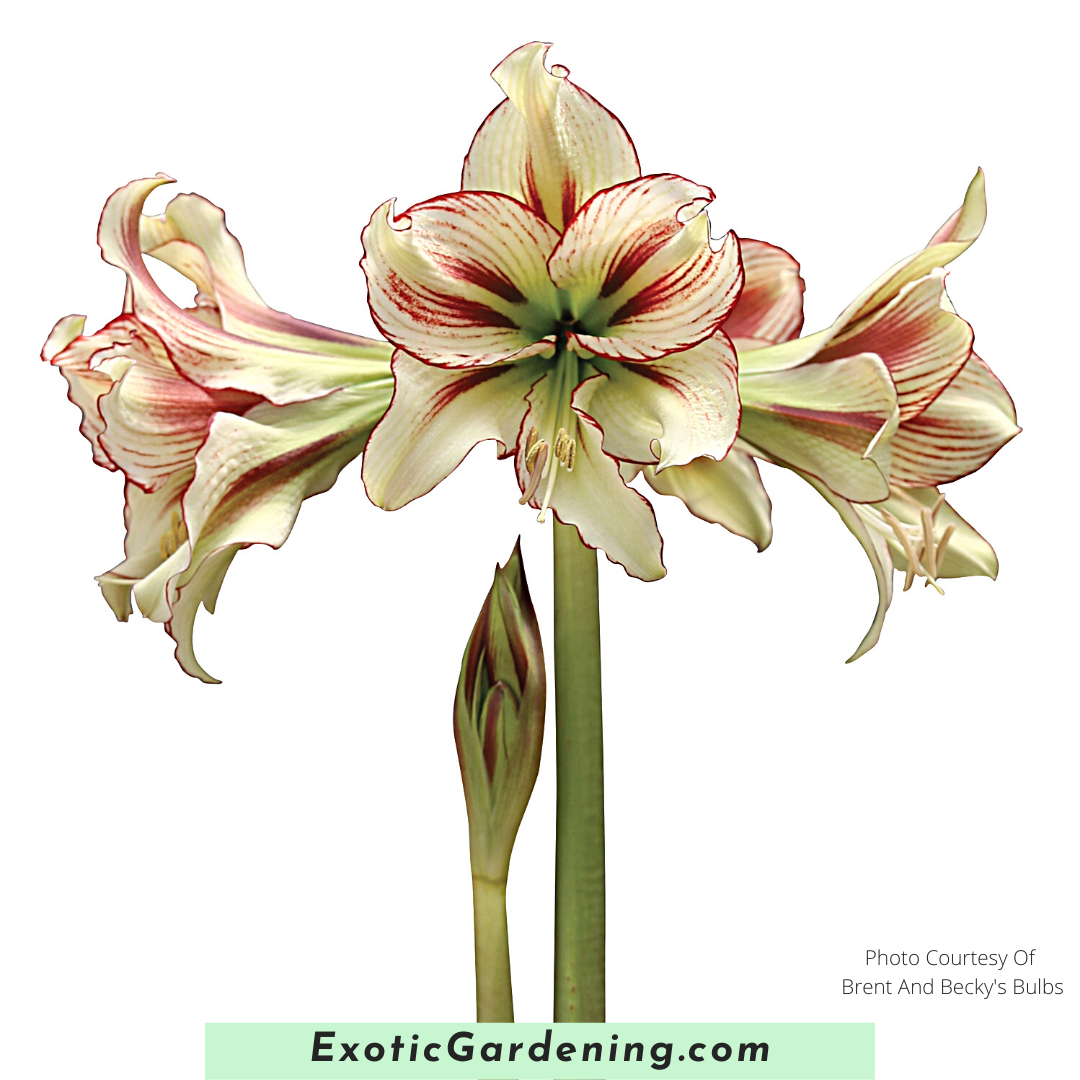
There is also much more variety than the familiar solid-red Christmas Amaryllis. Depending on the cultivar, flowers may be white, pink, salmon, red, striped, edged, greenish, single, double or spider-like. That variety becomes even more interesting if you start cross-pollinating plants because seedlings do not necessarily look exactly like either parent.
For me, that makes an Amaryllis more interesting after the first flowers fade—not less.
Choosing a Healthy Amaryllis Bulb
Start with a firm bulb. A large mature bulb has more stored energy than a small immature one, but size is not the only thing I look at. Avoid bulbs with obvious soft, collapsing or rotten areas. Some dry outer skin is normal.
If roots are present, healthy roots are an advantage. Do not panic over a few dried roots on a dormant bulb, but I would be cautious about a bulb whose basal plate is badly damaged or rotting because that is where the roots originate.
Choosing the Right Pot
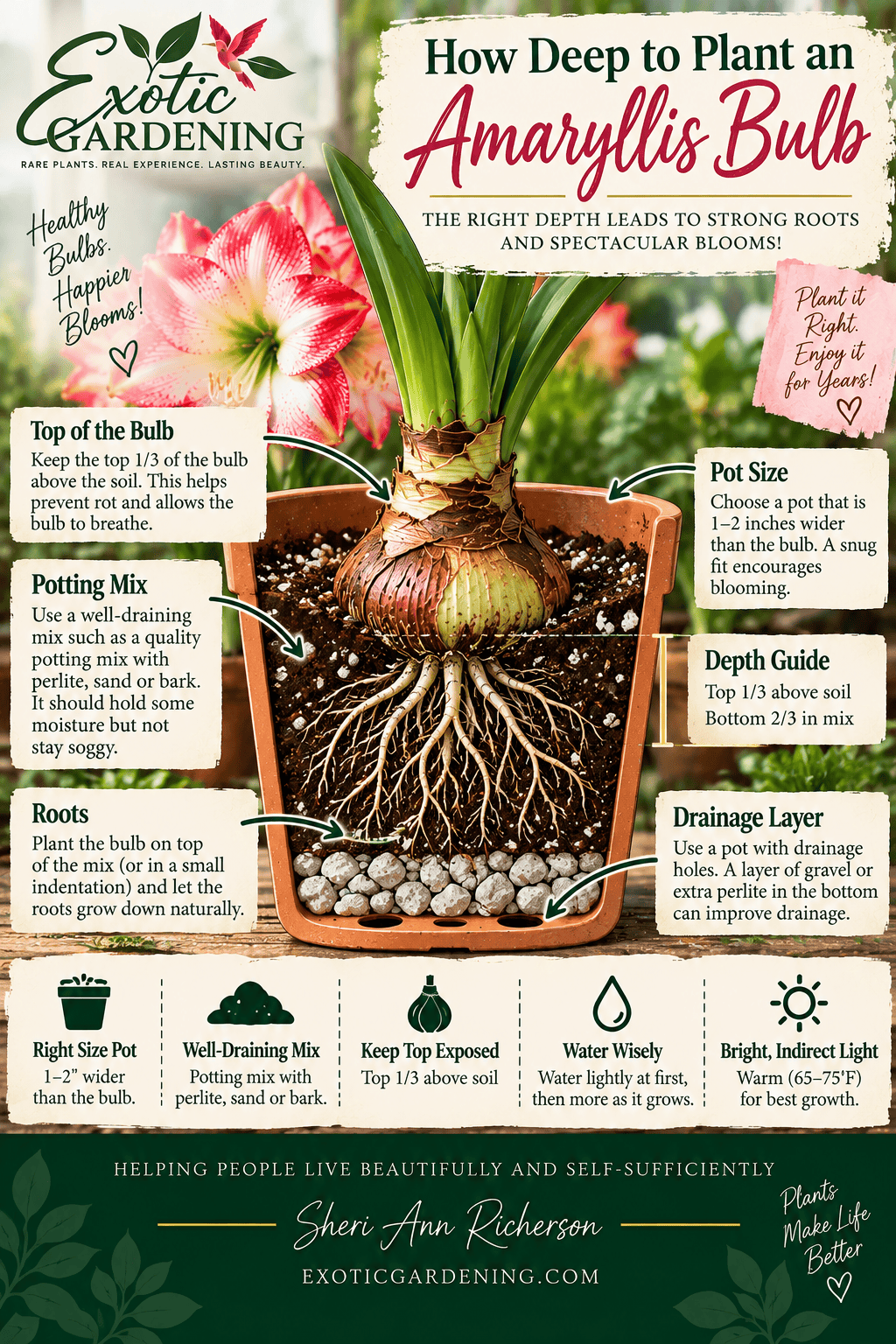
Amaryllis do not need an enormous container. In fact, a pot only somewhat larger than the bulb is easier to manage because a huge volume of wet potting mix around a bulb can stay wet too long.
The container needs a drainage hole and enough weight or stability to support a tall flower stalk topped with several large flowers. If you use a lightweight decorative pot, consider placing the planted pot inside a heavier cachepot so the whole thing does not topple when the flowers open.
What Soil Should You Use for Amaryllis?
The important word is drainage. Use a good-quality, free-draining container mix rather than dense garden soil. The roots need moisture while the plant is actively growing, but the bulb should not sit in waterlogged soil.
This is one reason I do not recommend adding things such as used coffee grounds to the pot as routine fertilizer. A predictable potting medium and an appropriate fertilizer give you much more control than kitchen scraps mixed around a bulb.
How Deep Should You Plant an Amaryllis Bulb?
This plant is not buried like a daffodil in the garden. Leave a substantial portion of the bulb above the potting mix. Recommendations vary somewhat, but keeping roughly the upper third to two-thirds of the bulb exposed protects the neck and makes it easier to avoid keeping the crown wet.
Spread the roots gently over the potting mix if they are flexible, fill around them, firm the mix enough to support the bulb, and water so the mix settles. Do not pack it into concrete.
Should You Soak Amaryllis Roots Before Planting?
If I have a dormant bulb with dry, stiff roots, I may hydrate the roots before planting. The important part is keeping the bulb itself out of the water. You are trying to hydrate roots, not soak the bulb.
This is optional rather than a requirement for every bulb. If the roots are already healthy and flexible, I would simply pot the bulb.
Watering a Newly Planted Amaryllis
One of the easiest ways to get into trouble is to lovingly water a dormant bulb over and over before it has enough active growth to use that moisture.
After the initial watering settles the potting mix, water sparingly while the bulb begins growth. As leaves and the flower stalk develop, its water use increases. Check the pot rather than watering automatically by the calendar, and never leave the container standing in water.
Try to direct water onto the potting mix rather than pouring it into the neck of the bulb.
Light and Temperature for Indoor Amaryllis
I like a bright location while the plant is actively growing. A sunny window can work very well, although I do not want foliage pressed against freezing glass or sitting in a cold draft.
Amaryllis flower stalks lean toward light, so turn the pot regularly as the stalk develops. This simple habit helps keep it straighter. Very large-flowered cultivars may still need support.
Warm conditions encourage growth. Once the flowers begin opening, somewhat cooler household temperatures can help the display last longer. Moving a blooming plant away from intense heat and harsh direct sun can buy you more time with the flowers.
How Long Does an Amaryllis Take to Bloom?
A prepared mature bulb commonly flowers about six to eight weeks after planting, but I treat that as a useful planning range rather than an appointment. Cultivar, bulb condition, temperature and how the bulb was handled before you bought it all affect timing.
That is also why “Amaryllis blooms from this month through that month” is misleading for an indoor plant. We manipulate the cycle. Bulbs are commonly started in fall and winter for holiday and winter flowers, but the timing of growth and rest influences when an individual bulb blooms.
What to Do While Your Amaryllis Is Blooming
Enjoy it! This is the stage we waited for. Keep the plant stable, give it good light, and continue checking moisture. If pollen drops onto the petals, you can remove the anthers if you wish to keep the flowers cleaner.
If you have two interesting cultivars flowering together, this is also your opportunity to experiment with cross-pollination. That can eventually produce seeds, but seed-grown offspring are genetically different plants—not copies of the parents.
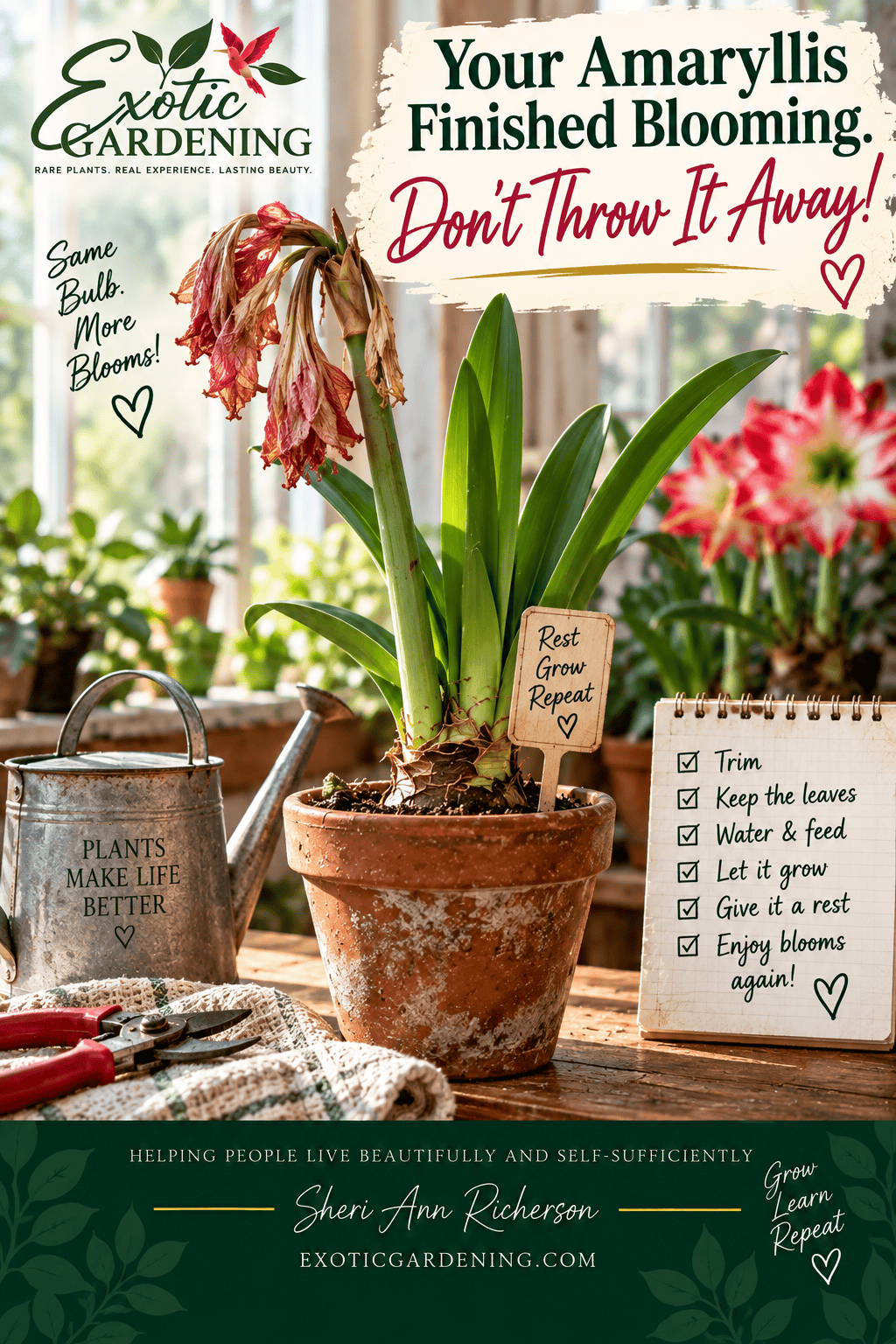
Amaryllis Care After Flowering
This is where I think many perfectly good bulbs are lost. The flowers are finished, so people assume the plant is finished.
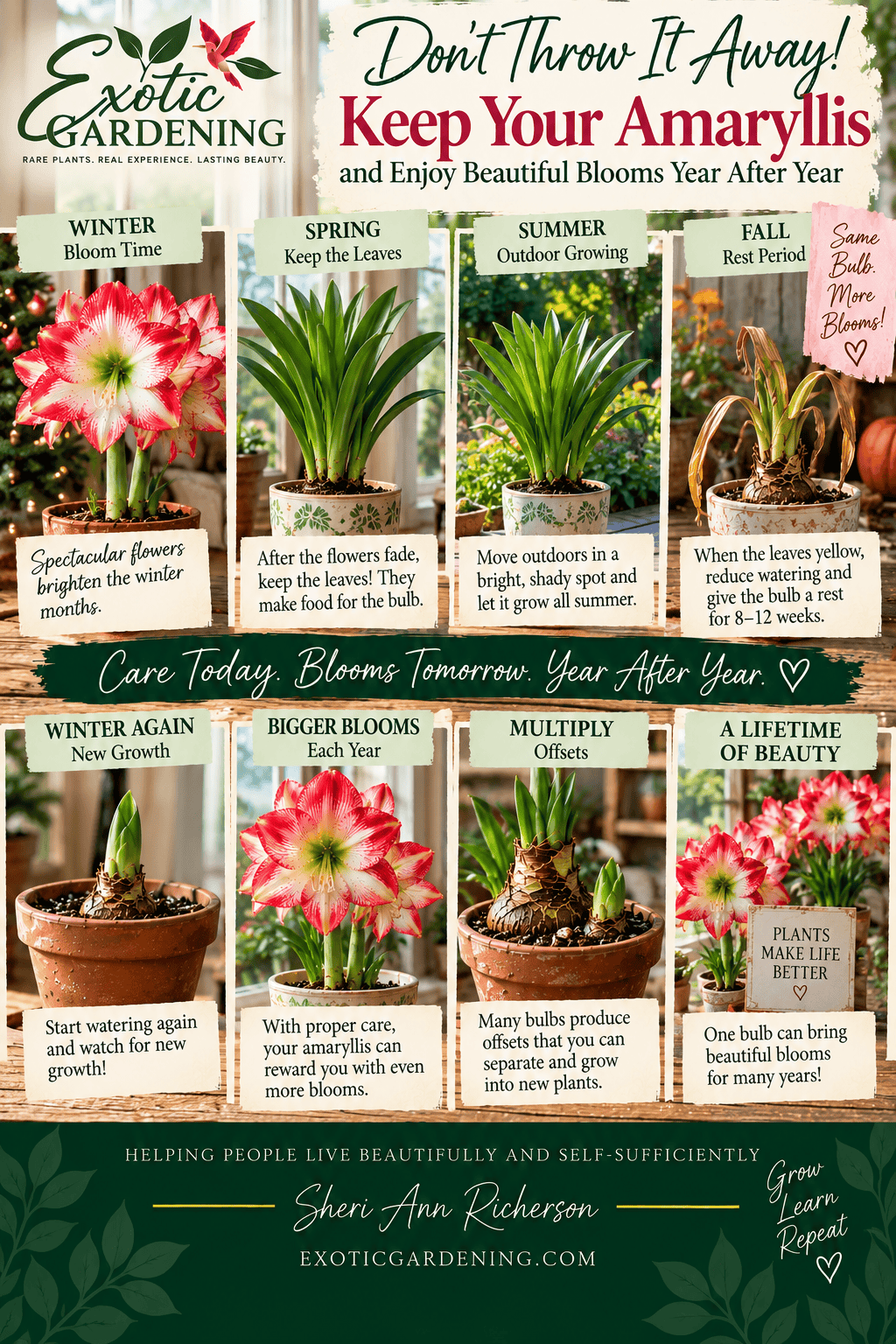
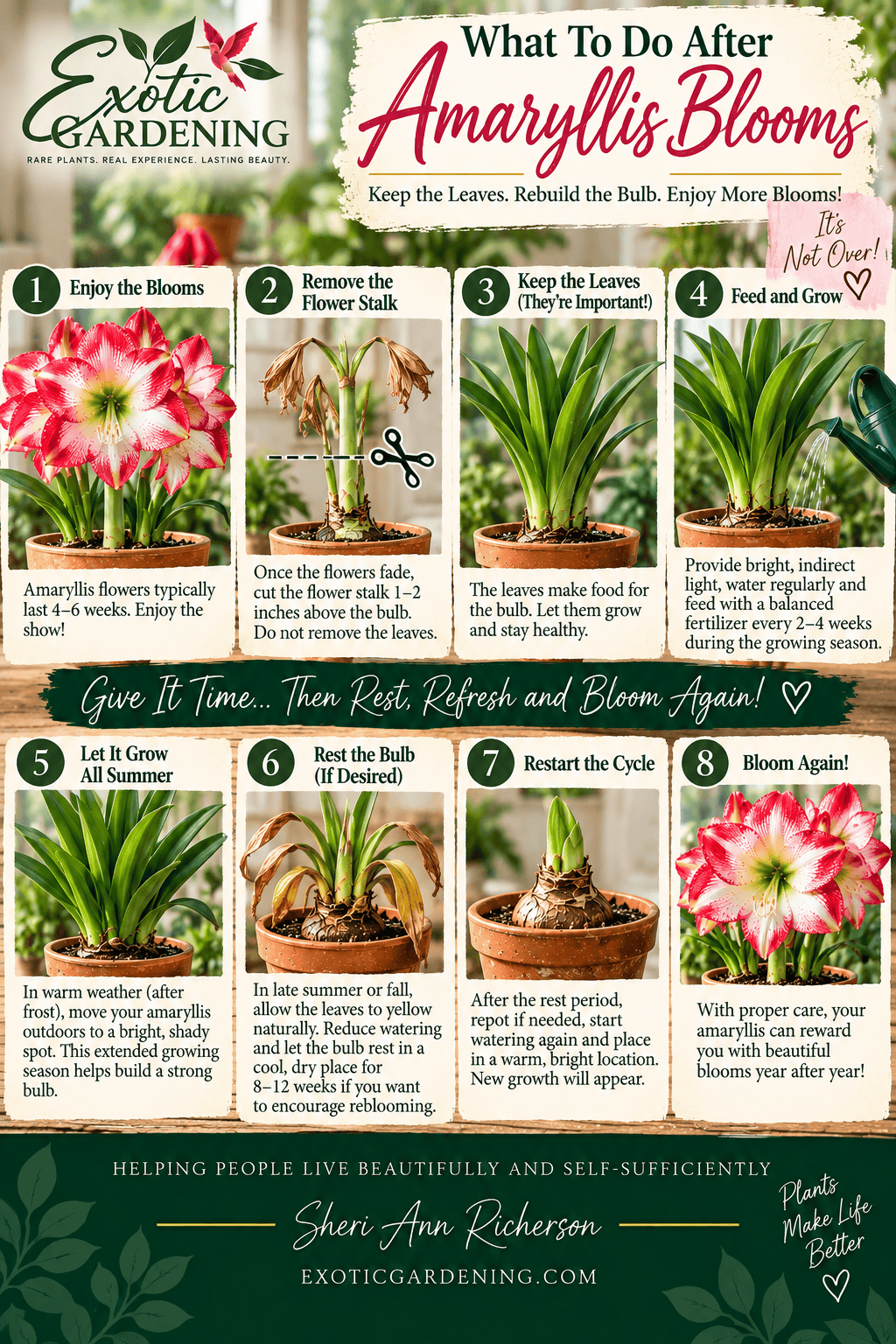
Once the flowers fade, cut off the spent flower stalk without damaging the leaves. Keep those leaves. They are capturing light and helping the plant rebuild the bulb after the energy it spent flowering.
Give the plant bright light, water as the potting mix begins to dry, and fertilize appropriately while it is actively growing. Think of this as the bulb's rebuilding season.
Can I Put My Amaryllis Outside for Summer?
Yes, and I have moved mine outdoors for the growing season. Here in Indiana, however, I treat Hippeastrum as tender plants that must be protected from freezing temperatures.
Do not take a plant that has been living indoors and suddenly put it into blazing outdoor sun. Acclimate it gradually. Once conditions are reliably warm, a protected outdoor location can give the leaves an excellent growing season. Keep up with watering and feeding because this is when you want the bulb storing energy.
Then bring it back to protection well before freezing weather becomes a threat.
Does Amaryllis Have to Go Dormant?
Not in the simplistic sense that every bulb must lose every leaf immediately after flowering. Mature Hippeastrum can be kept actively growing for months after bloom, and that growing period is important.
If you want to manage the plant for another flowering cycle, you can later give a mature bulb a cooler, drier rest or semi-dormant period. Young seedlings are different: do not deliberately force them dormant while they are trying to build bulb size.
How to Rest an Amaryllis Bulb for Reblooming
After a good growing season, reduce watering and stop feeding when you are ready to begin the rest period. Allow foliage to yellow naturally rather than cutting healthy green leaves simply because you want the plant to hurry up.
A mature bulb can be kept cool and dry for several weeks before you return it to warmth and light and resume watering. You do not need refrigerator-level cold. Hippeastrum does not require the prolonged chilling that many spring-flowering bulbs need.
Why Won't My Amaryllis Bloom Again?
When a bulb produces leaves but no flower, I look backward before blaming the bulb. Did it have enough light during its previous growing season? Was it watered and fed while the foliage was healthy? Was the foliage removed too early? Did the bulb remain healthy, or did it lose roots to chronically wet soil?
Too little light, an inadequate growing season, drying the plant too early, or poor bulb health can all interfere with flowering. A small offset or young seedling may also simply be too immature.
When Should You Repot or Divide Amaryllis?
Amaryllis do not need a new pot every year. Repot when the mix has deteriorated, the roots need more room, or you need to separate offsets. A slightly snug pot is fine.
If the mother bulb has produced offsets with their own roots, those can be separated and potted individually. This is very different from growing from seed: an offset is vegetative propagation and should preserve the parent plant's genetics, while a seedling is genetically unique.
Growing Amaryllis From Seed
This is one of my favorite parts because I have actually done it. In my experience, fresher Amaryllis seed generally gives better germination, although I have had older seed germinate too. My recorded germination times have ranged from about 9 to 120 days, so patience matters.
The easiest method I have found is floating the thin, papery seed on water until I see the white root emerge. Then I prepare the planting container before I remove the seed from the water.
I use tweezers to grasp the edge of the seed—not that delicate new root—place the root into a small pre-made hole in seed-starting mix, gently settle the mix around it, and cover the seed with a thin layer of vermiculite. I mist just enough to settle everything and then prefer bottom watering.
I have also used a plastic bag to maintain humidity, closing it during the afternoon and overnight but opening it in the morning so I can inspect for mold and give the seedling fresh air. Once I see active growth, I remove the pot from the bag.
Seed-grown Hippeastrum take years to reach flowering size and should be kept actively growing while young rather than deliberately forced into dormancy.
For the full process—including making the cross, collecting the seed, water germination, planting the germinated seed, caring for seedlings and wondering what the eventual flower might look like—read my Pecotee x Blossom Peacock Amaryllis cross-pollination experiment.

Can You Grow Amaryllis in Water?
You can display an Amaryllis bulb over water, but keep the bulb itself above the waterline. The roots can reach the water while the bulb remains dry. A heavy glass container and stones can help stabilize the plant because a tall stalk with several flowers becomes surprisingly top-heavy.
I consider water culture more of a display method than my preferred way to maintain a bulb for years. If my goal is long-term health and reblooming, I would rather grow the bulb in a well-drained potting mix where I can manage roots, moisture and nutrition more predictably.
What About Waxed Amaryllis Bulbs?
Waxed bulbs are sold as self-contained holiday displays and are designed to bloom using the reserves already stored in the bulb. If you want to try saving one after flowering, you can carefully remove the wax and inspect what is underneath.
Success is not guaranteed. Some waxed bulbs have a usable basal plate and enough viable root tissue to recover; others have been prepared in ways that make long-term recovery much less likely. I would judge the actual bulb rather than automatically saying every waxed bulb can - or cannot - be saved.
Common Amaryllis Problems
A soft or foul-smelling bulb points me toward rot, usually associated with too much moisture or damaged tissue. A leaning flower stalk usually needs more even light or support. Long, weak growth can indicate inadequate light. A bulb that refuses to rebloom may need a better season of leaf growth rather than simply a longer rest.
Also inspect leaves and bulbs instead of assuming every decline is cultural. Hippeastrum can have pest and disease problems. Plants spending summer outdoors can also attract slugs and snails.
Amaryllis Frequently Asked Questions
How long can an Amaryllis bulb live?
A healthy bulb is perennial and can be grown and rebloomed for many years. I do not put a guaranteed lifespan on an individual bulb because longevity depends on genetics, bulb health and how it is grown.
Should I cut the leaves off after flowering?
No. Remove the spent flower stalk, but keep healthy green leaves. Those leaves are exactly what you need while the bulb is rebuilding its reserves.
Are coffee grounds good for Amaryllis?
I do not recommend using coffee grounds as routine Amaryllis fertilizer. Use a free-draining potting mix and an appropriate fertilizer while the plant is actively growing.
Does an Amaryllis need a huge pot?
No. A pot only somewhat larger than the bulb is generally enough. Good drainage and stability are more important than giving one bulb a massive volume of soil.
Can I plant my Amaryllis outside permanently?
That depends on climate and the particular Hippeastrum. They are tender plants. In my Indiana climate, I do not leave these holiday-type bulbs outdoors through winter.
How soon will an Amaryllis grown from seed flower?
Expect years, not months. Published guidance says seed-grown Hippeastrum can take up to about six years to reach maturity, and individual seedlings and growing conditions vary. The reward is that the seedling may produce a flower unlike either parent.
Keep Your Amaryllis and See What It Can Do
If someone gives you an Amaryllis for Christmas, you do not have to treat it as a one-season decoration. Keep the leaves growing after the flowers fade. Give the bulb a real growing season. Learn how its growth cycle works. Watch for offsets. If you have two plants flowering together, you can even try making seed.
That is the part of gardening I have always enjoyed: not just getting a plant through one bloom, but seeing what else I can do with it.
And if growing plants from seed is what interests you most, continue with my complete seed-starting guide or explore the Pecotee x Blossom Peacock experiment linked above. That old Amaryllis seed experiment is exactly the sort of thing I was documenting on Exotic Gardening back in 1999—and it is still worth experimenting with today.