Learning how to grow Teddy Bear sunflowers wasn't originally on my gardening bucket list, but after spending a season with these cheerful little plants, I can honestly say they're one of my favorite new flowers. Sometimes the best additions to a garden are the ones you weren't planning to grow at all.
I first discovered Teddy Bear sunflowers while browsing the Baker Creek Heirloom Seeds website. Like most gardeners, I have a hard time resisting the temptation to add "just one more packet of seeds" to my shopping cart, especially when I come across something I've never grown before. The fluffy, deep golden blooms immediately caught my attention. They looked almost too perfect to be real -soft, full, and unlike any sunflower I had ever grown.
This year's planting wasn't just about satisfying my curiosity, though. The Grant County Master Gardeners selected a Garfield theme for the Children's Garden at Matter Park, where I maintain three garden plots. As soon as I started planning the displays, I knew I wanted flowers that reflected the familiar colors of Garfield and his faithful companion, Odie. Bright orange flowers with a few black plants sprinkled in would represent Garfield, while cheerful yellows would bring Odie to life throughout the garden. Teddy Bear sunflower looked like it would fit that vision perfectly.
Thankfully, it didn't disappoint.
Sunflowers have always been among the easiest flowers I've grown from seed, and Teddy Bear was no exception. I planted the seeds with the same confidence I plant most sunflowers, expecting them to germinate quickly, and they certainly did. Within a short time, healthy seedlings were pushing through the soil in the peat pots in my greenhouse and they would become one of the easiest-growing flowers in the garden this season.
That was especially impressive because this year's weather here in Indiana has been anything but predictable.
We seemed to bounce from one extreme to another. Spring lingered with cool temperatures and plenty of rain, making it feel like summer would never arrive. Then, almost overnight, the weather shifted to periods of intense heat and dry conditions that challenged many plants in the garden. Those rapid swings can stress even well-established annuals, yet Teddy Bear sunflower simply kept growing as though nothing unusual was happening.
One of the first things I noticed was how sturdy the plants became. Even when they were transplanted into the ground, they continued growing and setting buds, plus they developed strong stems that supported themselves without staking. That's something I always appreciate because any plant that requires less maintenance gives me more time to enjoy the rest of the garden instead of constantly rescuing flowers after every storm.
Then the blooms began to open.
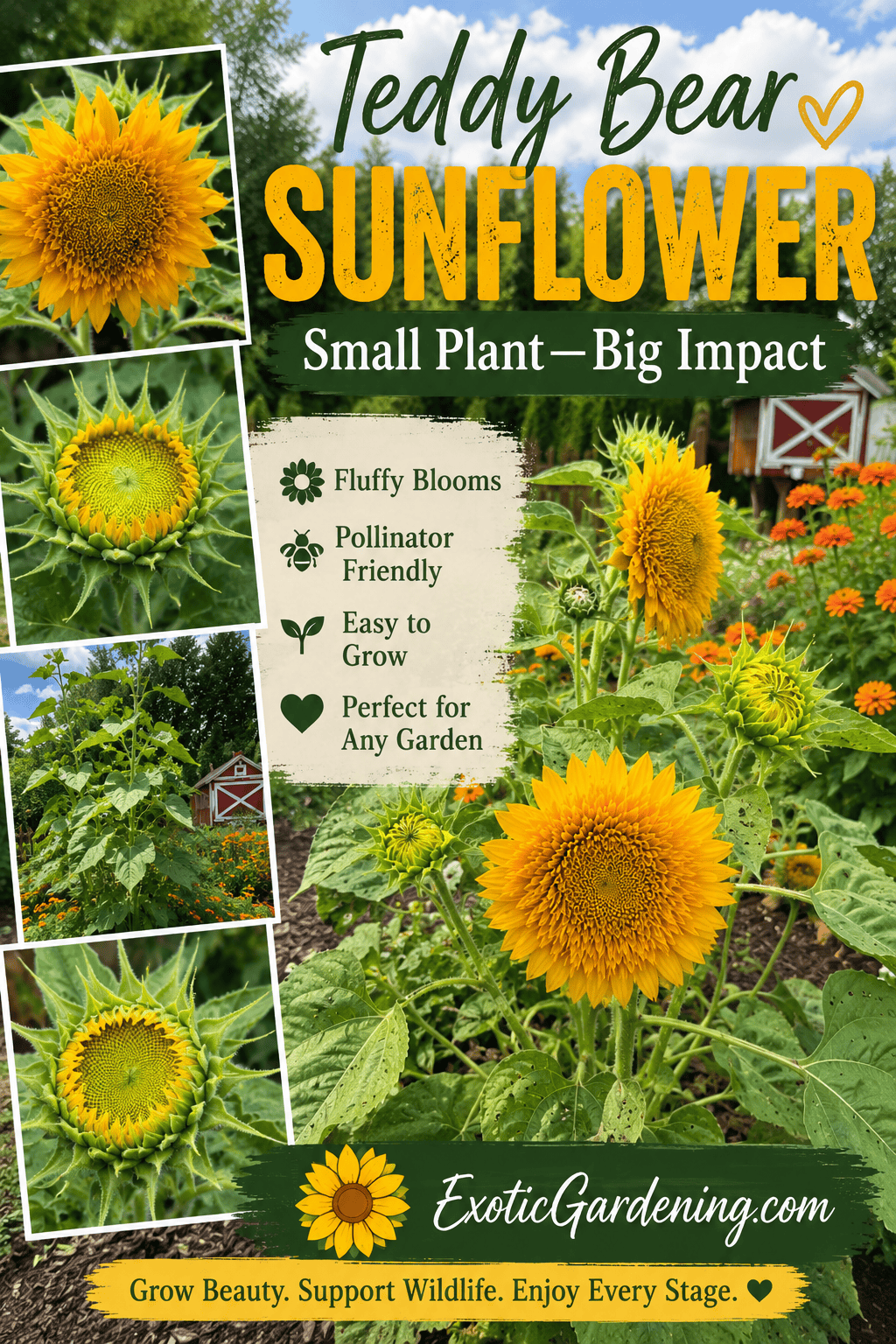
The online photos had convinced me to order the seeds, but seeing the flowers in person was an entirely different experience. Instead of the familiar dark center surrounded by bright yellow petals, these blooms were packed with layer upon layer of rich golden petals, creating soft, fluffy flowers that looked more like oversized pom-poms than traditional sunflowers. Every time I go to the garden to work, I found myself stopping for another look. They have a way of making you smile, and judging by the reactions of visitors to the Children's Garden, I'm not the only one who feels that way.
As I spend more time observing these plants, I realized there is much more to Teddy Bear sunflower than its adorable appearance. It isn't simply a smaller version of a giant sunflower or a novelty flower grown for its unusual shape. It has an interesting history, unique flower structure, surprising versatility in the landscape, and a personality all its own.
That's why this article goes beyond the basics of planting and watering. Of course, we'll cover everything you need to know to successfully grow Teddy Bear sunflowers, from starting seeds and caring for young plants to saving seed at the end of the season. But I also want to share the fascinating story behind this cultivar, explain what makes it different from other sunflowers, and offer the kind of practical observations that only come from spending an entire growing season watching a plant develop day by day.
After all, getting to know a plant is about much more than reading the instructions on a seed packet. It's about watching that first seedling emerge, celebrating the first flower, noticing the little details most people walk right past, and discovering exactly what makes a particular plant worth growing again.
For me, Teddy Bear sunflower has already earned a place in my garden at home.

Meet Teddy Bear Sunflower
I'll admit it - I expected the Teddy Bear sunflower to be cute.
With a name like "Teddy Bear," how could it not? I pictured a compact little sunflower with fluffy blooms that would add a pop of cheerful yellow to the Children's Garden. What I didn't expect was how much personality this little plant would have or how often I'd find myself stopping to admire it while working in the garden. The more time I spend around these plants, the more I realized they're anything but ordinary.
Like all annual sunflowers, Teddy Bear belongs to the species Helianthus annuus. If you've ever grown a towering sunflower that stretched toward the sky or planted one hoping to harvest seeds for the birds, you've already grown one of Teddy Bear's relatives. Plant breeders have spent generations selecting Helianthus annuus for different characteristics. Some varieties were developed to produce large quantities of seeds or oil, while others were bred simply because they were beautiful or unusual. Teddy Bear definitely falls into the "beautiful and unusual" category.
The first thing everyone notices is the flowers. Instead of the familiar dark brown center surrounded by bright yellow petals, Teddy Bear produces bloom after bloom packed with layers of rich golden petals. The center is almost completely hidden, giving each flower a soft, rounded appearance that really does resemble a fuzzy teddy bear. It's one of those flowers that makes people smile before they even realize they're smiling.
I've watched visitors walk through the Children's Garden and immediately notice these blooms. They don't just glance at them and move on. They stop. They lean in for a closer look. More than once I've seen someone reach toward a flower because it looks soft enough to touch. It has that kind of effect on people. Of course, the flowers aren't the only thing that makes this sunflower special.
Unlike the giant sunflowers many of us grew as children, Teddy Bear is refreshingly compact. Most plants mature somewhere around 18 to 24 inches tall, although growing conditions can influence their final height. The blooms themselves measure about 3 to 6 inches across, which creates a nice balance. The flowers are large enough to make an impact without overwhelming the plant. Personally, I think that size is one of Teddy Bear's greatest strengths.
Don't get me wrong - I love giant sunflowers. There's something magical about watching a sunflower grow taller than you are. They create dramatic backdrops, feed birds through the fall, and always become conversation pieces. But they aren't practical everywhere.
Not everyone has room for ten-foot-tall sunflowers. Some gardeners grow in raised beds. Others garden in containers on patios or balconies. Maybe you have a small city lot, a children's garden, or simply want a sunflower that won't cast shade over everything growing behind it. That's where compact varieties like Teddy Bear really shine. I also understand that shorter doesn't mean less impressive.
Sometimes we fall into the trap of thinking bigger is automatically better in the garden. Bigger tomatoes. Bigger pumpkins. Bigger sunflowers. Gardening has taught me that's rarely true.
Some of the plants that bring me the most joy are the ones that quietly do exactly what they're supposed to do without demanding constant attention. Teddy Bear sunflower has been one of those plants for me this year. It germinated quickly, handled Indiana's unpredictable weather remarkably well, developed sturdy stems that supported themselves, and rewarded me with bloom after bloom of fluffy golden flowers. Honestly, that's a pretty impressive list of accomplishments for a plant that's often purchased simply because it has an adorable name.
As I've watched these plants grow, I've realized Teddy Bear isn't trying to compete with giant sunflowers. It has a completely different job. Instead of towering over the garden, it invites you to slow down and take a closer look. It reminds us that not every sunflower has to be enormous to make an impact. Sometimes a plant's greatest strength isn't its size at all. Sometimes it's the way it makes people stop, smile, and fall in love with gardening all over again. And if you ask me, that's exactly what Teddy Bear sunflower does best.
A Brief History of Sunflowers: From Native Prairie Plant to Garden Favorite
Every time I grow a new sunflower, I can't help but think about how long people have been growing these incredible plants. It's easy to see a packet of seeds and think of them as just another annual flower for the summer garden, but sunflowers have a story that stretches back thousands of years.
Long before they brightened backyard flower beds and lined country roads, sunflowers were growing wild across much of North America. They weren't simply admired for their cheerful blooms, either. Indigenous peoples recognized their value and cultivated them long before European settlers arrived. The seeds were an important source of food, the oil was used in cooking, the flowers and seeds provided natural dyes, and various parts of the plant found their way into everyday life. A sunflower wasn't just something pretty to look at - it was a useful plant that earned its place. I think that's something we've lost sight of over the years.
Today, many people think of sunflowers as purely ornamental, but they're one of those rare plants that manage to be both beautiful and practical. Even now, when I see birds picking seeds from spent flower heads in late summer or watch bees working their way across freshly opened blooms, I'm reminded that these plants are still serving a purpose in the garden.
Eventually, sunflower seeds made their way across the Atlantic to Europe, where gardeners and plant breeders quickly fell in love with them. Over the centuries, they selected plants with larger seeds, stronger stems, different colors, branching habits, and flowers that looked nothing like the wild sunflowers growing on the North American prairie.
That's one of the things I find fascinating about gardening. We tend to think of plant breeding as something modern, but gardeners have been selecting their favorite plants for generations. If one sunflower had bigger flowers, someone saved seed from it. If another bloomed longer or branched more freely, those seeds were planted the following year. Little by little, those choices added up, eventually giving us the incredible variety of sunflowers we enjoy today. Look through a seed catalog and you'll see exactly what I mean.
Some sunflowers grow well over ten feet tall and produce enormous seed heads. Others branch into dozens of smaller blooms that make excellent cut flowers. You can find varieties with creamy white petals, rich mahogany blooms, soft lemon yellows, fiery oranges, deep reds, and even flowers with multiple colors blended together. Some are grown primarily for wildlife, some for bouquets, some for edible seeds, and others simply because they're beautiful. Then there's Teddy Bear. It has a completely different look, yet underneath all those extra petals it is the same species that once grew wild across North America. I think that's part of what makes gardening so much fun.
A single species can produce an almost unbelievable amount of diversity. Just when you think you know what a sunflower looks like, along comes a variety like Teddy Bear that reminds you plants are full of surprises. As much as I admire giant sunflowers - and I always will - I appreciate that plant breeders didn't stop there. They kept experimenting, selecting, and improving until they created varieties for every size garden and every gardener. Whether you have acres of land or a sunny patio with room for one container, there's probably a sunflower that fits your space. Teddy Bear is proof of that.
It may never set records for height, and it isn't the sunflower you'll grow if your goal is harvesting buckets of seeds. Instead, it represents something equally important. It's a sunflower grown simply because it brings joy. Its cheerful blooms, manageable size, and unique appearance make it one of those plants that encourages people to slow down, smile, and take a closer look. Honestly, I think that's a pretty wonderful legacy for a plant whose ancestors once grew wild on the North American prairie.
What Makes The Teddy Bear Sunflower So Different?
One of my favorite things about growing unfamiliar plants is discovering there's usually much more going on than first meets the eye. Teddy Bear sunflower is a perfect example. Those fluffy blooms aren't simply unusual looking - they're actually built differently than the classic sunflower most of us grew up with. That is something many gardeners never realize.
What we call a sunflower "flower" isn't actually a single flower at all. It's a collection of hundreds of tiny flowers growing together in one flower head. The bright yellow "petals" around the outside are called ray florets. Their job is to catch the attention of pollinators flying overhead, almost like a brightly colored welcome sign.
The tiny flowers packed into the center are called disk florets. Each one is capable of producing pollen and, after pollination, developing into an individual seed. On a traditional sunflower, it's easy to watch this happen because the center gradually changes as new rows of disk florets open day after day. The flowers of Teddy Bear changes that familiar design.
Instead of producing a large, open center, plant breeders selected plants with naturally fuller blooms over many generations. As those selections continued, more of the disk florets developed into petal-like structures. The result is the densely packed, almost shaggy-looking flowers that make this variety so distinctive. To me, that's one of the most interesting parts of plant breeding.
No one genetically engineered Teddy Bear sunflower in a laboratory. Gardeners simply noticed plants with fuller flowers, saved seed from those plants, and repeated the process over many generations. Little by little, those selections created the variety we grow today.
Another characteristic I've really come to appreciate is its branching habit. Many people picture a sunflower as one tall stalk topped with one enormous bloom. Teddy Bear doesn't limit itself to a single flower. As the plant matures, side branches begin developing, each producing additional buds and eventually more blooms. I found myself enjoying that almost as much as the flowers themselves.
Just when I thought the display was reaching its peak, another cluster would begin opening somewhere else on the plant. Instead of one spectacular bloom that's over all too quickly, the plant continues adding fresh flowers, giving it a much longer season of interest. That's especially valuable in a public garden like the Children's Garden at Matter Park. Rather than having one week of spectacular color followed by fading blooms, the plants continued producing flowers that kept the display looking fresh.
Of course, those extra petals come with a small trade-off. Because many of the center florets have become petal-like, the pollen and nectar are less accessible than they are on a traditional single-flowered sunflower. I still enjoy growing Teddy Bear, but I also like mixing it with open-centered sunflower varieties so pollinators have plenty of choices throughout the season.
It's a good reminder that every plant has its own strengths. Some sunflowers are grown for seed production. Some are planted to feed wildlife. Some are bred for cut flowers. Teddy Bear was bred to delight gardeners. I'd say it succeeds beautifully.

Growing Teddy Bear Sunflowers From Seed: My Experience
If you've grown sunflowers before, you already know they aren't usually fussy. Teddy Bear sunflower was no exception. I ordered my seeds from Baker Creek because I wanted something different for the Children's Garden at Matter Park. The Garfield theme called for plenty of orange, black and yellow flowers, and Teddy Bear looked like it would be a perfect fit. Since this was my first time growing this variety, I wasn't quite sure what to expect beyond the beautiful photos I had seen online.
The seeds germinated quickly, which is exactly what I hope for when sowing sunflowers. There's nothing quite like walking out to the garden one morning and discovering little green seedlings pushing through the soil where there was nothing the day before. It never gets old. Instead of planting the seeds directly into the garden this year, I started them in the greenhouse because I wanted to transplant plants into the Children's Garden. From the point of germination on, the plants seemed determined to grow.
This certainly wasn't the easiest gardening season we've had here in Indiana. Spring stayed cool and wet much longer than normal, and just when it seemed like summer had finally arrived, the weather shifted into stretches of hot, dry conditions. Those kinds of extremes can slow some plants down or leave them looking stressed. Teddy Bear sunflower didn't seem to mind. The plants continued growing steadily through all of it. I never had the feeling they were struggling or trying to recover from the weather. They simply kept adding leaves, producing strong stems, and eventually setting flower buds.
I planted them in full sun, which is exactly where sunflowers are happiest. They really do need plenty of direct sunlight to develop sturdy stems and produce their best flowers. If you're trying this variety for the first time, don't tuck it into a partially shaded corner of the garden. Give it the sunshine it wants, and I think you'll be much happier with the results.
The soil in the Children's Garden is quite nice from years of being tended to and mulched, but I didn't do anything special for these plants. They weren't pampered or given an elaborate fertilizer program. Sunflowers generally don't need that. In fact, I've found that pushing them with too much nitrogen often gives you lots of leaves and fewer flowers.
Once the seedlings were transplanted into the garden, they quickly became established, they were watered when the garden needed it, especially during the hotter, drier stretches of the summer. Like most annuals, consistent moisture helped keep the plants growing well, but I also wanted the roots to reach deeper into the soil instead of becoming dependent on frequent shallow watering.
One thing that impressed me was how sturdy the plants became. There have been a number of strong winds go through Matter Park this year that have tobbled large established trees, but the Teddy Bear Sunflowers stood strong. Even after the weather changed and the flowers began opening, they stood upright without staking. Considering how unpredictable our weather can be, that's something I always appreciate.
Another pleasant surprise was how quickly they reached the flowering stage. It did not feel like I was waiting forever for something to happen. Before I knew it, buds were forming, and not long after that, those wonderfully fluffy blooms began opening one after another. That's probably the best word I can use to describe Teddy Bear sunflower - vigorous. Not aggressive. Not invasive. Just vigorous.
This plant seems to make good use of the growing season without demanding constant attention from the gardener. Those are exactly the kinds of plants I enjoy growing because they spend less time testing my patience and more time rewarding me with beautiful flowers. For a first-year trial in a season filled with weather extremes, I honestly couldn't have asked for much better performance.

Watching Teddy Bear Grow: Every Stage Has Something to Teach You
One of the reasons I enjoy growing plants from seed is that I get to watch the entire story unfold. Buying a plant already in bloom is certainly satisfying, but there's something special about starting with a tiny seed and seeing what it becomes over the next few months. Teddy Bear sunflower never had a stage where it looked awkward or disappointing. Every week brought something new to notice.
It all began with germination. Once the seed coat split open, the young root head downward while the shoot pushes toward the light. Before long, the first pair of leaves appears. These aren't true leaves yet. They're called cotyledons, or seed leaves, and their job is to provide the seedling with stored energy while the young plant gets established.
The real excitement begins when the first true leaves appear. Unlike the smooth, simple cotyledons, the true leaves immediately look like miniature sunflower leaves. They have a rougher texture, pointed tips, and the familiar shape that tells you exactly what you're growing. At this point, the seedlings seem to shift into high gear. Every visit to the garden reveals another leaf, a little more height, and a stronger stem.
As the plants mature, they begin putting their energy into building a sturdy framework. Healthy stems become thicker, the leaves become larger, and side branches start forming. That's when I realized Teddy Bear wasn't planning to produce just one flower and call it a season. The branching habit is one of my favorite characteristics of this variety.
Instead of focusing all of its energy into a single bloom, each branch develops flower buds of its own. The result is a succession of flowers rather than one brief display. While one bloom is fully open, another is just beginning to unfurl, and several more buds are waiting their turn. That staggered blooming period keeps the plants looking attractive for weeks instead of days.
Watching the flower buds develop is almost as interesting as the flowers themselves. At first they're small, green, and tightly wrapped. Day by day they become larger until the green bracts begin separating, giving you your first glimpse of the golden petals tucked inside. Once that happens, it doesn't take long before the flower begins opening. I found myself checking the plants almost every day at that stage.
Each morning another bloom seemed just a little farther along than it had been the day before. The flowers don't all open at once, which means the display changes constantly. That's one of the reasons I enjoy walking through the garden every day. Even when nothing dramatic has happened, there's almost always something new to discover.
As the flowers mature, they continue holding their rich golden color while new blooms open nearby. Eventually, the oldest flowers begin drying, and the plant shifts its energy toward producing seed. If you're interested in saving seed, this is the stage to watch carefully. The flower heads gradually dry, the backs turn brown, and the seeds continue developing until they're fully mature.
It's a reminder that the growing season is really a cycle. Every flower that finishes blooming has the potential to produce the seeds that will become next year's garden.
Where Teddy Bear Fits in the Garden - Small Plant, Big Impact
I think one of the biggest misconceptions about sunflowers is that they're only for the back of the border. After all, that's where the giants belong. Teddy Bear is different. Its compact size makes it one of the most versatile sunflowers I've grown because it fits almost anywhere.
In my case, it became part of the Garfield-themed Children's Garden at Matter Park, where its cheerful yellow blooms represented Odie. Because the plants stayed compact and branched freely, they blended beautifully with the surrounding flowers instead of towering over everything else. Visitors, especially children, could easily admire the blooms without feeling like they were looking up at a wall of sunflowers.
I could just as easily see Teddy Bear growing in a cottage garden where it mingles with zinnias, cosmos, calendula, and other old-fashioned favorites. The rounded flowers provide a completely different texture than the daisy-shaped blooms around them, adding interest without overwhelming the planting.
They're equally at home in a vegetable garden. I've always believed vegetables deserve to be beautiful as well as productive. Tucking flowers among tomatoes, beans, squash, or herbs brings more color into the garden and encourages you to spend a little more time there. Teddy Bear's modest height means it won't cast heavy shade over neighboring crops the way some giant sunflower varieties can.
If you're gardening in containers or raised beds, this variety deserves a look too. Many gardeners simply don't have room for towering sunflowers, but Teddy Bear offers the same cheerful personality in a much more manageable package. A large container filled with several plants would make a beautiful focal point on a sunny patio or deck.
I also think these sunflowers work well planted in groups. While a single plant is attractive, a drift of Teddy Bear sunflowers creates much more impact. Those clusters of fluffy golden blooms almost seem to glow, especially in the early morning or late afternoon sunlight. They're bright enough to catch your eye from across the garden while still blending beautifully with other summer flowers.
If you enjoy cutting flowers to bring indoors, Teddy Bear has another advantage. The branching stems provide multiple blooms over an extended period, so you're not sacrificing the entire display by cutting one flower. There's usually another bud waiting to open. But be aware the stems won't be super long, so you will need to create shorter flower arrangements.
After growing this variety for the first time, I don't think of it as a replacement for giant sunflowers. I think of it as filling a completely different role. Sometimes you want a sunflower that reaches for the sky. Sometimes you want one that fits comfortably into the rest of the garden and quietly steals the show anyway. Teddy Bear does exactly that.
Designing Around Teddy Bear Sunflowers
One of the things I appreciate most about Teddy Bear sunflower is that it doesn't demand to be the star of the show. Instead, it seems perfectly happy sharing the spotlight with other summer flowers. That's one of the reasons I think it fits into so many different garden styles.
When I planned my three plots in the Children's Garden at Matter Park, I wasn't designing around Teddy Bear sunflower alone. Every plant had a purpose, whether it added height, color, texture, or simply made visitors stop for a closer look. Nature helped with the design, too.
Several larger volunteer sunflowers appeared in the garden, and I decided to leave them exactly where they came up. I love volunteer plants because they often remind me that the garden has ideas of its own. The taller volunteers now rise above the Teddy Bear sunflowers in the same row, creating layers of blooms instead of one flat line of flowers. Rather than competing with one another, each variety brings something different to the display.
Behind the Teddy Bear sunflowers, I planted orange cactus zinnias. Since they grow considerably taller, they added another layer of height without hiding the sunflowers. Once everything began blooming, the combination was exactly what I had hoped for. The bold, spiky texture of the cactus zinnias contrasted nicely with the rounded, fluffy flowers of Teddy Bear. Sometimes the best garden combinations aren't about matching flowers - they're about contrasting shapes.
The garden also offered another unexpected gift. Sweet alyssum had volunteered from previous years, and I left every patch I found. Those tiny white flowers formed a soft carpet around the larger plants and spilled into the walkway, softening the pathways and filling empty spaces naturally. I could have pulled them out, but I think gardens often look better when they have a little spontaneity.
The same was true of the volunteer fennel. Most gardeners grow fennel for the kitchen or as a host plant for swallowtail butterflies. I happen to love its feathery foliage just as much. Growing near the Teddy Bear sunflowers, the fine, airy texture provided another contrast to the broad sunflower leaves and dense flowers. It's amazing how much difference foliage can make in a planting. Flowers may steal the attention, but leaves provide the framework that holds everything together.
If you're planning your own garden, think beyond flower color. Texture can be just as important. Teddy Bear sunflower pairs beautifully with plants that have delicate foliage, like fennel or cosmos. It also looks wonderful beside flowers with completely different bloom forms, such as cactus zinnias, salvia, or calendula. Those differences keep the planting interesting because every flower contributes something unique.
Color is another opportunity to have fun. Since Teddy Bear produces rich golden-yellow blooms, it naturally complements warm colors like orange, gold, and deep red. That's one reason it worked so well in the Garfield-themed garden. Orange zinnias, marigolds, and nasturtiums all create a cheerful summer palette that practically glows in the sunshine.
If you prefer cooler color schemes, don't overlook black and purple flowers. Black petunias, catmint, or other purple-flowering perennials create a beautiful contrast against the warm yellow blooms. Purple foliage can be just as striking. Whether it's purple basil, ornamental sweet potato vine, or dark-leaved coleus, those darker tones help the flowers stand out even more.
Herbs also deserve a place nearby. Many herbs attract pollinators when allowed to flower, and they blend naturally into informal gardens. Basil, oregano, thyme, dill, and fennel all contribute different textures while adding another layer of interest for beneficial insects. I rarely think of herbs as belonging only in the vegetable garden. Many are ornamental enough to earn a place among flowers.
For gardeners who enjoy supporting wildlife, mixing Teddy Bear sunflowers with native plants is another beautiful option. Coneflowers, black-eyed Susans, blazing stars, mountain mint, bee balm, and asters extend the season of bloom while creating a garden that's alive with bees, butterflies, and other beneficial insects from spring through fall.
One thing I always try to think about when designing a garden is bloom succession. A garden shouldn't reach its peak for one week and then fade away. Instead, I like choosing plants that take turns blooming. Early flowers give way to summer color, which gradually blends into late-season blooms. That way there's always something new to enjoy. Teddy Bear sunflower fits beautifully into that rhythm, carrying the garden through the heart of summer while many other annuals and perennials are also reaching their peak.
Looking back at this year's garden, I don't think I would change much. Some of the best combinations weren't planned at all. The volunteer sunflowers, alyssum, and fennel reminded me that sometimes the garden knows exactly what it's doing. All I had to do was recognize a good thing and let it grow.
Growing Teddy Bear Sunflowers in Containers
One of the nicest things about Teddy Bear sunflower is that you don't need a large garden to enjoy it. Unlike giant sunflower varieties that quickly outgrow most containers, this compact variety is perfectly suited to growing in a large pot or planter.
If I were growing Teddy Bear on a patio or deck, I'd choose a container that's at least 12 to 16 inches wide and equally deep. Bigger is always better when it comes to sunflowers because more soil means more room for the roots and it doesn't dry out quite as fast during the hottest part of summer.
A good-quality potting mix is worth the investment. Garden soil tends to become heavy and compacted in containers, making it harder for roots to grow and for excess water to drain away. A light, well-drained potting mix gives the plants a much better start.
Container-grown plants usually need more frequent watering than those growing in the ground. During cool weather, you may only need to water every few days. Once summer heat arrives, especially during stretches of hot, windy weather, checking containers every day becomes part of the routine. Rather than watering on a schedule, I prefer sticking my finger into the potting mix. If the top inch or two feels dry, it's time to water thoroughly.
Since nutrients wash out of containers more quickly, a light application of a balanced, slow-release fertilizer at planting time is usually enough to keep Teddy Bear growing well through the season. I wouldn't overdo it, though. Too much fertilizer often produces lots of lush foliage at the expense of flowers.
One thing to remember is that containers can become top-heavy as the plants begin blooming. Teddy Bear stays relatively compact, but a pot sitting on an exposed patio or balcony can still be blown over during a strong summer storm. If your location is especially windy, place the container where it's somewhat protected or choose a heavier pot that won't tip easily.
I also think Teddy Bear is a wonderful choice for gardening with children. The plants stay at a height that's easy for kids to watch, water, and enjoy without needing a ladder or a step stool. They can see the flowers developing from tiny buds to fully open blooms, and later help collect seeds at the end of the season. Watching a sunflower grow from a single seed into a flowering plant is a pretty amazing experience, no matter how old you are.
If you're limited to a balcony or small outdoor space, don't let that stop you from growing sunflowers. A sunny balcony can produce beautiful plants as long as they receive plenty of direct sunlight and consistent watering. Sometimes one cheerful pot of flowers is all it takes to brighten an entire outdoor living space.
Caring for Teddy Bear Sunflowers
One of the reasons I enjoyed growing Teddy Bear sunflower so much is that it doesn't feel like a high-maintenance plant. Once it became established, it settled into the garden and simply got on with growing. That doesn't mean you can ignore it completely, but it certainly doesn't require constant attention.
Watering is probably the most important task, especially during long periods of hot, dry weather. I prefer watering deeply rather than giving plants a quick sprinkle every day. Deep watering encourages the roots to grow farther into the soil, making the plants more resilient when summer temperatures climb.
A layer of mulch helps more than many people realize. Mulch keeps the soil cooler, slows evaporation, and reduces the number of weeds competing for moisture and nutrients. It also saves me time because I'm spending less effort pulling weeds and more time enjoying the garden.
When it comes to fertilizer, less is often more. If your soil contains plenty of organic matter, Teddy Bear sunflower usually doesn't need much additional feeding. Rich, healthy soil produces healthier plants than repeated applications of fertilizer. I've found that it's easy to overfeed sunflowers, and when that happens they often reward you with beautiful foliage instead of additional flowers.
Whether or not to remove spent blooms depends on your goals. If you want the plants to continue looking neat and encourage additional flowering, deadheading faded blooms can help direct the plant's energy into producing more flowers. If your goal is collecting seed or feeding birds later in the season, you'll want to leave some flower heads in place so they can mature naturally.
One thing I appreciated this year was how sturdy my plants became. They supported themselves throughout the season without staking, even with the changing weather. In especially windy locations or unusually rich soil, some gardeners may still prefer to provide support, but I didn't find it necessary.
Keeping weeds under control is important while the plants are young. Once Teddy Bear fills out and the foliage shades the surrounding soil, weeds become much less of an issue. A little attention early in the season usually pays off later.
Summer weather has a way of keeping gardeners humble, and this year certainly reminded me of that. Heavy rain can splash soil onto the lower leaves, while extended periods of heat and humidity can put stress on almost any annual flower. During long dry spells, I simply kept an eye on soil moisture and watered when needed. After heavy storms, I checked the plants for broken stems or damaged flowers, although Teddy Bear handled the weather better than I expected.
That's probably one of the biggest compliments I can give this variety. It didn't require constant fussing. It simply grew, bloomed, and continued putting on a beautiful display despite a season that challenged many other plants in the garden.
Pollinators and Wildlife: Who Visits Teddy Bear Sunflowers?
One of the questions I hear most often about almost any flowering plant is, "Will it attract pollinators?" The answer for Teddy Bear sunflower is yes, but with a little explanation.
If you've ever watched an open-centered sunflower on a warm summer afternoon, you've probably noticed it's almost impossible to count how many bees are visiting at once. That's because the large central disk is made up of hundreds of tiny flowers, each producing pollen and nectar that insects can easily reach.
Teddy Bear is a little different. Because so many of those tiny disk florets have been transformed into extra petal-like structures, much of the flower's center is hidden beneath layers of golden petals. That beautiful, fluffy appearance is exactly why gardeners love this variety, but it also means nectar and pollen aren't as easy for pollinators to reach as they are on a traditional sunflower.
That doesn't mean insects ignore it. I've seen bees visiting my plants, especially as flowers continue opening and the centers become more accessible. Hoverflies also seem to enjoy stopping by, and those are always welcome visitors in my garden since their larvae help control aphids. Butterflies occasionally investigate the blooms as well, although I tend to see them spending more time on nearby flowers with open nectar sources. To me, that's simply another reminder that diversity matters.
Rather than planting one type of flower and expecting it to do everything, I prefer growing a mixture of annuals, perennials, herbs, and native plants that bloom throughout the season. Some flowers are bee magnets. Others are butterfly favorites. Together, they create a much healthier habitat than any single plant ever could.
Even after the flowers begin fading, Teddy Bear still has something to offer. If you leave the seed heads on the plants instead of removing them, birds will eventually discover them. Goldfinches are especially fond of sunflower seeds, and it's always fun watching them cling to the drying flower heads while they pick out a meal. Other seed-eating birds may stop by as well, depending on where you live.
One thing I encourage gardeners to do is resist the urge to clean everything up the minute flowers fade. Those drying seed heads continue feeding wildlife long after the colorful blooms are gone. They also add a different kind of beauty to the late-season garden, especially on crisp autumn mornings when birds are busy harvesting seeds.
I think that's one of the reasons I've always enjoyed growing sunflowers. They give something back to the garden from the day the first flower opens until the last seeds are gone.
Troubleshooting Teddy Bear Sunflowers
One of the reasons I'd recommend Teddy Bear sunflower to beginning gardeners is because it's generally an easy plant to grow. Like any annual, though, it's not completely immune to problems. Fortunately, most issues are easy to recognize and even easier to correct.
If your seeds don't germinate well, don't automatically blame the seed. Sunflowers prefer warm soil, and planting too early is one of the most common reasons for poor germination. Cool, waterlogged soil can delay sprouting or cause seeds to rot before they ever emerge. Waiting until the soil has warmed makes a tremendous difference.
Occasionally, seedlings become tall and spindly. That usually happens when they're started indoors without enough light. If you're direct sowing outdoors, this is rarely a problem because young plants naturally receive all the sunlight they need from the beginning.
Yellow leaves can have several different causes. Sometimes it's simply older leaves aging naturally near the bottom of the plant. Other times, overly wet soil, poor drainage, or nutrient deficiencies may be responsible. Before reaching for fertilizer, I always look at watering practices first because too much water often causes more problems than too little.
Like many garden plants, Teddy Bear can occasionally attract aphids. I usually don't panic when I see a few because lady beetles, lacewings, hoverflies, and other beneficial insects often take care of the problem for me. If populations become excessive, a strong spray of water is often enough to knock them off the plants.
Japanese beetles can also make an appearance, especially during midsummer. While they may chew on leaves and flowers, I generally handpick them if numbers become high rather than automatically reaching for insecticides that might also harm beneficial insects. Just put the Japanese beetles in a jar of soapy water, put a lid on it and let it sit overnight. That will take care of them.
Young sunflower seedlings sometimes catch the attention of slugs, rabbits, or even deer. Slugs usually feed at night, leaving ragged holes in tender leaves. Rabbits often clip seedlings cleanly near the ground, while deer may browse leaves, stems, or flower buds. If wildlife pressure is high in your area, protecting young plants with temporary barriers is often the simplest solution until they become established.
Although Teddy Bear has been trouble-free in my garden this year, periods of prolonged humidity can encourage fungal diseases like powdery mildew. Good air circulation, proper spacing, and watering the soil instead of the foliage all help reduce the chances of disease developing.
Poor drainage can sometimes lead to stem or root rot, particularly if plants remain in soggy soil for extended periods. That's another reason I always recommend well-drained soil when growing sunflowers.
One concern many gardeners have is wind damage. Fortunately, Teddy Bear's compact growth habit works in its favor. Because the plants stay much shorter than giant sunflowers, they're naturally less likely to snap or topple over during summer storms. Even so, it's worth taking a quick walk through the garden after severe weather to check for broken stems or damaged blooms. No garden is completely free of challenges.
The good news is that Teddy Bear sunflower doesn't seem to create many of its own. Give it sunshine, reasonably well-drained soil, and a little attention now and then, and chances are it will spend far more time blooming than causing problems.
Can You Save Teddy Bear Sunflower Seeds?
Absolutely - but there are a few things worth knowing before you tuck those seeds away for next year's garden.
One of the things I enjoy most about growing annual flowers from seed is watching the entire life cycle come full circle. It begins with a tiny seed, grows into a healthy plant, produces beautiful flowers, and eventually creates the next generation of seeds. There's something satisfying about saving those seeds yourself and knowing next year's garden is already waiting. The hardest part is usually being patient.
Once the flowers begin fading, it's tempting to cut them off and tidy up the garden. If your goal is saving seed, though, let the flower heads remain on the plant as long as possible. During this stage, the plant is still directing energy into developing mature seeds. You'll notice the flower head gradually changing. The bright petals begin drying and dropping away while the back of the flower slowly changes from green to yellow and eventually to a papery brown. That's one of the best signs that the seeds are approaching maturity. Birds know exactly when that happens.
If goldfinches or other seed-loving birds are common in your area, they'll often discover your sunflowers before you decide it's time to harvest them. I don't mind sharing a few seeds with the birds, but if I'm planning to save seed, I usually cover the drying flower head with a paper bag or a piece of pantyhose once it begins maturing. That allows air to circulate while keeping hungry visitors from harvesting the crop before I do.
When the flower head feels dry and the seeds come loose easily, it's ready to harvest. I simply cut the head from the plant and finish drying it indoors in a warm, well-ventilated location if necessary. Once it's completely dry, rubbing the center with my hand or a stiff brush usually releases the seeds without much effort.
Before storing them, make sure they're thoroughly dry. Even a small amount of moisture can shorten their storage life or encourage mold during the winter. I like storing sunflower seeds in labeled paper envelopes or glass jars kept in a cool, dark, dry location until planting time returns.
One question I hear fairly often is whether saved Teddy Bear sunflower seeds will produce plants exactly like the parent. The answer is...maybe. If Teddy Bear was the only sunflower growing nearby, your chances are much better. However, sunflowers are pollinated by bees and other insects that travel freely from flower to flower. If another sunflower variety blooms at the same time, cross-pollination can happen.
That doesn't change the seeds you're harvesting this year. Those are perfectly fine to save and plant. The surprise comes the following season. Instead of producing flowers identical to the parent plant, some seedlings may inherit characteristics from both parents. You might end up with taller plants, flowers with visible centers, different branching habits, or even slightly different shades of yellow. That's part of the fun of saving seed from open-pollinated plants - you never know exactly what nature might create.
If maintaining the classic Teddy Bear appearance is important, isolate your plants from other sunflower varieties as much as practical, or simply purchase fresh seed every few years to preserve the original characteristics. Personally, I enjoy both approaches. Sometimes I want the reliability of a known variety. Other times, I'm curious to see what surprises the garden has planned for me.
Lesser-Known Facts About Teddy Bear Sunflower
The longer I garden, the more I realize plants are full of little surprises. Teddy Bear sunflower is no exception. Here are a few things I found especially interesting.
One of the reasons Teddy Bear looks so different from traditional sunflowers is because gardeners have been selecting unusual flowers for centuries. Double flowers became especially fashionable in ornamental gardens because they appeared fuller, more luxurious, and stayed attractive longer than single flowers. Teddy Bear is part of that long tradition of gardeners choosing beauty alongside practicality.
You may also notice the flowers changing slightly as they age. Newly opened blooms often have a richer, deeper golden color, while older flowers gradually soften to a lighter yellow before drying. It's a subtle change, but one that adds even more interest to the planting over time.
Sunlight influences more than just flowering. Plants growing in full sun generally develop stronger stems, better branching, and more flower buds than those receiving only part-day sun. If your Teddy Bear sunflower seems stretched or produces fewer blooms than expected, the amount of sunlight it receives is one of the first things I'd evaluate.
People sometimes ask whether birds prefer Teddy Bear sunflower seeds over those from giant sunflowers. In my experience, birds are far more interested in whether seeds are available than in which sunflower variety produced them. Giant sunflowers naturally produce much larger seed heads, so they tend to attract more attention simply because there's more food to be found.
Another thing I've noticed is how well compact sunflowers handle summer weather. A ten-foot sunflower has a tremendous amount of leverage working against it during strong winds. Shorter plants simply don't catch the wind the same way. That's one reason Teddy Bear stayed standing so well through our unpredictable Indiana weather this season.
The flowers themselves change as they mature, too. Freshly opened blooms have a soft, almost plush appearance. After several days of sunshine, wind, and visiting insects, the petals gradually relax and the flower takes on a slightly different texture. I actually enjoy watching those changes because they remind me the garden is never standing still.
Heavy rain affects these flowers a little differently than traditional open-centered sunflowers. The extra petals can hold water after a storm, so if we've had several days of rain, I like checking the blooms afterward. Most recover beautifully once the sun returns, but it's another reminder that every flower has its own personality.
Finally, here's one of my favorite sunflower facts because it surprises almost everyone. People often believe sunflowers spend their entire lives following the sun across the sky. They don't. Young flower buds do exhibit a behavior called heliotropism, slowly turning from east to west during the day and then resetting overnight to face east again before sunrise. Researchers believe this movement helps maximize growth while the plants are actively developing. Once the flower opens, however, that daily movement largely stops. Most mature sunflower heads remain facing east for the rest of the season. Scientists believe this eastward orientation helps warm the flowers earlier in the morning, making them more attractive to pollinating insects. I think that's a wonderful reminder that even familiar plants still have plenty to teach us. The more closely I watch my garden, the more fascinating it becomes.

Frequently Asked Questions
Can I grow Teddy Bear sunflowers in pots?
Absolutely. In fact, I think this is one of the best sunflower varieties for container gardening. Choose a pot that's large enough for the roots to develop, use a quality potting mix, and place it where the plants will receive at least eight hours of direct sunlight each day. Keep in mind that containers dry out much faster than garden beds during the heat of summer, so check the soil regularly and water when needed.
Will Teddy Bear sunflowers reseed themselves?
They certainly can if mature seed heads are left in the garden. Whether those seeds survive the winter depends on your climate, the weather, and how many birds discover them before spring arrives. I always consider volunteer seedlings a bonus. If they come up where I want them, they stay. If not, they're easy enough to move or remove while they're still small.
Do they need staking?
One of the pleasant surprises this year was how sturdy my plants were. Even with the unpredictable weather we experienced, they stayed upright without any support. That won't necessarily be true in every garden, especially if plants are growing in very rich soil or exposed to strong winds, but under normal conditions I don't think staking is usually necessary.
Do rabbits eat Teddy Bear sunflowers?
Young sunflower seedlings can be tempting to rabbits. Once the plants begin putting on size, they're usually much less of a target. If rabbits are common in your area, it's worth protecting seedlings until they become established.
Will deer eat them?
Unfortunately, deer aren't nearly as selective as we'd like them to be. If deer regularly visit your garden, they'll often sample sunflower foliage and flower buds. Temporary fencing or repellents may be necessary until the plants are large enough to better withstand a little browsing.
Can I grow Teddy Bear sunflowers indoors?
Not as a long-term houseplant. Sunflowers simply need more direct sunlight than most windows can provide. You can certainly start seeds indoors a few weeks before your last frost if your growing season is short, but once the weather warms, they'll be much happier outside.
Do they make good cut flowers?
I think they do. Their compact stems and unusual fluffy blooms make them a little different from traditional sunflowers, which is exactly what makes them interesting in a bouquet. Since the plants branch naturally, you can usually cut a few flowers without sacrificing the entire display.
Are Teddy Bear sunflowers a good choice for gardening with children?
Without question.
Their manageable height makes them easy for children to observe from the day the seedlings emerge until the flowers finally produce seeds. They're also quick enough to grow that kids don't lose interest waiting for results. Watching a sunflower develop from a seed into a flowering plant is still one of the best introductions to gardening I can think of.
How long do they bloom?
That depends somewhat on the weather, but because Teddy Bear branches and produces multiple flowers, the blooming season lasts much longer than many people expect. Instead of one giant flower opening all at once, new buds continue developing while earlier flowers are still in bloom, keeping the plants colorful for weeks.
Can I save the seeds?
Yes, although keep in mind that if your Teddy Bear sunflowers cross-pollinate with other sunflower varieties nearby, the seedlings you grow next year may not look exactly like the parent plants. That's part of the fun of seed saving - you never know what surprises nature might have in store.
Why I'll Grow Teddy Bear Sunflowers Again
Every year, there are a few plants that make me think, I'm definitely growing those again. Teddy Bear sunflower has earned a place on that list.
I originally planted it because I needed bright yellow flowers for the Garfield-themed Children's Garden at Matter Park. Looking back, I got much more than I expected. The seeds germinated quickly, the seedlings and plants handled Indiana's unpredictable weather without complaint, and produced the cheerful display I had hoped for. I never found myself wondering if they would make it through another stretch of rain or another week of summer heat. They simply kept growing.
What surprised me most wasn't the flowers. It was the branching. I expected a compact sunflower with an attractive bloom. What I didn't expect was a plant that kept producing flower after flower, extending the display and making the garden look fresh for such a long time. Every time I thought it had reached its peak, another bud was beginning to open.
I also came to appreciate how easily Teddy Bear fit into the rest of the garden. It didn't overpower neighboring plants or demand all the attention. Instead, it blended beautifully with the volunteer giant sunflowers, orange cactus zinnias, sweet alyssum, and volunteer fennel that shared the bed. Each plant contributed something different, and together they created a display that looked natural rather than overly planned. That's probably what I'll remember most.
Walking through the Children's Garden each morning became something I looked forward to. There was always another flower opening, another bee making the rounds, another child stopping to point at the fluffy yellow blooms, or another reminder that gardens are constantly changing. Those are the moments that stay with me long after the growing season ends.
Will Teddy Bear sunflower become part of my annual flower rotation? I honestly think it will. Not because it's rare. Not because it's difficult to grow. Not because it's the biggest or the most dramatic sunflower available. I'll grow it again because it made me smile every time I walked into the garden. And after all these years of gardening, I've learned that's one of the best reasons of all.




Leave a Reply