Colorful vegetables worth growing are the ones that stop you in your tracks the moment you step into the garden.
There is something magical about walking into a space that doesn’t look like everyone else’s.
Deep plum leaves shimmer beside lime-green chard. Striped tomatoes hang like ornaments in streaks of gold and crimson. Indigo beans twist along trellises. Even the cauliflower looks like it belongs in an art exhibit instead of on a dinner plate.
For years, vegetable gardening was treated as strictly practical - rows of green plants meant to feed the family. But somewhere along the way, many gardeners forgot that vegetables can be breathtakingly beautiful.
And here’s the part that matters most:
Color in the vegetable garden isn’t just ornamental flair.
It signals plant chemistry. Nutrient density. Resilience. Biodiversity. Sometimes even superior flavor.
Those vibrant hues often reflect different phytonutrients, natural stress adaptations, and deeper genetic diversity. They can attract pollinators, strengthen garden ecosystems, and bring extraordinary visual interest to ordinary beds.
The most colorful vegetables often carry the most nutritional density, visual drama, and growing resilience - and they deserve a place in both ornamental and edible landscapes.
When you grow colorful vegetables, you’re not just adding beauty.
You’re adding strength, diversity, and intention to your garden - and to your kitchen.
Let’s take a closer look at why vibrant vegetables deserve space in your beds this year.
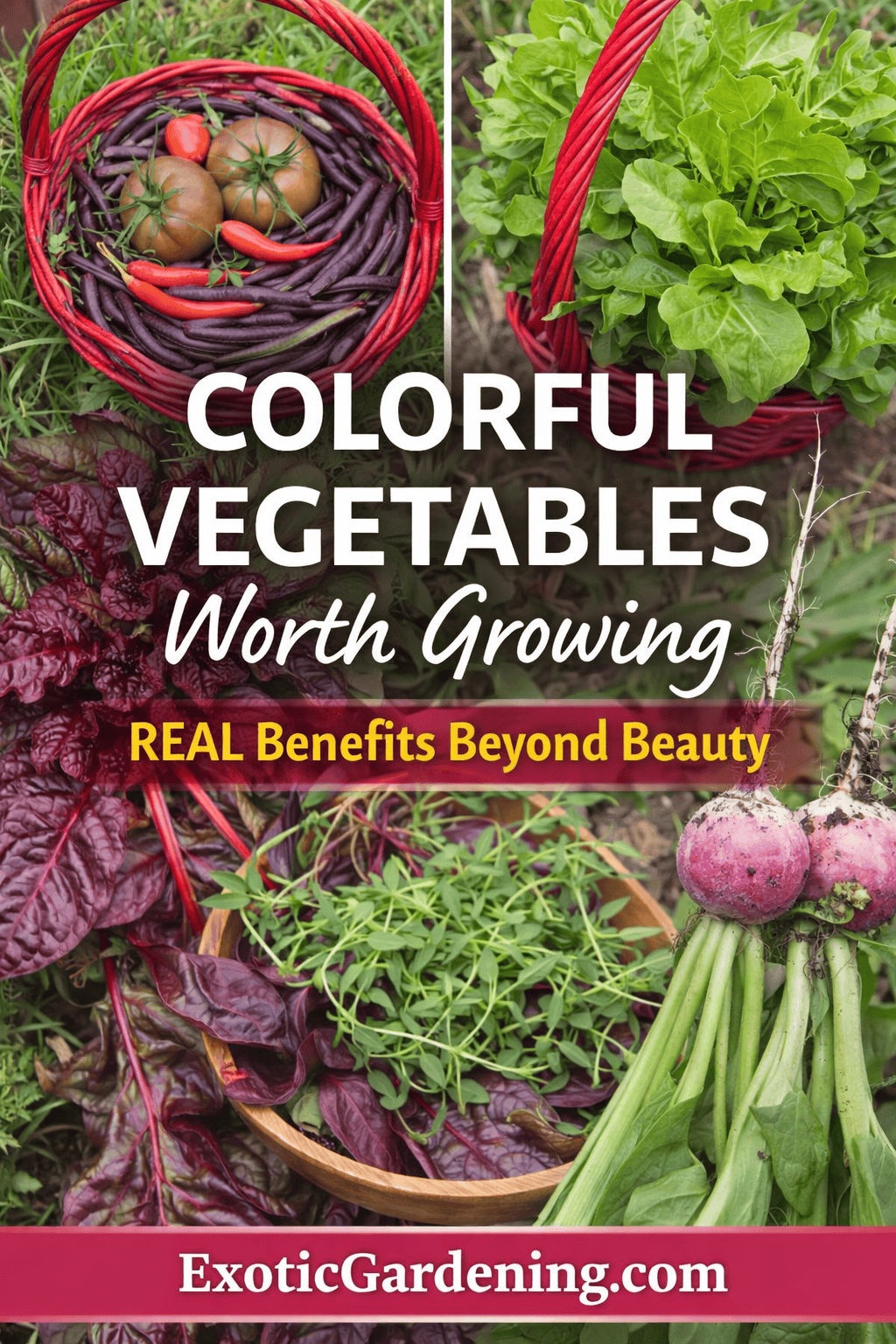
Why Color Matters in the Vegetable Garden
Color in the garden is not accidental.
Those deep purples, fiery oranges, ruby reds, and electric pinks are not there for decoration alone. They are the visible expression of what’s happening inside the plant at a cellular level.
Plant pigments are survival mechanisms.
When you see a purple cabbage or a blue potato, you’re seeing chemistry at work - the plant responding to light, temperature, stress, and its environment. The very compounds that give vegetables their dramatic color are often the same compounds that help them endure harsh sun, fluctuating temperatures, and pest pressure.
And that matters - especially if you garden in a climate that isn’t perfectly predictable.
Phytonutrients & Plant Chemistry
Let’s break down what those colors actually mean.
Anthocyanins (purple and blue tones)
These pigments create the deep purples in cabbage, cauliflower, beans, carrots, and potatoes. Anthocyanins act like a natural sunscreen for plants, protecting tissues from UV radiation. They’re often more intense when nights are cool and sunlight is strong - which is why fall-grown purple vegetables can look especially vibrant.
For gardeners, this can signal resilience. Plants high in anthocyanins often tolerate stress better, particularly light and temperature swings.
Beta carotene (orange hues)
Found in carrots, squash, sweet potatoes, and orange cauliflower, beta carotene helps plants absorb light for photosynthesis. It also protects cells from oxidative damage caused by environmental stress.
When you grow orange vegetables, you’re not just growing color - you’re growing plants that efficiently manage energy and light.
Lycopene (deep red tones)
Lycopene gives tomatoes and red peppers their rich, saturated color. It builds as fruits ripen in strong sunlight and warm temperatures. High-lycopene varieties often require consistent warmth to develop their deepest color and fullest flavor.
Betalains (beets and chard)
Betalains create the jewel tones in beets and rainbow chard stems - magenta, gold, crimson. These pigments help plants respond to environmental stress and are especially noticeable in cool-season crops.
Chlorophyll (green, of course)
Green may seem ordinary, but it’s foundational. Chlorophyll is what allows plants to convert sunlight into energy. Interestingly, some deeply pigmented vegetables actually mask chlorophyll beneath layers of purple or red.
Xanthophylls (yellow tones)
These pigments create yellows in squash, peppers, and corn. They also protect plant tissues from excessive sunlight.
Pigment Is Protection
Color is not vanity for a plant. It is defense.
Pigments help:
• Shield leaves from UV damage
• Buffer against temperature swings
• Reduce oxidative stress
• Deter certain pests
• Support cellular repair
As gardeners, when we grow vegetables rich in pigment diversity, we’re essentially building a system that spreads risk. If one variety struggles in heat, another may thrive. If intense sun bleaches tender greens, a purple-leafed strain may handle it better.
This is especially important in today’s increasingly unpredictable growing seasons.
Nutritional Crossover
What protects the plant often benefits us.
Many of the same compounds that guard vegetables against stress also act as antioxidants in the human body. While I don’t grow vegetables purely for nutrition statistics, it’s reassuring to know that diversity on the plate often mirrors diversity in beneficial plant compounds.
And let’s be honest - when a salad contains deep purple leaves, golden beets, red tomatoes, and emerald herbs, you’re naturally eating a wider spectrum of plant chemistry.
Color encourages variety.
Variety strengthens both gardens and bodies.
Biodiversity Is Insurance
Beyond the chemistry, color often signals genetic diversity.
When you grow:
• Purple and green beans
• Red and golden beets
• Yellow and red tomatoes
• Orange and purple carrots
You are planting different genetic expressions of the same species. That diversity matters. It reduces vulnerability. It increases adaptability. It preserves heirloom lines and prevents monoculture thinking.
If one variety falters due to weather or disease pressure, another may carry the season.
That’s not novelty gardening.
That’s strategic gardening.
The Smart Gardener’s Perspective
Colorful vegetables are sometimes dismissed as “specialty” or “Instagram” crops.
But in reality, choosing pigment diversity is a thoughtful, systems-based decision.
You’re building:
• Visual beauty
• Nutritional variety
• Climate resilience
• Genetic diversity
• Market appeal
• Pollinator interest
Color isn’t indulgent.
It’s intelligent.
When you look at your beds this year, don’t just think in terms of yield.
Think in terms of spectrum.
Because the more color your garden holds, the more layered and resilient it becomes.
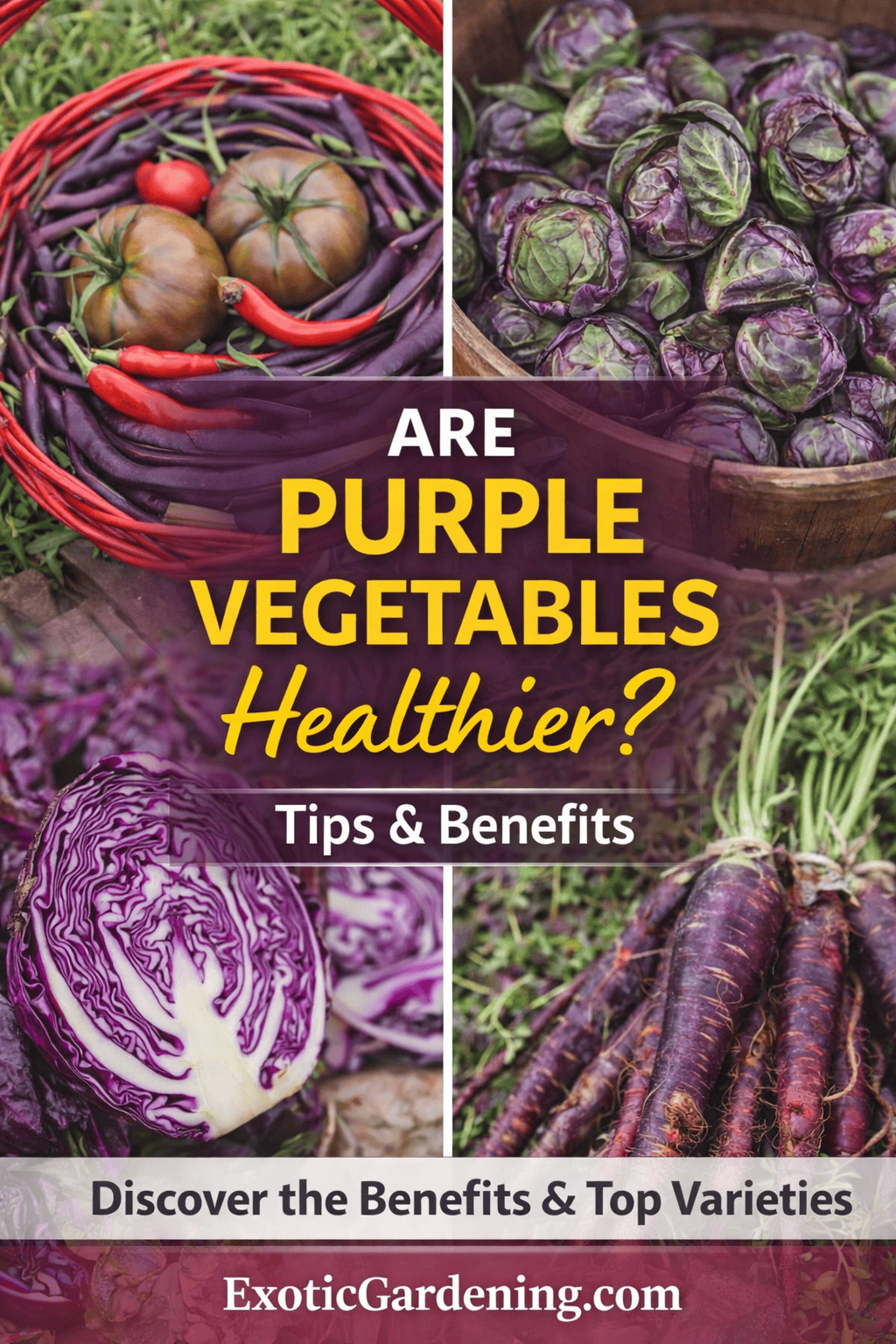
Purple Vegetables: Drama with Benefits
There’s something undeniably elegant about purple in the garden. It brings contrast, richness, and a kind of “designer” look that makes even a humble raised bed feel intentional. Purple vegetables also tend to be high in anthocyanins - those pigments that act like natural sunscreen for plants. In practical terms, that often means the color becomes more intense when plants experience bright light, cooler nights, or mild stress.
So yes, purple is pretty… but it’s also a signal that the plant is doing something interesting under the surface.
Purple Cauliflower
Purple cauliflower grows much like its white counterpart, but it has a personality all its own. In cool weather, the color can deepen into a rich violet - especially when the plants get strong sunlight. If you’ve ever grown purple cauliflower and wondered why one head is pale lavender and another is practically royal purple, that’s often your weather and light conditions showing off.
A quick growing note: purple cauliflower can be a little more sensitive to heat than white varieties. If your springs turn hot fast (hello, Indiana-style mood swings), transplant early, keep the soil evenly moist, and don’t let the plants stall out from drought stress. Stressed cauliflower can “button” into tiny heads, and nobody wants that.
In the kitchen, purple cauliflower is a showstopper. Roasting turns it into a smoky violet and brings out a mellow sweetness that makes simple meals feel fancy.
Garden design tip: Purple cauliflower looks stunning paired with silver foliage - think dusty miller, artemisia, or even silvery sage in an edible border.
Purple Green Beans
Purple beans are one of my favorite “gateway” vegetables for skeptical eaters, especially kids. They’re productive, they climb or bush depending on variety, and they look like something out of a storybook garden.
Here’s the fun part: the purple color disappears when cooked. That’s because anthocyanins are water-soluble and sensitive to heat and pH. When you blanch or boil purple beans, the pigments break down, and the beans turn green. It’s not a failure - it’s science in action.
If you want to keep some of the deeper color, try quick sautéing, roasting, or even pickling (acid changes pigment behavior in interesting ways). But honestly? Even if they turn green on the plate, they still did their job - getting someone excited to eat beans.
Another interesting fact about purple green beans is they seem less bothered by pests than the traditional green colored ones.
Market appeal note: A basket of purple beans at a farm stand stops people. They are one of those “what IS that?” items that sparks conversation, and conversation sells.
Black and Purple Tomatoes
Tomatoes are where purple gets truly dramatic. Varieties like Cherokee Purple and Black Krim aren’t just attractive - they’re complex, with that rich, almost smoky-sweet flavor that makes you pause mid-bite like, “Okay… I get it now.”
Then you have the “indigo” types - tomatoes with purple shoulders or deep blue blush. These often show their best color in full sun and cooler nights, where anthocyanin production ramps up. If you’ve ever noticed that the side facing the sun gets darker, that’s not your imagination. That’s the plant responding to light exposure.
A quick reality check: indigo tomatoes aren’t always as “dark and rich” inside as they look on the outside. Some are bred heavily for appearance, while others manage both looks and flavor. That’s why it’s nice to grow a few types and decide what’s worth your garden space next year.
Design tip: Purple tomatoes look incredible against bright green foliage - and even better if you edge beds with chartreuse herbs like lime basil, golden oregano, or a pale green lettuce mix.
Purple Carrots (Yes, They Belong Here!)
Purple carrots are one of those vegetables that make you feel like you’re growing history. Carrots originally came in colors beyond orange, and purple varieties are a beautiful nod to that older genetic diversity.
Many purple carrots have orange centers, and some are purple all the way through. That matters in the kitchen: purple carrots can bleed color when cooked, which is gorgeous if you want everything tinted violet… and mildly annoying if you don’t. Roasting tends to keep the color more stable than boiling.
In the garden, they’re grown just like standard carrots - deep, loose soil, consistent moisture, and thinning (even when you don’t want to thin). The payoff is worth it.
Bonus: Purple carrots are fabulous for kids’ gardens because they make “normal” carrot harvest feel like a treasure hunt.
Beets (The Jewel Tones of the Root World)
Beets don’t just bring purple - they bring that deep ruby, wine, and velvet range that makes a harvest basket look lush and abundant. While most people think “red beet,” there are also varieties that lean more purple-red, and their leaves can be equally dramatic.
Beets are also one of those vegetables where the tops deserve more attention. Beet greens are productive, nutrient-dense, and beautiful - especially when the stems show red or pink tones. If you’re growing for both beauty and practicality, beets pull double duty.
Growing tip: beets are happiest in cooler weather. They can handle a light frost and still keep growing, which makes them ideal for early spring and fall - exactly when purple tones and pigments tend to intensify.
Purple Corn (A True Showpiece)
Purple corn is not the “quickest” vegetable to grow, but if you want a garden that looks like art, it’s hard to beat. Some purple corn varieties are grown for drying (for flour or decoration), and some can be eaten fresh depending on the type. Either way, the plants themselves add height and drama.
Corn is wind-pollinated, so if you’re growing multiple types and want to keep colors true, spacing and timing matter. If you’re not saving seed, you can relax a bit and just enjoy the show.
Even a small block of purple corn creates that “wow” moment when people walk by. It’s one of those plants that turns a vegetable garden into a landscape feature.
Design tip: Purple corn looks especially striking planted behind lighter greens - think pale squash leaves, silvery sage, or even a row of bright lettuce. Or try growing purple pole beans up the corn stalks to add a little extra color.
Purple Potatoes (Quietly Impressive Underground)
Purple potatoes might be one of the most satisfying colorful vegetables you can grow because all the drama happens underground. You plant an unassuming seed potato, hill the soil as usual, and months later you dig into the earth and uncover deep violet skins and jewel-toned flesh.
Unlike some novelty vegetables, purple potatoes are not difficult. They grow just like standard varieties - same spacing, same hilling, same watering schedule. If you can grow potatoes, you can grow purple ones.
What makes them special is their flesh color. Some varieties are lavender throughout. Others are nearly indigo inside. When roasted, they often retain much of that color, especially compared to purple beans that lose theirs with heat.
Flavor-wise, many purple potatoes are slightly nutty and earthy, with a creamy texture that holds up beautifully to roasting. They also make striking mashed potatoes when blended with a bit of butter or olive oil - the kind of side dish that makes people pause before they take a bite.
From a garden-design standpoint, potato foliage itself isn’t purple (in most varieties), but the harvest reveal adds to the sense of wonder. If you’re gardening with children - or honestly just gardening for joy - digging purple potatoes feels like uncovering treasure.
Growing tip: Purple potatoes benefit from consistent moisture and good airflow just like any other potato. Avoid heavy, waterlogged soil, and hill them well to prevent green shoulders from sun exposure.
And because many purple varieties contain higher levels of anthocyanins, they’re another example of pigment serving purpose. Those same compounds that give them their deep hue help protect plant tissues from stress.
They aren’t just pretty.
They’re resilient.
A Quick Note on Purple Potatoes vs. Purple Sweet Potatoes
Purple potatoes and purple sweet potatoes are entirely different crops.
Purple Potatoes
These are true potatoes (Solanum tuberosum), grown from seed potatoes and hilled during the growing season. They prefer cooler weather and are planted in early spring. The flesh can range from lavender to deep indigo and often retains its color when roasted. Texture tends to be creamy or slightly waxy, depending on variety.
Purple Sweet Potatoes
Sweet potatoes (Ipomoea batatas) are actually a warm-season vine crop and are grown from slips, not seed potatoes. They require a long, warm growing season and loose, well-drained soil. Purple sweet potatoes are often denser and drier than orange types, with a subtly nutty flavor. Some varieties lean more toward magenta, others toward deep violet.
In the garden, they behave very differently:
-
Potatoes grow upright and are harvested mid-season.
-
Sweet potatoes sprawl and are harvested in late summer or early fall.
-
Potatoes prefer cooler soil.
-
Sweet potatoes demand heat.
Both are beautiful. Both bring anthocyanin-rich color. But they fill very different roles in the garden calendar.
Why Purple Works So Well in the Garden
Purple vegetables are visually grounding. They create depth the same way dark mulch or a shadowed border does. They also photograph beautifully - which matters more than people like to admit when they’re trying to share gardening content online or promote a farm stand.
And when you plant purples alongside lime greens, pale yellows, or silver foliage, the whole bed looks more intentional - like you planned it, not like you just shoved seedlings wherever they fit.
Purple isn’t novelty.
Purple is a power move.
Orange & Golden Vegetables: Warm and Welcoming
If purple brings drama, orange and gold bring warmth.
These are the vegetables that make a garden feel inviting - glowing at sunset, catching morning light, softening deep shadows created by darker foliage. Orange often signals beta carotene, but beyond plant chemistry, it adds emotional warmth to a planting scheme.
It’s the color family that makes a garden feel alive.
Carrots (Yes, and Not Just the Standard Kind)
Carrots are the obvious place to start, but even here, there’s more diversity than most people realize.
True orange carrots are rich in beta carotene, but you’ll also find:
-
Deep orange storage carrots
-
Pale gold varieties
-
Almost neon tangerine types
-
Bi-colored orange-and-yellow strains
Carrots are easy to tuck between slower-growing crops, and their feathery foliage adds softness to the bed. Harvesting them feels like pulling sunshine out of the soil.
And unlike some colorful vegetables, orange carrots hold their color beautifully when cooked - roasted, steamed, or turned into soups.
Growing tip: Loose, stone-free soil makes all the difference. If your soil is heavy, consider raised beds or deep amendments before sowing. Also, double digging your carrot beds by hand before planting, planting the seeds on the surface of the soil the pressing them into the soil and keeping the seeds moist to help them germinate is the secret to success.
Golden Beets
If you’ve avoided beets because of staining or that strong earthy note, golden varieties are worth reconsidering.
They’re milder, less likely to turn your cutting board crimson, and just as productive. Their greens are often vibrant and tender, making them a dual-purpose crop.
Thinly sliced golden beets layered over dark greens create instant contrast. They’re also excellent roasted alongside purple carrots or blue potatoes for a multi-toned root medley.
Cool-season crop bonus: Like purple varieties, golden beets thrive in spring and fall and tolerate light frost.
Orange Cauliflower
Orange cauliflower isn’t dyed - it’s naturally high in beta carotene. The color can intensify as the head matures, especially in strong sunlight.
Flavor-wise, many gardeners find orange cauliflower slightly sweeter and milder than white types. It also holds its color well when roasted, making it ideal for sheet pan dinners or vibrant vegetable trays.
If you garden with children or picky eaters, this is one of the easiest “color upgrades” to introduce.
Growing note: As with purple cauliflower, consistent moisture and timely harvest matter. Heat stress can cause small or loose heads.
Yellow & Golden Tomatoes
Yellow tomatoes often surprise people. They’re typically lower in acidity and gentler on the stomach than red varieties.
That makes them especially appealing for:
-
Fresh eating
-
Slicing
-
Salsa with less bite
-
Garden salads where you want brightness without sharpness
Golden varieties also look stunning in mixed harvest bowls - especially alongside red, purple, and striped types.
If you’re selling at a market or sharing online, yellow tomatoes photograph beautifully. They reflect light differently than red ones, giving images warmth.
Orange Peppers
Sweet orange peppers are some of the most productive and reliable vegetables you can grow in summer heat.
They move through stages - green to yellow to orange to red - which makes them visually interesting even before harvest.
Orange peppers tend to be:
-
Sweet
-
Crisp
-
High-yielding
-
Excellent for fresh eating
Their upright habit makes them perfect for raised beds or large containers.
Winter Squash & Pumpkins
It would be impossible to talk about orange vegetables without acknowledging squash.
From butternut to kabocha to classic pumpkins, orange squash brings both productivity and storage power to the garden.
Their sprawling vines add scale and ground cover, while their fruits provide late-season color long after many crops have faded.
Squash also connects visually to autumn landscapes - golden leaves, low light, harvest time. They make the garden feel seasonal and abundant.
Golden Corn
While we talked about purple corn earlier, golden corn deserves its moment.
Sunlit tassels, tall stalks, and golden ears create movement and height. Corn adds vertical structure to vegetable gardens, breaking up low-growing crops and adding rhythm.
In small gardens, even a modest block of corn can transform the space visually.
And unlike novelty crops, sweet corn brings serious harvest weight.
Why Orange & Gold Matter
Warm tones do more than brighten the plate.
They:
-
Reflect strong sunlight beautifully
-
Balance darker vegetables
-
Create harmony in mixed beds
-
Signal beta carotene-rich plant tissue
-
Add psychological warmth to the landscape and dinner plate
When planted beside purples and deep greens, orange vegetables prevent the garden from feeling heavy or overly cool.
Design tip:
Pair orange carrots with purple cabbage.
Plant golden beets beside dark kale.
Let orange peppers glow against blue-green sage.
The effect is intentional, layered, and striking.
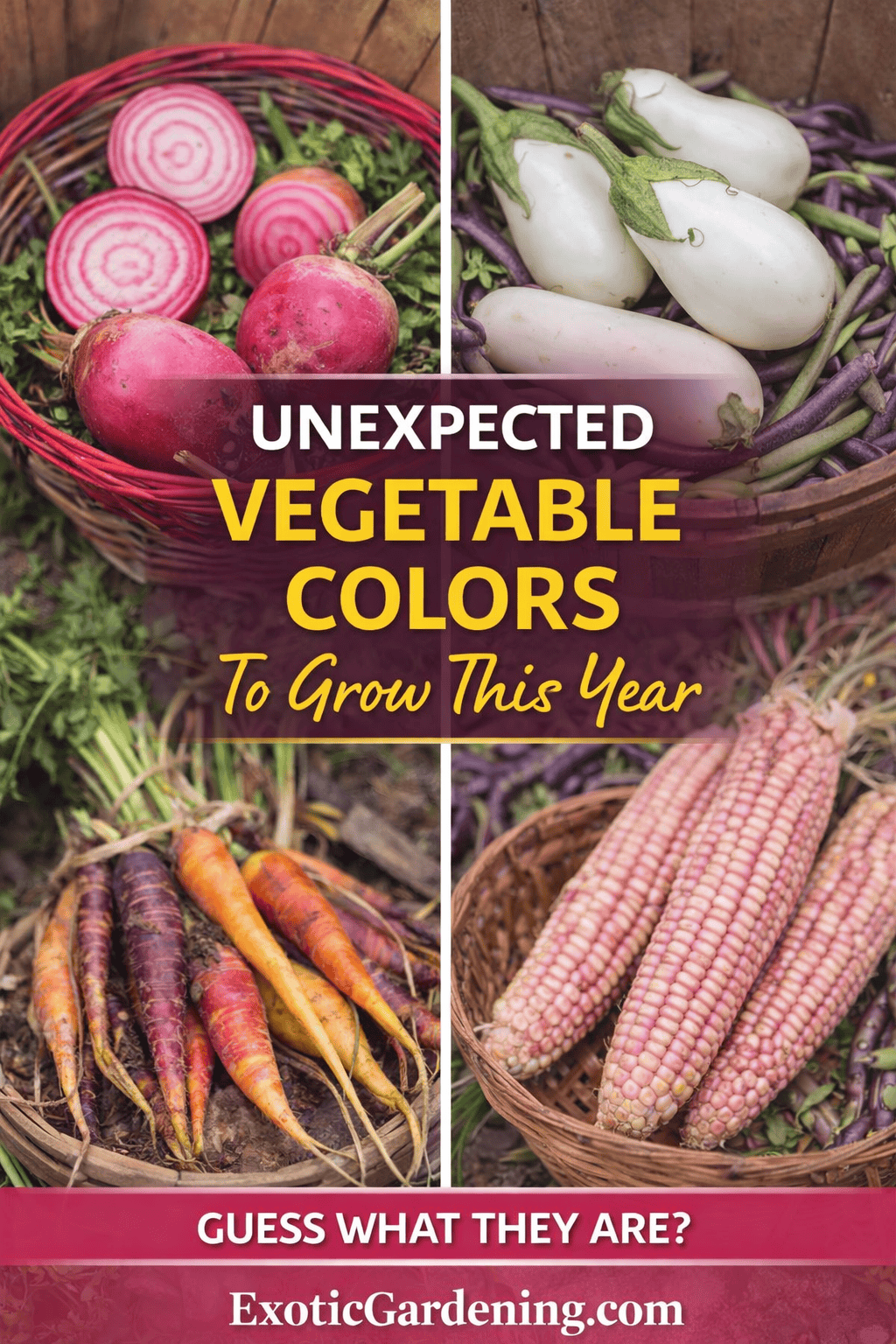
Striped, Speckled & Marbled Varieties: Living Artwork
Movement in the garden doesn’t just come from wind.
Striped vegetables create motion visually. They draw the eye across a bed the way brushstrokes move across a painting. When you plant marbled or speckled varieties, you’re adding rhythm and texture - not just yield.
These are the vegetables that make people lean in closer.
Striped Tomatoes
Few things create visual excitement like a basket of striped tomatoes.
Varieties such as:
-
Green Zebra
-
Pineapple
-
Mr. Stripey
-
Chocolate Stripes
-
Striped German
These varieties offer layers of green, gold, red, and even smoky purple tones. Sliced open, they look almost too beautiful to eat.
In raised beds, striped tomatoes break up the monotony of solid red fruits. On a market table, they practically sell themselves. Customers will ask what they are, how they taste, and how to cook them - and that conversation creates connection.
Design note: Plant striped tomatoes alongside solid purple or golden varieties to amplify contrast.
Variegated Peppers
Peppers are some of the most playful vegetables you can grow.
Certain varieties feature:
-
Cream-and-green streaked foliage
-
Purple-tinged leaves
-
Multi-colored fruits that mature from lavender to cream to orange to red
These plants blur the line between ornamental and edible. Many compact varieties are perfect for decorative containers on patios or entryways - especially if you like the idea of edible landscaping.
Even if you never sell a single pepper, the foliage alone can elevate a space.
Growing tip: Most variegated peppers need full sun to maintain strong color contrast. In lower light, the variegation may fade.
Striped & Ornamental Corn
There are ornamental striped corns - including multicolored dent and flint types - grown specifically for visual impact. Some have streaked husks, marbled kernels, or speckled ears that look hand-painted.
Then there’s Glass Gem corn, which has become widely admired for its jewel-toned, translucent kernels. It’s typically grown for drying and decorative use, though it can be ground into cornmeal.
Glass Gem corn has Indigenous origins, and its preservation is connected to Native seed-keeping traditions. If you choose to grow it, it’s important to approach it with respect and awareness of its history.
In the garden, ornamental corn adds height, structure, and vertical drama. It’s especially striking planted behind lower crops like lettuce or beets.
Even when dried, the ears can be displayed indoors, extending the beauty of the garden into winter.
Speckled Lettuce & Leafy Greens
We shouldn’t forget speckled greens.
Varieties of lettuce, especially romaine and butterhead types, often feature:
-
Red freckles on green leaves
-
Burgundy splashes
-
Deep wine-colored margins
These create subtle movement at ground level. A mixed bed of speckled lettuce feels layered and dynamic rather than flat.
They’re also quick crops - which means you can use them to fill visual gaps while slower plants mature.
Striped Squash & Zucchini
Striped zucchini and delicata squash deserve mention here too.
Delicata squash, in particular, has cream-and-green striping that looks almost graphic. Striped zucchini varieties add visual interest long before harvest, especially when fruits are allowed to grow slightly larger.
These trailing plants create motion horizontally, complementing the vertical movement of corn.
Marbled Roots & Radishes
Some radishes, turnips, and carrots also fall into this category.
-
Watermelon radish (white outside, brilliant pink inside)
-
French breakfast radishes with red-and-white tips
-
Bi-colored carrots
They may look ordinary at first glance - until sliced open. That “hidden color” adds surprise, which is another form of visual movement.
Why Pattern Matters in the Garden
Solid blocks of color are powerful.
But pattern adds life.
Striping and speckling:
-
Break up monotony
-
Create visual rhythm
-
Add texture without extra plants
-
Increase perceived abundance
If you photograph your garden (for social media, markets, or personal enjoyment), patterned vegetables add depth to images.
And if you sell produce, they become conversation starters - and conversation builds loyalty.
There’s something about a striped tomato or a speckled ear of corn that makes people pause. Pattern feels playful. It feels different. And sometimes, that’s exactly what’s needed.
If you have a picky eater in your home, growing striped, speckled, or marbled vegetables can be a surprisingly effective bridge. A child who won’t touch a regular tomato may be curious about one that looks like it was painted. A hesitant eater might slice open a watermelon radish just to see the color inside.
Curiosity often comes before appetite.
When vegetables feel like discoveries instead of obligations, they become less threatening and more inviting.
Sometimes it isn’t about changing taste.
It’s about changing perception.
Chartreuse & Lime Greens: The Unsung Heroes
Bright greens don’t shout.
They glow.
Chartreuse and lime-toned vegetables are some of the most underrated design tools in the edible garden. While purple brings drama and orange brings warmth, chartreuse brings light. It lifts heavy beds. It softens dark foliage. It reflects sunlight in a way that makes an entire planting feel fresher and more expansive.
These greens are not just filler.
They’re contrast.
They’re balance.
They’re the quiet designers of the garden.
Rainbow Swiss Chard (Especially Lime-Forward Mixes)
Few vegetables blur the line between ornamental and edible quite like Swiss chard.
In rainbow mixes, you’ll find stems in neon pink, gold, scarlet, and orange - but the lime-toned varieties are what really make darker vegetables shine. Those luminous stems seem to catch and hold the light.
Chard is also incredibly practical:
-
It’s cut-and-come-again.
-
It tolerates heat better than many lettuces.
-
It provides weeks - sometimes months - of harvest.
In mixed beds, it adds vertical movement without taking over. And because the leaves are glossy, they reflect light in a way matte foliage does not.
Design tip: Plant lime-toned chard next to purple cabbage or dark kale. The contrast feels intentional and almost architectural.
Pale & Light Green Cucumbers
We don’t talk enough about pale cucumbers.
Some varieties lean toward creamy green or even almost white. These lighter fruits stand out beautifully against deep green vines and dark soil.
Flavor-wise, many pale cucumbers are milder and less bitter than darker types. They can also be slightly more heat-tolerant depending on the variety.
In the garden, they create surprise. From a distance, you might not even see them - until sunlight hits and they glow softly among the leaves.
They’re subtle - but powerful in a mixed harvest basket.
Lime Basil & Bright Herbs
Lime-toned basil varieties are more than decorative. They bring fragrance, pollinator activity, and culinary brightness to the garden.
Compared to darker purple basils, lime basils feel airy. Their leaves catch light differently, and when planted beside deep eggplant foliage or burgundy lettuce, the contrast is striking.
Herbs are especially useful in this color family because they tuck easily into edges and containers. A single lime basil plant near darker vegetables can transform the entire feel of a bed.
Bonus: Chartreuse herbs tend to photograph beautifully, which matters if you’re sharing garden images or promoting produce.
Light-Toned Lettuce & Greens
Many butterhead and romaine varieties lean toward bright, almost translucent green. When morning sun hits them, they practically glow.
These lighter lettuces:
-
Reflect heat better than darker varieties.
-
Pair beautifully with red or speckled types.
-
Soften strong color combinations.
In small spaces, alternating lime and burgundy lettuce creates movement without adding more crops.
Why Chartreuse Matters in Garden Design
In ornamental landscaping, chartreuse is often used as a “bridge color.” It connects darker tones and prevents beds from feeling too heavy.
The same principle works in edible gardens.
Without light greens, beds filled with purple cabbage, dark tomatoes, and deep squash vines can feel visually dense. Chartreuse breaks that up. It gives the eye a place to rest.
It also increases perceived abundance. Lighter greens make the entire planting feel more layered and dimensional.
Think of chartreuse as the garden’s natural highlighter.
The Practical Advantage
Beyond design, lighter green vegetables often:
-
Mature quickly
-
Reflect strong sun
-
Tolerate early harvest
-
Provide continuous cuttings
They’re the vegetables that quietly keep feeding you while flashier crops develop.
Underrated? Absolutely.
Essential? Very likely.
Red & Pink Roots Beyond Radishes
Some vegetables save their most dramatic color for the harvest moment.
Above ground, they may look ordinary - leafy, green, unassuming. But below the soil surface, they’re quietly developing jewel tones that feel almost theatrical when pulled from the earth.
Red and pink roots bring vibrancy without overwhelming a planting scheme. They’re bold, but refined.
Watermelon Radish
Watermelon radishes are masters of surprise.
From the outside, they’re pale and understated. Slice one open, though, and you’re met with brilliant fuchsia flesh edged in white.
They thrive in cool weather, making them ideal for early spring or fall gardens. In hot weather, they can become pithy or overly spicy, so timing matters.
Thinly sliced, they transform salads into conversation pieces. Even reluctant vegetable eaters often try them simply because they look so unexpected.
They’re a reminder that not all beauty announces itself above ground.
Red Carrots
Red carrots deserve far more attention than they receive.
Unlike purple carrots, which lean toward anthocyanins, red carrots get their color from lycopene - the same pigment found in tomatoes. That gives them a slightly different visual warmth and sometimes a subtle flavor variation.
Some red carrot varieties are deeply saturated all the way through. Others have lighter cores. Either way, they stand out beautifully when harvested in bunches.
Growing-wise, they’re no more difficult than standard orange carrots:
-
Loose, well-drained soil
-
Consistent moisture
-
Careful thinning
Their color often intensifies as they mature, particularly in cool weather.
On the plate, red carrots hold their color well when roasted and create stunning contrast alongside golden beets or pale potatoes.
They’re bold without being loud.
Pink Celery
Pink celery is one of those vintage vegetables that feels both refined and unexpected.
Some older European varieties naturally blush pink along the ribs, especially when exposed to sunlight. Others deepen in tone as temperatures cool.
Pink celery tends to be slightly more delicate in flavor than thick commercial green types, and it brings elegance to harvest baskets.
In the garden, its soft rose tones bridge the gap between bright red crops and pale greens.
It’s subtle - but sophisticated.
Red Beets & Rose-Toned Turnips
While golden beets were covered earlier, red and pink beets deserve a moment here too.
Deep red beet roots feel lush and velvety when pulled from the soil. Their greens are often streaked with crimson veins, adding above-ground color as well.
Rose-tinted turnips and certain heirloom varieties also contribute to this palette, offering pale pink shoulders fading into creamy white bases.
These roots:
-
Thrive in cool seasons
-
Intensify in color as nights cool
-
Store well
They add richness to harvest displays without overwhelming lighter vegetables.
Why Red & Pink Matter
Red and pink vegetables bring warmth without the brightness of orange. They feel grounded, almost romantic, especially in fall light.
From a design standpoint:
-
They anchor mixed harvest baskets.
-
They contrast beautifully with chartreuse greens.
-
They soften bold purples.
And from a practical perspective, many red roots are cool-season crops, which means they extend color into spring and fall - times when summer crops are fading.
They may not shout.
But they linger.
Growing Tips for Maximum Color
If you’re going to grow colorful vegetables, you might as well grow them at their best.
Pigment expression isn’t random. It responds to light, soil conditions, temperature, and even how and when you harvest. When vegetables look dull or washed out, it’s often not the variety - it’s the environment.
Here’s how to help your crops develop their richest color.
Sunlight: The Color Catalyst
Most pigment-rich vegetables need strong light to reach their full potential.
Purple tomatoes deepen where the sun hits them. Indigo shoulders darken on the exposed side. Red carrots intensify in well-lit beds. Even rainbow chard seems to glow brighter in full sun.
Without enough light:
-
Purple varieties can look muted.
-
Tomatoes may stay pale.
-
Leaves may lack saturation.
That doesn’t mean everything must bake in intense afternoon heat - but aim for at least 6–8 hours of direct sun for most colorful crops.
In cooler climates, full sun often enhances color beautifully. In hotter climates, providing afternoon shade for sensitive crops (like cauliflower) can prevent stress-related issues while still allowing strong pigmentation.
Light drives color.
Soil Health: The Foundation of Vibrancy
Colorful vegetables are not separate from soil health - they’re reflections of it.
Balanced fertility allows plants to develop:
-
Strong cell structure
-
Efficient photosynthesis
-
Robust pigment production
If soil is depleted or compacted, plants often look washed out or pale.
Before assuming a variety “just isn’t vibrant,” consider:
-
Is soil drainage adequate?
-
Are micronutrients balanced?
Sometimes a simple soil test reveals deficiencies that affect overall plant vigor - and vigor often correlates with color intensity.
Healthy soil doesn’t just increase yield.
It increases richness.
Stress & Color: The Subtle Balance
This is where things get interesting.
Slight environmental stress can intensify pigmentation - especially in purple varieties.
Cool nights paired with sunny days often deepen anthocyanin production. That’s why fall-grown purple cabbage or carrots can look more saturated than their midsummer counterparts.
But there’s a difference between mild stress and plant damage.
-
Consistent drought can stunt growth.
-
Excessive heat can cause bolting.
-
Nutrient deficiencies can fade color entirely.
Think of it this way:
Gentle challenge strengthens pigment expression.
Severe stress weakens the plant.
Understanding that balance is part of becoming a more observant gardener.
Harvest Timing: Color Peaks Matter
Color isn’t static.
Some vegetables intensify as they mature - but wait too long, and vibrancy can decline.
Examples:
-
Purple beans lose color when overmature.
-
Lettuce can become dull and tough past peak.
-
Tomatoes may crack or soften, dulling visual appeal.
Harvesting at peak maturity ensures:
-
Best flavor
-
Strongest visual impact
-
Highest nutritional value
It also keeps plants productive. Frequent harvesting of chard, lettuce, and beans encourages continued growth and sustained color throughout the season.
Watering Practices
Overwatering can dilute flavor and weaken plant structure. Underwatering can cause stress-related fading or stunting.
Consistent moisture is key, especially for root crops like carrots and beets. Irregular watering can lead to cracking, uneven development, and reduced visual appeal.
Mulching helps maintain even soil moisture and temperature - both of which influence pigmentation.
Variety Selection Matters
Not all “purple” varieties are equally purple.
Some are bred primarily for appearance. Others balance flavor and pigment.
If maximum color is your goal:
-
Read variety descriptions carefully.
-
Choose open-pollinated or heirloom strains known for strong pigmentation.
-
Observe which perform best in your specific climate.
Keep notes.
Over time, you’ll discover which varieties consistently produce vibrant results in your soil and light conditions.
The Bigger Picture
When vegetables lack vibrancy, it’s rarely cosmetic.
Dull color often signals:
-
Nutrient imbalance
-
Inadequate sunlight
-
Overcrowding
-
Poor soil structure
Vibrant color, on the other hand, usually reflects:
-
Balanced soil
-
Strong plant health
-
Appropriate spacing
-
Observant gardening
In other words, maximum color is often a byproduct of good stewardship.
When you focus on soil health, proper light, and thoughtful timing, the color follows.
And when the color follows, so does beauty.
Design Your Vegetable Garden Like a Painter
Vegetables are not just food.
They are color.
They are form.
They are movement.
If you begin thinking of your vegetable garden the way a painter approaches a canvas, everything changes. Instead of asking, “Where can I squeeze this plant in?” you begin asking, “What does this space need?”
More light?
More contrast?
More height?
More texture?
That shift alone transforms a practical garden into something extraordinary.
Repetition Creates Rhythm
In painting, repetition brings cohesion. The same principle works in the garden.
If you plant a single purple cabbage in one corner and never echo that tone elsewhere, it feels accidental. But repeat that deep plum color in a row of purple beans or a few dark-leafed lettuces, and suddenly the design feels intentional.
Repetition doesn’t mean monotony. It means harmony.
A band of golden beets repeated every few feet.
A sweep of lime basil edging darker crops.
Clusters of striped tomatoes spaced deliberately instead of randomly.
The eye begins to move naturally across the space.
And that movement creates beauty.
Contrast Brings Drama
Contrast is where the magic happens.
Purple next to lime.
Deep red against chartreuse.
Golden squash beneath dark kale.
When you plant complementary colors beside each other, each one intensifies. A purple cauliflower looks darker beside pale chard. Lime lettuce glows brighter against burgundy foliage.
This isn’t accidental - it’s design.
I have always been about pushing limits, about refusing to accept that vegetable beds must be plain green and strictly utilitarian. Contrast is how you elevate a garden from productive to unforgettable.
Texture Adds Depth
Color alone isn’t enough.
Texture creates dimension.
Think about:
-
The feathery softness of carrot tops
-
The broad, waxy leaves of cabbage
-
The upright spires of chard
-
The trailing vines of squash
When you mix textures, beds feel layered instead of flat.
Pair delicate foliage with bold leaves. Combine upright growers with sprawling vines. Let lettuce spill between structured crops.
Suddenly, your garden has movement - even when the air is still.
Height Layering Builds Structure
Painters think in foreground, midground, and background. Gardeners can do the same.
Low-growing crops like lettuce and radishes form the foreground.
Mid-height plants like chard and peppers create the mid-layer.
Tall corn, trellised beans, or tomatoes provide vertical backdrop.
Height layering adds drama and allows more plants to coexist beautifully in the same space. It also makes small gardens feel fuller and more immersive.
Even a modest raised bed can look lush and abundant when layered thoughtfully.
Vegetables as Landscape Elements
For too long, vegetables have been confined to neat, separated rows - tucked away from the “real” landscape.
But why?
Purple cabbage can anchor a border as effectively as ornamental kale. Rainbow chard rivals any annual flower for stem color. Striped tomatoes offer as much visual intrigue as decorative foliage plants.
There is no rule that says edible and ornamental must live apart.
In fact, combining them creates a garden that feels more alive, more abundant, and more personal.
A vegetable garden can be:
Functional.
Beautiful.
Intentional.
All at once.
Pushing the Limits
This is where the imagination truly comes in.
Growing unusual colors. Mixing edible crops into decorative beds. Treating raised beds like curated compositions rather than storage space for produce.
When you design like a painter, you’re not just feeding your household.
You’re creating atmosphere.
You’re shaping experience.
You’re proving that productivity and aesthetics can coexist beautifully.
And once you see vegetables as living design elements, you’ll never plant a bed the same way again.
Why Colorful Vegetables Improve Biodiversity
Color in the vegetable garden isn’t just about beauty or nutrition.
It’s about preservation.
When you grow colorful vegetables - especially heirloom and open-pollinated varieties - you are participating in something larger than a single growing season. You’re protecting genetic diversity.
And genetic diversity is insurance.
Genetic Diversity Strengthens the Garden
Modern agriculture often narrows plant genetics down to a handful of uniform, commercially viable traits: consistent size, predictable ripening, transport durability.
But gardens thrive on variation.
When you grow:
-
Red, purple, and golden beets
-
Orange, red, and striped tomatoes
-
Green and purple beans
-
Multiple carrot colors
You are increasing the genetic range in your growing space.
That range matters because different traits respond differently to:
-
Heat
-
Cold
-
Drought
-
Soil conditions
-
Pest pressure
If one variety struggles, another may excel. Biodiversity spreads risk and stabilizes yield.
A garden filled with one color of one vegetable is vulnerable.
A garden filled with many expressions of the same species is resilient.
Heirloom Preservation
Many of the most colorful vegetables are heirloom or open-pollinated varieties. They were preserved not because they shipped well across the country - but because someone loved them enough to save their seed.
Deep purple carrots. Pink celery. Striped tomatoes. Multicolored corn.
These varieties carry history.
When you choose them over uniform hybrids, you help ensure they remain in circulation. Each season you grow them, you reinforce their survival.
Color becomes continuity.
Pollinator Attraction
Colorful vegetables also influence pollinator behavior.
While many vegetables are harvested before flowering, those allowed to bloom - especially herbs, brassicas, and root crops - provide nectar and pollen.
Flowers on purple cabbage, carrot umbels, basil blooms, and chard stalks attract:
-
Bees
-
Hoverflies
-
Beneficial wasps
-
Butterflies
A diverse garden with varied plant types and bloom times supports a broader range of beneficial insects.
And beneficial insects mean fewer pest outbreaks and stronger overall plant health.
Biodiversity above ground supports biodiversity below ground as well - from soil microbes to earthworms.
The Power of Seed Saving
This is where colorful vegetables become especially powerful.
Saving seed from open-pollinated varieties:
-
Preserves unique traits
-
Encourages local adaptation
-
Strengthens resilience
-
Reduces dependence on purchased seed
Over time, seeds saved in your own garden begin to adapt to your soil, climate, and growing conditions.
If your purple carrots consistently deepen in color during cool falls, saving seed from the strongest specimens may reinforce that trait. If your striped tomatoes handle your humidity well, selecting from those plants improves next year’s crop.
You aren’t just harvesting vegetables.
You’re shaping future generations of plants.
That’s a level of stewardship many gardeners never fully explore.
Color as a Marker of Variation
When you plant multiple color strains of a vegetable, you’re not just adding visual appeal - you’re widening the gene pool in your space.
Different pigment expressions often correlate with different chemical pathways inside the plant. Those differences can affect:
-
Stress tolerance
-
Flavor
-
Growth habit
-
Maturity timing
By growing a spectrum rather than a single strain, you’re building flexibility into your garden.
Flexibility becomes stability.
Self-Sufficiency Through Diversity
Biodiversity also ties directly into self-sufficiency.
A garden that relies on one variety for one harvest window is fragile.
A garden with multiple colors, maturities, and adaptations can:
-
Extend harvest season
-
Improve storage reliability
-
Increase culinary variety
-
Provide seed for future planting
Saving seed from colorful, open-pollinated vegetables reinforces independence.
It turns gardening from consumption into continuity.
The Bigger Picture
Colorful vegetables aren’t trendy novelties.
They are living expressions of genetic diversity.
They protect history.
They strengthen ecosystems.
They invite pollinators.
They empower gardeners to become seed stewards.
And when you choose to grow and save seed from open-pollinated colorful varieties, you’re doing more than decorating your garden.
You’re participating in preservation.
That is where beauty and responsibility meet.
Market Appeal & Farm Stand Advantage
If you sell produce - whether at a roadside stand, a local market, or through a CSA - color is one of your most powerful tools.
Before customers taste anything, they see it.
And color sells.
A basket filled with deep purple carrots, golden beets, striped tomatoes, and lime-green basil looks abundant. It looks intentional. It looks different from what’s available in a grocery store.
That difference matters.
Conversation Creates Connection
Unusual varieties naturally spark curiosity.
“What kind of tomato is that?”
“Why are those beans purple?”
“Is that corn real?”
Every question opens the door to interaction.
And interaction builds trust.
When customers feel like they’ve discovered something special, they’re more likely to remember your stand, follow you online, or return the following week.
Color gives you a story to tell.
And storytelling builds loyalty.
Encouraging Sampling
Striped tomatoes and watermelon radishes are especially powerful for sampling.
Slice one open and the visual impact alone draws attention. Customers who might hesitate to buy something unfamiliar often change their minds once they see it and hear a short explanation.
Color lowers resistance.
Instead of “I don’t know if I’ll like that,” the reaction becomes, “That’s beautiful - I want to try it.”
Premium Pricing & Perceived Value
Perception influences price tolerance.
A standard basket of red tomatoes may feel ordinary. Add yellow, striped, and purple varieties, and the entire display shifts into “artisan” territory.
Multi-colored bunches of carrots feel curated. Mixed beet bundles look intentional. Rainbow chard appears decorative as well as edible.
That visual abundance allows you to:
-
Command slightly higher prices
-
Offer mixed bundles at a premium
-
Differentiate from commodity produce
You’re no longer competing on volume alone.
You’re competing on experience.
CSA Boxes & Harvest Presentation
If you operate a CSA, color variety enhances the unboxing experience.
Members opening a box filled with:
-
Golden squash
-
Burgundy lettuce
-
Lime basil
-
Red carrots
-
Striped tomatoes
Suddenly feel excitement.
That excitement translates into social sharing. A colorful CSA box is far more likely to be photographed and posted online than a uniform one.
Color becomes marketing without extra effort.
In the end, growing colorful vegetables isn’t only about personal enjoyment.
It’s also about opportunity.
Color creates conversation.
Conversation builds connection.
Connection builds loyalty.
And loyalty builds sustainable income.
Are They Harder to Grow?
This is one of the most common questions gardeners ask when they see unusual colors.
Are purple carrots finicky?
Are striped tomatoes temperamental?
Is ornamental corn harder than sweet corn?
The short answer?
Generally, no.
Most colorful vegetables grow exactly like their traditional counterparts. A purple bean is still a bean. A red carrot is still a carrot. An orange cauliflower still needs consistent moisture and cool temperatures to form properly.
If you can grow the standard version, you can grow the colorful one.
That said, there are a few nuances worth understanding.
Season Length & Maturity
Some specialty varieties - especially heirloom tomatoes and deeply pigmented root crops - may have slightly longer days-to-maturity.
That doesn’t make them difficult. It simply means:
-
Choose varieties suited to your growing zone.
If your growing season is short, select earlier-maturing strains of colorful varieties rather than assuming all are late producers.
Temperature Sensitivity
Certain purple crops intensify in cooler weather.
Purple cabbage, carrots, and cauliflower often develop richer color when nights are cool. In very hot climates, some purple varieties may appear less saturated or bolt earlier than green types.
This isn’t failure - it’s environmental response.
Likewise, purple sweet potatoes need warmth just like orange ones. They aren’t fragile; they simply require the same heat units as any sweet potato.
Know your climate. Match the crop accordingly.
Soil & Drainage
Root crops - regardless of color - require loose, well-drained soil to develop evenly.
Carrots will fork in compacted soil whether they’re orange, red, or purple. Beets will struggle in heavy clay no matter their hue.
Color does not change root physics.
Good soil preparation matters more than pigment.
Seed Quality & Source
Some newer “novelty” varieties are bred primarily for appearance and may sacrifice flavor or vigor.
To avoid disappointment:
-
Purchase seed from reputable sources.
-
Read variety descriptions carefully.
-
Look for open-pollinated or heirloom strains known for stability.
The issue isn’t color. It’s breeding priorities.
The Confidence Factor
Sometimes what makes colorful vegetables feel “harder” isn’t the plant - it’s unfamiliarity.
Gardeners are used to seeing green beans and red tomatoes. When something looks different, it feels risky.
But horticulturally, the growing requirements remain largely the same:
Sun.
Healthy soil.
Consistent moisture.
Appropriate spacing.
That’s it.
The Bottom Line
Colorful vegetables are not advanced-level gardening.
They are standard vegetables wearing different coats.
Some may require attention to season length or temperature preference. A few may mature slightly later. But none are beyond the reach of home gardeners willing to observe and adapt.
If you’ve successfully grown carrots, tomatoes, beans, squash, or corn before, you already have the skills.
Adding color doesn’t add difficulty.
It adds dimension.
And once you see that, there’s no reason to hold back.
Bringing It Indoors
Colorful vegetables don’t stop being powerful once they leave the garden.
In many ways, that’s where their influence becomes most meaningful.
A bowl of multi-colored tomatoes on the counter.
Roasted rainbow carrots on a simple sheet pan.
Golden beets tucked beside deep purple cabbage.
Suddenly, dinner feels less routine and more intentional.
Color elevates even the simplest meals. A plain salad becomes layered. A basic roasted vegetable tray becomes vibrant. A pot of soup gains warmth before anyone takes a bite.
When food looks beautiful, it feels special.
And that matters - especially in everyday cooking.
Inspiring Curious Eaters
Color can also soften resistance.
Children - and even adults - often approach new foods cautiously. But when vegetables look playful instead of plain, curiosity often replaces hesitation.
A striped tomato invites questions.
A watermelon radish begs to be sliced open.
Purple mashed potatoes feel like a surprise rather than an obligation.
Sometimes it isn’t about convincing someone that vegetables are healthy.
It’s about making them interesting.
Curiosity opens the door. Taste follows.
Making the Ordinary Feel Celebratory
One of the quiet joys of growing your own food is realizing that celebration doesn’t have to wait for a holiday.
A harvest bowl filled with mixed colors feels abundant - even if it’s just Tuesday.
Preserves made from golden tomatoes glow in jars on a pantry shelf. Pickled red carrots add brightness to winter meals. Multi-colored corn hung to dry becomes decoration long after the season ends.
Color carries the garden into the home.
It turns nourishment into experience.
Beauty + Self-Sufficiency
Growing colorful vegetables isn’t indulgent.
It’s intentional.
When you grow your own food, you already step outside the ordinary food system. Choosing vibrant, diverse varieties deepens that independence. You’re not just producing calories - you’re shaping your own aesthetic, your own flavor profiles, your own seasonal rhythm.
Self-sufficiency doesn’t have to be plain.
It can be beautiful.
And when your meals reflect the richness of your garden, the connection between soil and table becomes visible.
Not just in taste.
But in color.
Grow Food That Feeds Your Eyes and Body
The vegetable garden doesn’t have to be predictable.
It doesn’t have to be neat rows of identical green.
It can be vibrant.
Unexpected.
Playful.
Resilient.
For too long, practical gardening was separated from beautiful gardening - as if nourishment and aesthetics couldn’t coexist. But they can. In fact, they should.
Colorful vegetables are not frivolous indulgences.
They represent biodiversity.
They protect heirloom genetics.
They strengthen ecosystems.
They encourage curiosity.
They support nutrition.
They build resilience.
And yes - they bring joy.
This season, challenge yourself to grow at least one variety that surprises you.
Plant something deep purple that almost looks unreal.
Try a glowing orange tomato that catches the morning light.
Grow a striped tomato that looks like it was brushed with watercolor.
Let your garden hold a little wonder.
Because the garden is not just about calories.
It’s about curiosity.
It’s about beauty.
It’s about connection.
It’s about growing something that makes you pause and smile when you harvest it.
When your beds are filled with color, you begin to see vegetables differently. They are no longer just ingredients. They are living expressions of care, patience, and intention.
And when your garden feeds both your body and your eyes, it becomes more than productive.
It becomes art.
It becomes stewardship.
It becomes a reflection of how you choose to live.
Grow boldly.
Grow beautifully.
Grow something unexpected.
And let your food nourish more than hunger.
Frequently Asked Questions About Colorful Vegetables
Q. Are purple vegetables healthier?
A. Purple vegetables often contain anthocyanins, powerful antioxidant pigments that may support overall health.
Anthocyanins are the compounds responsible for deep purple and blue tones in vegetables like purple cabbage, carrots, potatoes, and cauliflower. These pigments help protect plants from environmental stress, and research suggests they may provide antioxidant benefits in the human body as well.
That said, no single color is automatically “healthier” than another. Orange vegetables are rich in beta carotene, red vegetables often contain lycopene, and green vegetables supply chlorophyll and other nutrients. The real benefit comes from eating a variety of colors, which ensures a broader spectrum of phytonutrients.
Q. Do colorful vegetables taste different?
A. Yes, some colorful vegetables have subtle flavor differences compared to standard varieties.
For example, yellow tomatoes are often lower in acidity and taste milder than red ones. Purple carrots may have a slightly earthier or spicier flavor profile. Golden beets tend to be sweeter and less earthy than deep red varieties.
However, growing conditions, soil health, and harvest timing often influence flavor just as much as color. In many cases, the taste difference is gentle - but noticeable enough to make meals more interesting.
Q. Are colored vegetables genetically modified?
A. Most colorful vegetables sold to home gardeners are not genetically modified.
Purple carrots, striped tomatoes, golden beets, and multicolored corn are typically heirloom or open-pollinated varieties that have been selectively bred over generations for specific traits, including color.
Selective breeding is not the same as genetic modification. Gardeners have saved and selected seed for unique colors and flavors for centuries. If you are concerned about GMOs, look for seed labeled open-pollinated, heirloom, or non-GMO from reputable suppliers.
Q. Why do some purple vegetables turn green when cooked?
A. Heat and pH changes can affect plant pigments.
Purple vegetables often contain anthocyanins, which are sensitive to heat and acidity. When cooked, especially in water, these pigments can break down or change color. For example, purple green beans may turn green once heated.
Roasting or lightly sautéing can help preserve more of the original color compared to boiling.
Q. Do colorful vegetables grow differently than regular varieties?
A. In most cases, no.
Purple, red, golden, or striped varieties generally grow under the same conditions as their traditional counterparts. They require similar sunlight, soil preparation, spacing, and watering.
Some deeply pigmented varieties may intensify in cooler weather or require a slightly longer season to mature, but they are not more difficult to grow. If you can grow the standard version, you can usually grow the colorful one.
Q. Are colorful vegetables safe to eat?
A. Yes, colorful vegetables are safe to eat when grown from reputable seed sources.
The vibrant colors come from naturally occurring plant pigments. These pigments are part of the plant’s normal biology and are commonly found in fruits and vegetables worldwide.
As with any crop, proper washing and food safety practices apply, but color alone does not indicate risk.




Leave a Reply