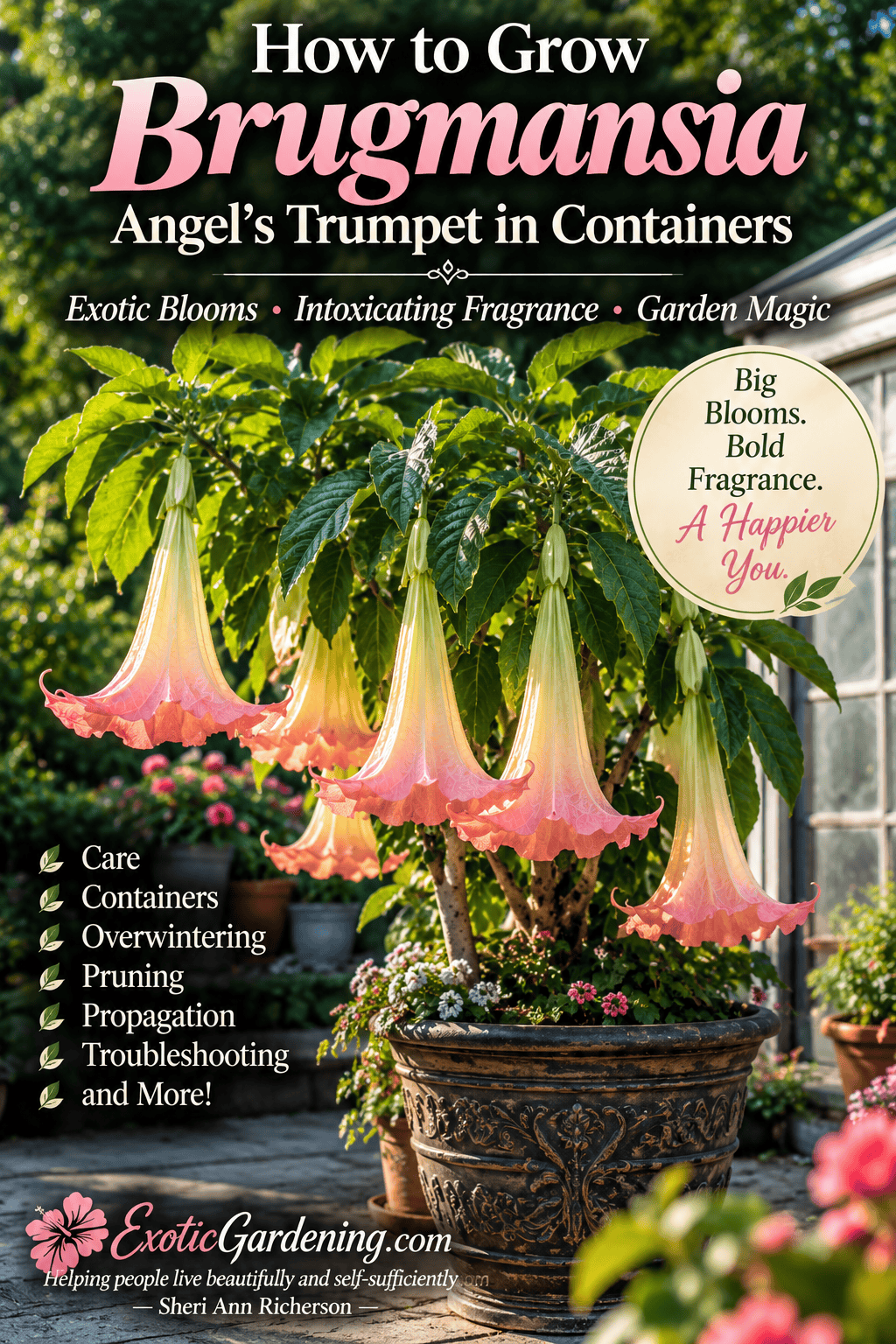
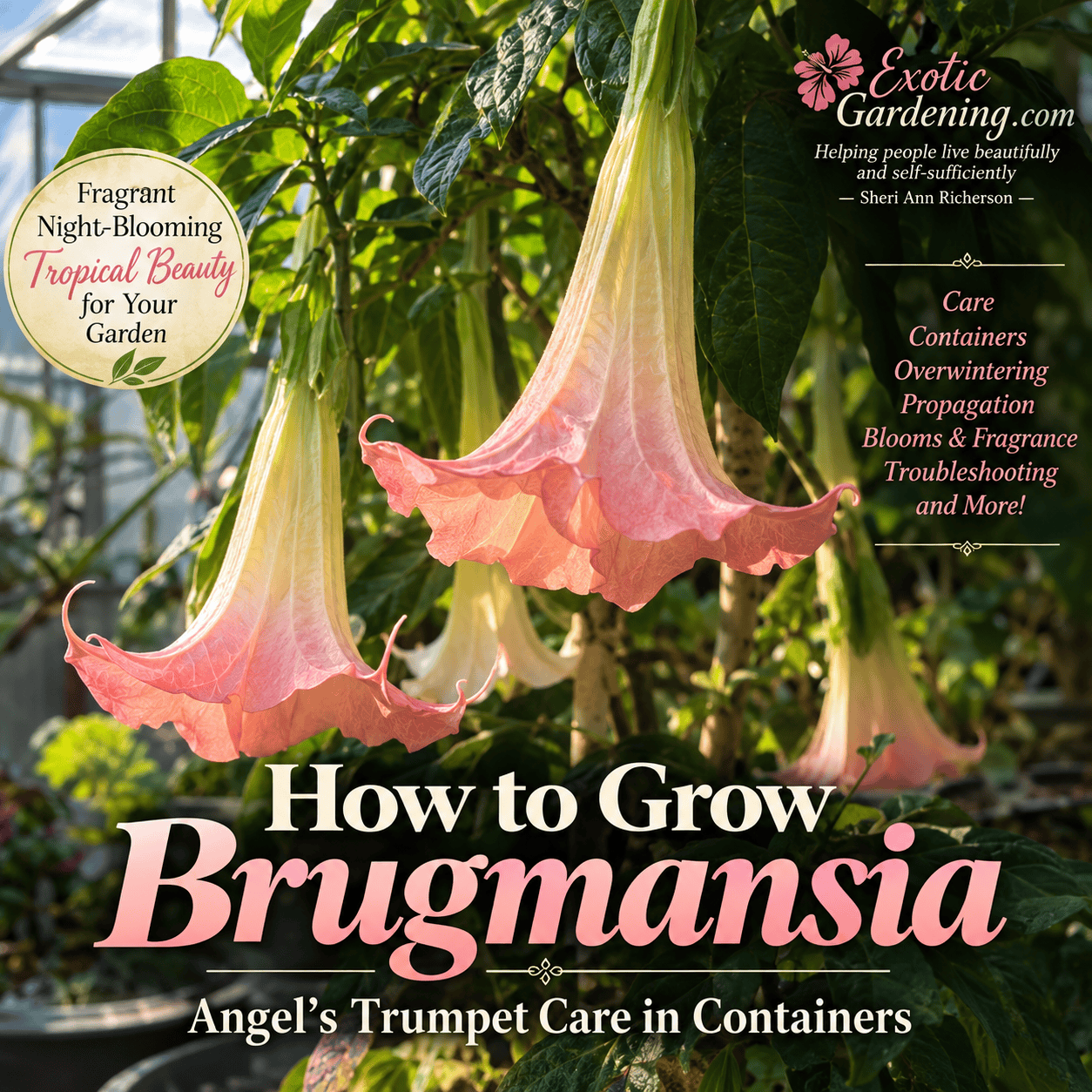
Brugmansia is my favorite tropical flowering tree. I grow mine in a container, and there is nothing quite like walking near it in the evening when those enormous hanging trumpets begin releasing their fragrance. During the day, the flowers often look wilted or shriveled, especially after they have been open overnight. For me the real show starts as evening arrives, when the trumpets open and their fragrance becomes noticeable.
If you garden in a cold climate, do not assume this is a plant you can only admire on vacation. I grow Brugmansia in Indiana by treating it as a container plant and overwintering it in my greenhouse. It takes some work, plenty of water during active growth, regular feeding, and a plan for winter, but this is one tropical plant I think is worth the effort.
This guide covers the genus Brugmansia—often called Angel's Trumpet—including container growing, flowering, pruning, propagation, overwintering, pests, troubleshooting, and an important discussion of toxicity.
Plant Geek Tip: When you see Brugmansia spp., the abbreviation spp. means multiple species within the genus Brugmansia. There are several species and many hybrids and cultivars in cultivation, so a general care guide often refers to the genus rather than pretending every Angel's Trumpet is the same species.
What Is Brugmansia?
Brugmansia is a genus in the Solanaceae, or nightshade, family. Tomatoes, peppers, potatoes, petunias and Datura are also members of this large plant family, although that does not mean they have the same edibility or toxicity. Brugmansia is highly toxic.
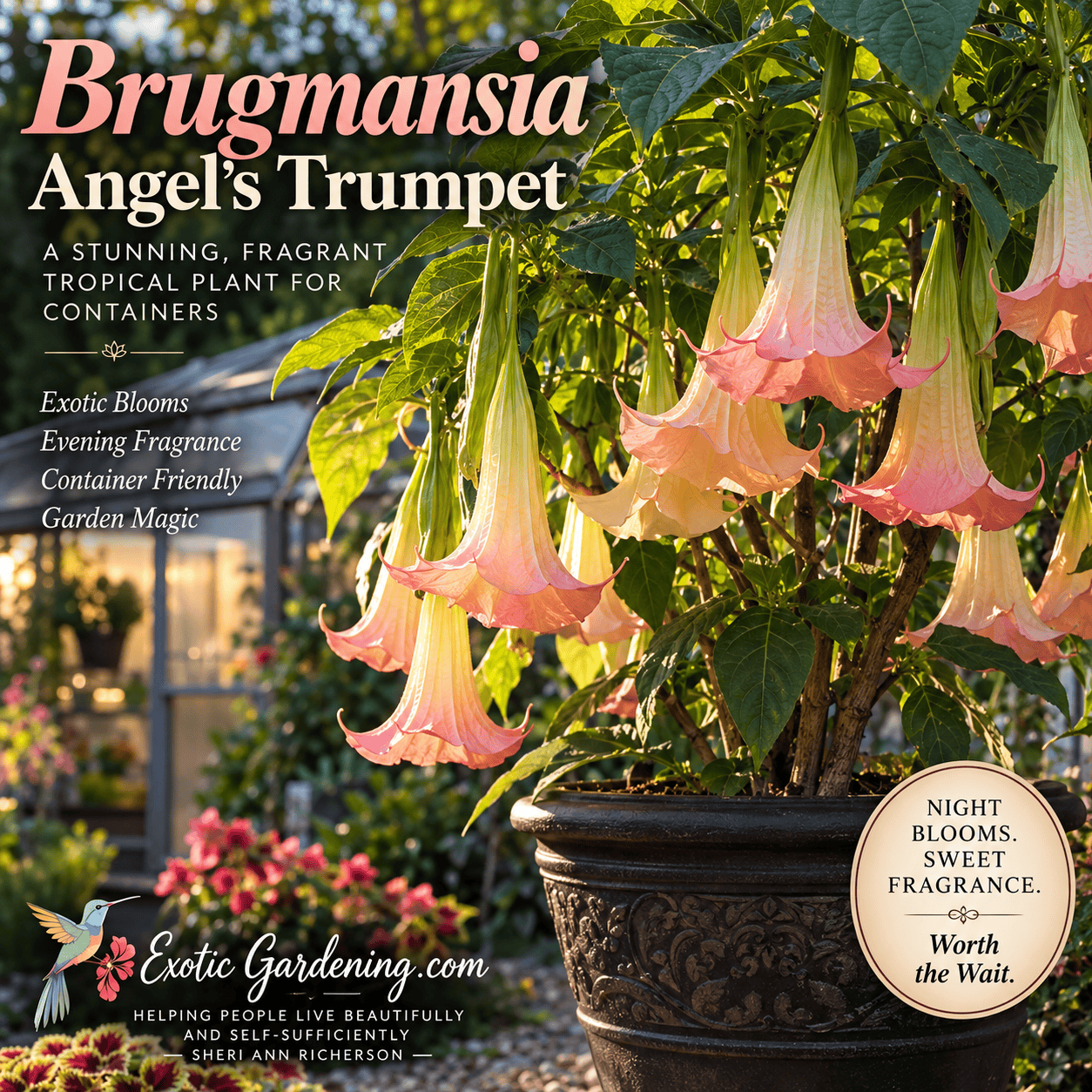
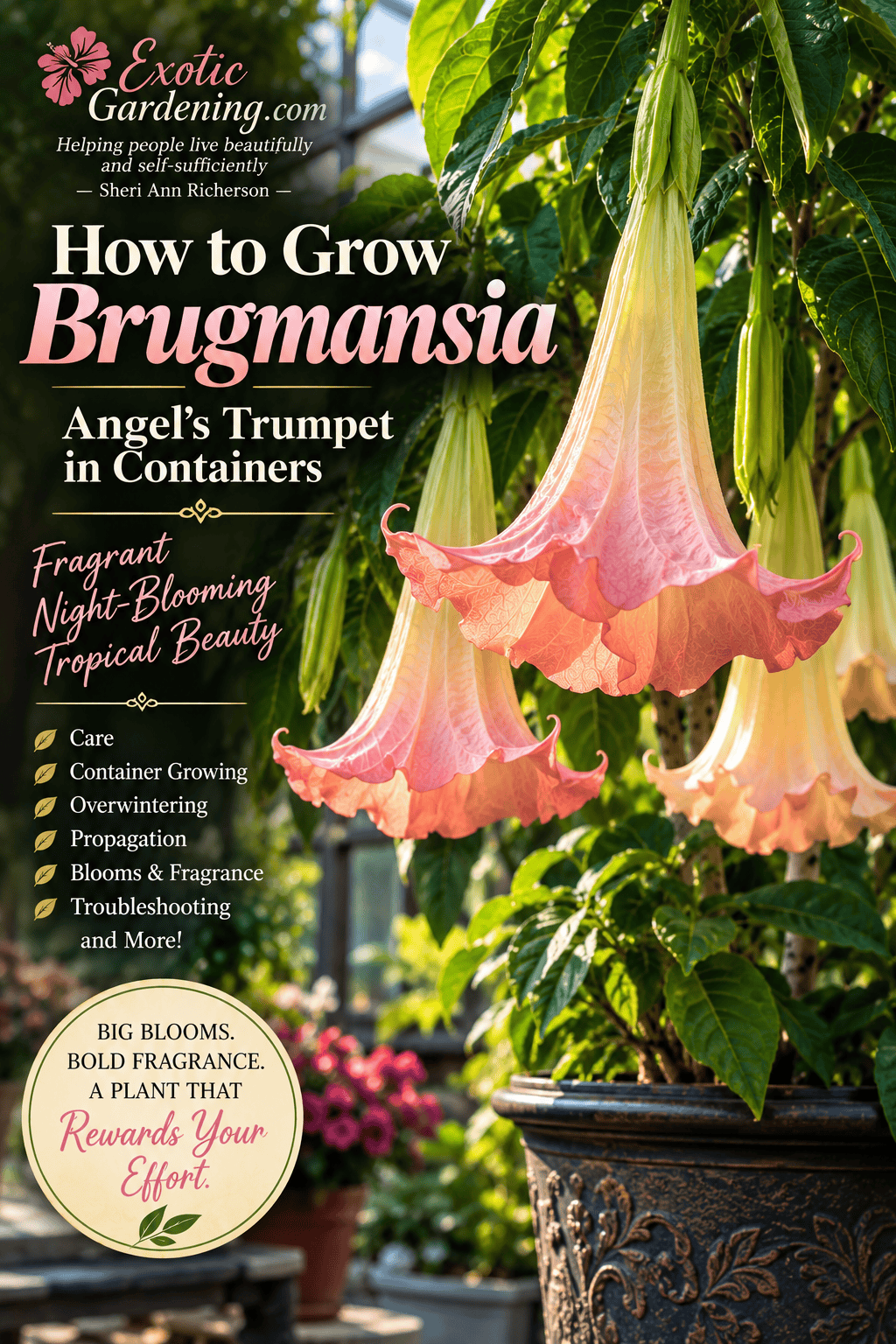
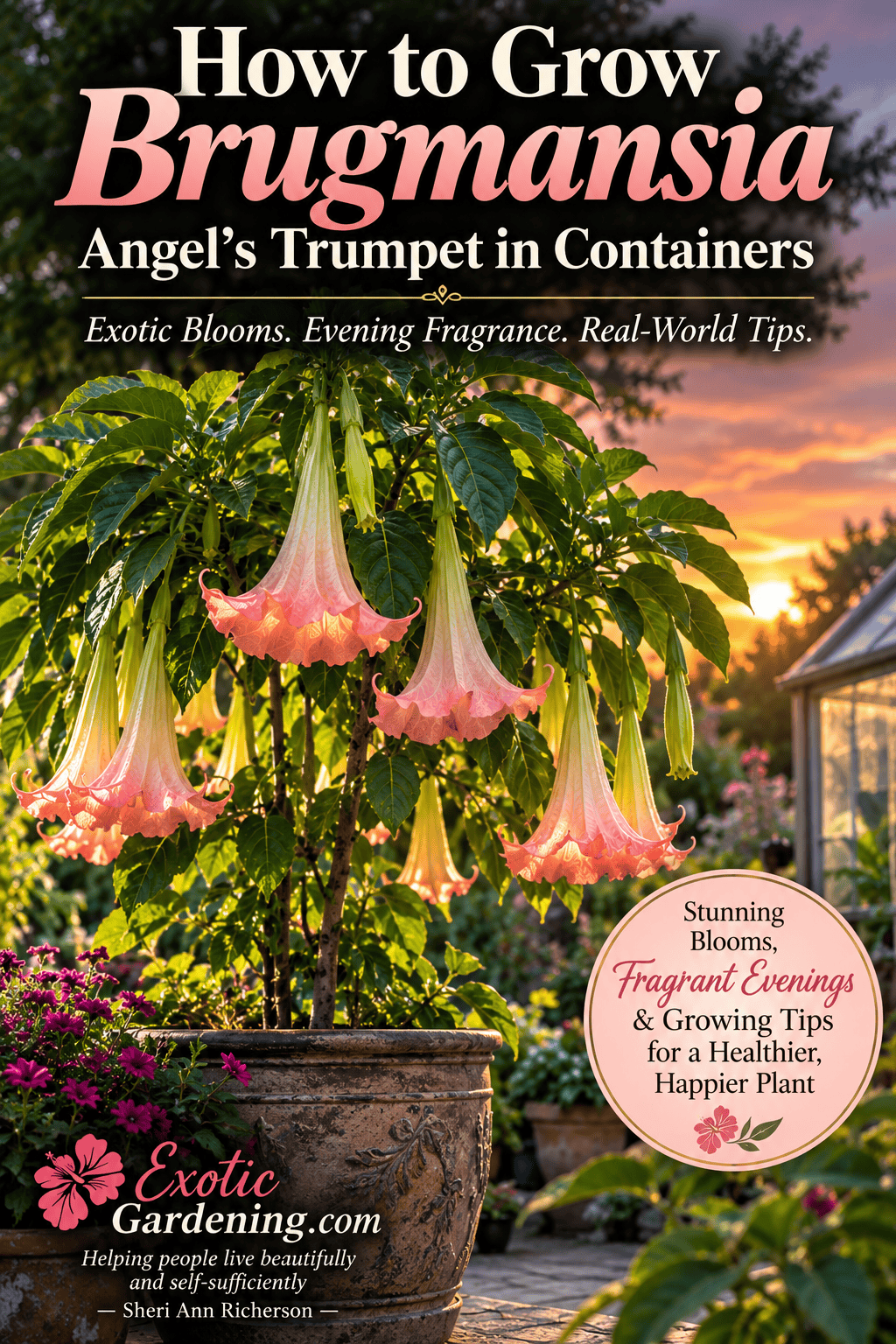
The genus is native to tropical South America and includes woody shrubs and small trees. Depending on the species or hybrid, the huge pendulous flowers may be white, yellow, peach, orange, pink or other shades. Some cultivars have single flowers while others have double or more elaborate forms.
The fragrance is one of the reasons I love this plant so much. Many Brugmansia flowers become especially fragrant in the evening. That combination of huge hanging flowers and nighttime perfume makes it a natural choice for a moon garden, fragrance garden, patio or other area where you spend time after the heat of the day has passed.
Brugmansia vs. Datura: They Are Not the Same Plant
Common names can cause all kinds of confusion. "Angel's Trumpet" is used for plants in both Brugmansia and Datura, which is exactly why I believe botanical names belong in plant articles.
A simple visual clue is the direction of the flowers. Brugmansia flowers generally hang downward like bells suspended from the branches. Datura flowers generally point upward. Brugmansia also develops into a woody shrub or small tree, while many commonly grown Datura species have a more herbaceous or shrubby habit.
What Does That Mean? A genus is a botanical grouping of closely related plants. Brugmansia is one genus and Datura is another. A species is a more specific classification within a genus—for example, Brugmansia suaveolens.
Why I Grow Brugmansia in a Pot
For gardeners in genuinely tropical or subtropical climates, Brugmansia can become a substantial landscape shrub or tree. Here in Indiana, that is not realistic year-round. Freezing winter temperatures mean I need to be able to move mine to protection, so container culture makes sense.
A container also gives me control over soil, watering and placement. I can move the plant as the seasons change and bring it into the greenhouse for winter rather than starting over with a new plant every spring.
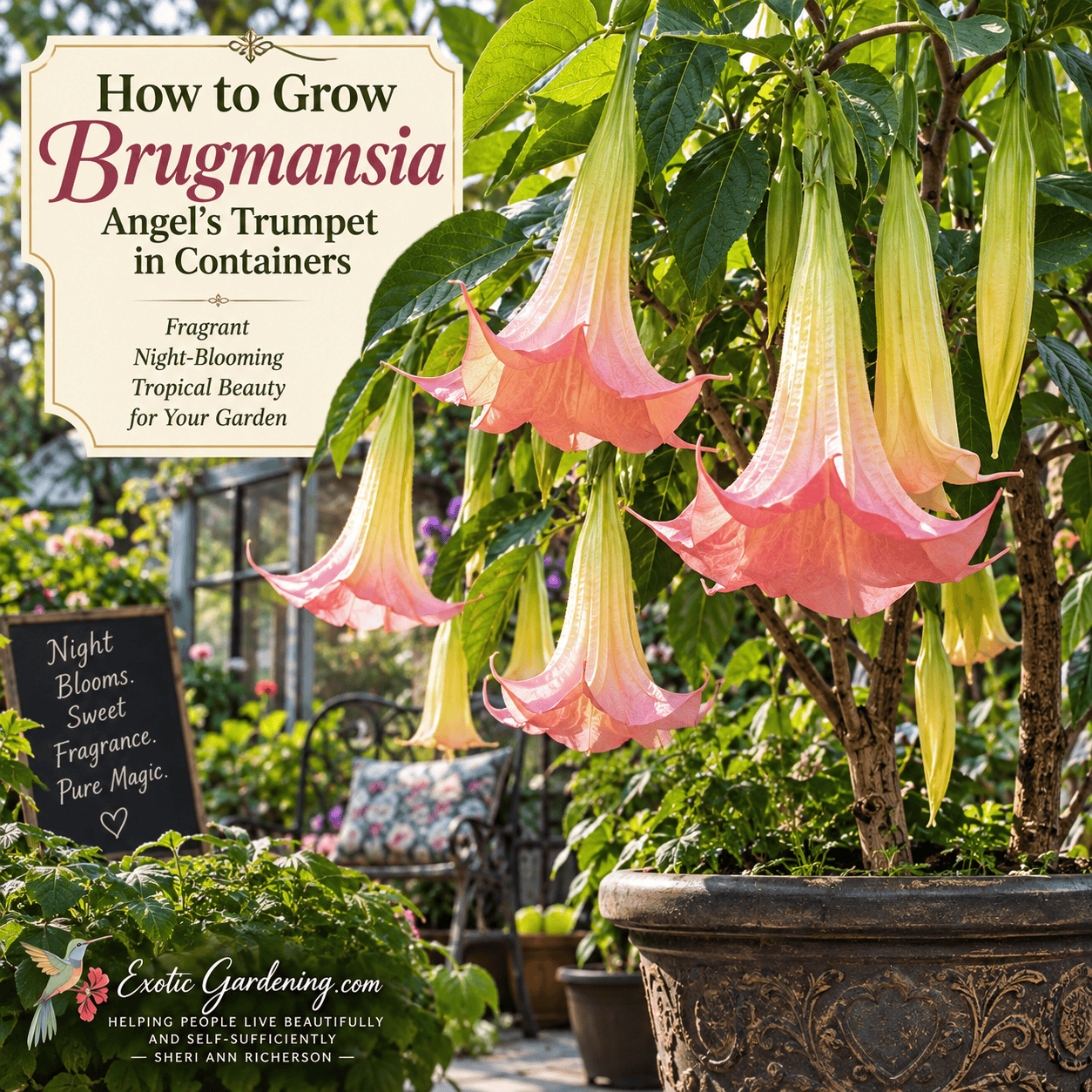
The tradeoff is that a large Brugmansia is a thirsty, hungry plant with a considerable canopy sitting on top of a pot. You need enough root room, enough weight to keep the plant stable, and enough space at the top of the container to water it thoroughly without everything immediately running over the rim.
If you are new to growing large tropical plants in pots, see my successful container gardening guide for more of the basics.
Choosing a Container and Potting Mix
Do not put a rapidly growing Brugmansia into a tiny decorative pot and expect it to perform. As the plant grows, step it up into a substantial container with drainage holes. A mature container-grown plant may live in a very large pot; the exact size depends on the plant, your climate, how often you can water, and whether you root-prune.
I have grown full-sized Brugmansia in roughly ten-gallon containers, but that works because container size is only one part of the system. Root management, fresh potting mix, water and nutrition matter too. A plant allowed to become severely rootbound without maintenance is not going to perform the same way.
Use a fertile, moisture-retentive but well-drained potting mix. "Moisture-retentive" does not mean swampy. The goal is a mix that holds enough moisture for a thirsty tropical plant while still allowing excess water to drain and air to reach the roots.
Good to Know: Brugmansia can become very top-heavy. Think about the weight and shape of the pot before the plant is six feet tall and covered with foliage. A stable container can save you from broken branches when summer storms and wind arrive.
How Much Sun Does Brugmansia Need?
Brugmansia likes bright light and can grow in full sun, but "full sun" is not the whole story when you are growing a tropical plant in a container through a hot Midwestern summer.
Intense afternoon heat can stress a potted plant much faster than one growing with an unrestricted root system in the ground. If your plant wilts badly every afternoon, drops leaves, stops growing or refuses to flower during extreme heat, consider giving it some protection during the hottest part of the day while maintaining plenty of bright light.
Morning sun with some afternoon protection can be a very useful arrangement in hot conditions. Your exact placement will depend on your climate, the cultivar, the container and how consistently you can keep up with watering.
Watering a Potted Brugmansia
During active summer growth, my Brugmansia can need water every day. A large leafy plant in a container can move through an astonishing amount of moisture in hot weather.
Do not turn "water daily" into a rigid calendar rule, though. Check the plant and potting mix. Temperature, wind, pot size, root mass, humidity and rainfall all change how quickly a container dries.
Water thoroughly enough to moisten the root ball and allow excess water to drain. A plant that repeatedly dries to the point of severe wilt is being stressed, but permanently waterlogged roots create a different set of problems.
Winter is completely different. Once my plant is in the greenhouse, cooler and dropping its leaves, it is not using water at anything close to its summer rate. That is when overwatering can become the bigger danger.
Feeding Brugmansia for Growth and Flowers
Brugmansia is a heavy feeder during active growth, especially when it is confined to a container. Every time you water heavily, nutrients can also move through and out of the pot, so a plant that grows rapidly and produces enormous flowers needs regular nutrition.
I lean toward organic growing practices, so I prefer building fertility with quality organic inputs when they make sense. For a container-grown flowering plant, I am also comfortable using a reputable fertilizer formulated for flowering plants—such as a Proven Winners-type flowering plant fertilizer—when I want dependable nutrition that supports vigorous growth and bloom production.
The important part is not chasing one magic brand or assuming that dumping extra phosphorus on a reluctant plant will force it to bloom. Follow the fertilizer label, pay attention to the plant, and remember that light, temperature, maturity, root health, water and pruning all influence flowering.
I feed during active growth and reduce or stop feeding when the plant is resting in winter. Fertilizing a cool, semi-dormant plant that is not actively growing does not accomplish what feeding a vigorously growing summer plant does.
Plant Geek Tip: Fertilizer labels show three numbers for nitrogen (N), phosphorus (P) and potassium (K). Those nutrients all have roles in plant growth. A "bloom" fertilizer is not a substitute for adequate light, healthy roots and mature flowering wood.
When Does Brugmansia Bloom?
One of the most useful things to understand about Brugmansia is that a young plant has to reach a mature branching stage before it flowers. Gardeners often hear this described as waiting for the plant to form its first Y.
The trunk grows upward and eventually forks. Flowering growth develops above that mature fork. This matters when you prune and when you propagate: if you remove all mature flowering growth, the plant may need time to rebuild the structure it needs before it blooms heavily again.
Once a healthy mature plant gets going, the sight of it covered with hanging trumpets is extraordinary. The fragrance in the evening is the part I wait for.
Why Isn't My Brugmansia Blooming?
If your Angel's Trumpet is producing leaves but no flowers, work through the growing conditions instead of immediately reaching for more fertilizer.
- Is the plant mature? Seedlings and juvenile growth need to reach the mature branching stage before flowering.
- Does it have enough light? Deep shade can produce disappointing flowering.
- Is extreme heat stressing it? A container baking in intense afternoon heat may struggle even though Brugmansia likes bright conditions.
- Is it drying out repeatedly? Severe water stress can interfere with growth and flowering.
- Is it severely rootbound? A neglected root ball can make water and nutrient management difficult.
- Is it being fed appropriately during active growth? A large flowering tropical plant in a pot needs nutrition.
- Was it recently pruned hard? It may simply need time to produce mature flowering growth again.
- Is it winter? A cool overwintered plant may rest rather than bloom.
Pruning Brugmansia and Understanding the "Y"
Pruning can control size, encourage branching and help make a large container plant manageable, but learn how Brugmansia grows before you start cutting.
If your plant has not yet reached its first mature fork or "Y," be patient. Once the plant has mature growth above that fork, selective pruning can encourage a fuller canopy with more flowering branches.
I also prune because I have to move and overwinter my plant. A Brugmansia that is perfectly manageable in May can become a completely different creature by September.
Use clean pruning tools, make deliberate cuts, and remember the toxicity of the plant. I recommend gloves, especially when you are handling a lot of cut material. Collect the trimmings instead of leaving leaves and stems scattered where children or animals can get into them.
Root Pruning a Container-Grown Brugmansia
One reason a long-lived tropical plant can remain in a manageable container is root pruning. This means removing part of an established root mass and replacing exhausted potting mix rather than automatically moving the plant into an ever-larger container.
Root pruning is not something I would combine with every other stress at once. Do major root work when you can give the plant time to recover, use clean tools, refresh the potting mix, and balance the amount of top growth with the reduced root system.
What Does That Mean? Root pruning is the intentional removal of some roots from a container-grown plant to manage a crowded root system and allow fresh growing medium to be added. It is different from accidentally tearing roots apart while repotting.
Overwintering Brugmansia in a Cold Climate
This is where my experience differs from advice written for gardeners in warm climates. I am not leaving my Brugmansia outdoors through an Indiana winter.
Mine is container-grown and spends winter in my greenhouse at about 50°F. At that temperature it does not keep performing as though it were summer. It drops its leaves and goes into what I think of as a resting or semi-dormant period. Mine does not continue blooming through winter at that temperature.
That leaf drop can be unnerving the first time you overwinter one. A bare Brugmansia can look pretty miserable compared with the huge flowering plant you had outside in summer. But reduced growth in cool winter conditions does not automatically mean the plant is dead.
Other gardeners overwinter Brugmansia in a bright indoor location or allow a plant to rest in a cool protected space. The exact method depends on the temperatures you can provide. Whatever method you use, the goal is to keep the plant from freezing while adjusting water and fertilizer to match its much slower winter growth.
Watch overwintering plants for pests. Spider mites and whiteflies can become especially aggravating when plants are crowded into protected winter spaces.
Sheri's Growing Notes: My greenhouse is kept around 50°F in winter. My potted Brugmansia drops its leaves and rests there rather than blooming. I cut back on water and do not try to force summer growth out of a plant that is clearly responding to cooler winter conditions.
Moving Brugmansia Back Outside in Spring
Do not take a plant that has spent months protected indoors or in a greenhouse and suddenly park it in intense outdoor sun for the entire day. Acclimate it gradually to stronger light and outdoor conditions.
Resume more frequent watering as active growth increases, begin your growing-season feeding routine, and watch nighttime temperatures. Brugmansia may tolerate a little chill, but a tropical plant that you have successfully carried through winter is not something I gamble with during a late Indiana freeze.
Propagating Brugmansia From Cuttings
Stem cuttings are one of the easiest ways to make another Brugmansia, and they have another advantage: a cutting preserves the genetics of the parent plant. That matters if you have a particular flower color or form you want to keep.
Take healthy stem material with clean tools. Cuttings can be rooted using several methods, including a moist propagation medium or water, depending on your preference and conditions. Warmth, sanitation and avoiding a waterlogged rooting medium are more useful than complicated tricks.
If flowering age matters, pay attention to where the cutting came from on the plant. Mature flowering growth can behave differently from juvenile growth.
Growing Brugmansia From Seed
Seed is another option, and I have a separate guide on how to plant Brugmansia seeds.
Growing from seed is especially interesting if you enjoy the surprise of genetic variation, but seedlings may not be identical to the parent plant. If you want an exact copy of a named cultivar, vegetative propagation such as a cutting is the better approach.
Seed-grown plants also have to pass through their juvenile stage before reaching mature flowering growth, so do not assume every seedling will become a flowering tree immediately.
A Serious Warning About Brugmansia Seed Pods
I am going to make this section stronger than the usual one-line "this plant is toxic" disclaimer because I have firsthand reason to take it seriously.
Brugmansia is highly toxic. The plant contains tropane alkaloids, including compounds such as scopolamine, atropine and hyoscyamine. Poisoning can cause severe neurological and cardiovascular effects, including delirium and hallucinations, and serious exposures can become medical emergencies.
The liquid associated with a Brugmansia seed pod is not something to casually get on your hands or experiment with. I learned firsthand just how potent this plant can be. Don't ask how I know.
Wear gloves when handling seed pods and when doing extensive pruning or cleanup. Do not touch your face or eyes while working with the plant, wash your hands afterward, and keep seeds, pods, leaves, flowers and clippings away from children and animals.
If you suspect a person has been poisoned by Brugmansia, contact Poison Control in the United States at 1-800-222-1222 or seek emergency medical help for severe symptoms. For a pet exposure, contact a veterinarian or veterinary poison service promptly.
Brugmansia, Children and Pets
This is not a plant I would casually recommend for a household where young children or pets can reach or chew it. Beautiful does not mean harmless.
Because leaves and flowers can fall naturally, owning the plant means taking responsibility for cleanup. If children or pets have access to the growing area, keep fallen flowers, leaves, seed pods and pruning debris picked up rather than leaving plant material lying on the ground.
Placement matters too. A large pot on a patio may be convenient for you, but it may also put the plant exactly where a curious child or pet spends time. Think about your household before deciding whether Brugmansia is an appropriate plant for you.
Safety Note: Never use Brugmansia as a home remedy or experiment with it for psychoactive effects. The concentration of toxic alkaloids is not something a home gardener can safely judge by looking at the plant.
Common Brugmansia Pests
A healthy outdoor plant can still attract pests, but I pay particular attention when plants come under cover for winter. Spider mites and whiteflies are two problems commonly associated with overwintered Brugmansia. Aphids and other sap-feeding insects may also appear.
Inspect the undersides of leaves, new growth and branch junctions rather than waiting until the infestation is obvious from across the greenhouse. Fine stippling, webbing, sticky residue, distorted new growth or clouds of tiny white insects when the plant is disturbed are signs worth investigating.
Because I lean toward organic gardening, I prefer starting with sanitation, physical removal, water sprays where practical, and lower-impact controls appropriate to the pest before reaching for stronger treatments. Whatever product you use, identify the pest first and follow the label.
Can You Braid Brugmansia Trunks?
You can train young, flexible stems into unusual forms, including twisted or braided multi-trunk specimens. This has to begin while the stems are young enough to bend without cracking.
If you experiment with this, do not bind the stems with something that will cut into expanding tissue. Check ties frequently. A material that seems loose today can girdle a rapidly thickening stem later.
I consider this an optional plant-geek project, not a requirement for growing Brugmansia well. A naturally grown specimen covered in flowers is spectacular without any special trunk training.
Is Brugmansia Worth Growing?
For me, absolutely.
Brugmansia asks more from me than a plant I can put in the ground and forget. Mine needs a substantial container, plenty of water in summer, regular nutrition, pruning, winter greenhouse space and careful handling because of its toxicity.
But it is still my favorite tropical flowering tree.
There are few plants that create the same experience. The huge trumpets hang below the foliage, evening arrives, and then that fragrance begins. It turns an ordinary summer evening into something that feels genuinely tropical—even though the plant is growing in a pot in Indiana.
If you can meet its needs and safely manage a toxic plant around your household, Brugmansia is one of those plants that can be worth making room for year after year.
Quick Brugmansia Care Reference
- Botanical name: Brugmansia spp.
- Common name: Angel's Trumpet
- Family: Solanaceae
- Plant type: Tropical woody shrub or small tree
- Flowers: Large, pendulous trumpets; many forms are strongly fragrant, especially in the evening
- Light: Bright light to full sun; afternoon protection can help container plants during extreme heat
- Water: High demand during active summer growth; much less during cool winter rest
- Soil: Fertile, moisture-retentive and well-drained
- Feeding: Regularly during active growth; reduce or stop during cool winter rest
- Propagation: Stem cuttings or seed
- Overwintering: Protect from freezing; mine rests in a roughly 50°F greenhouse and drops its leaves
- Common pests: Spider mites, whiteflies and other sap-feeding pests, particularly under cover
- Safety: Highly toxic; keep all plant parts and fallen debris away from children and pets
Sources and Further Botanical Reading
For botanical nomenclature and distribution, I use resources such as Kew Science's Plants of the World Online. North Carolina Extension's Plant Toolbox also provides horticultural and toxicity information for Brugmansia. These references complement the firsthand container-growing and overwintering experience I have shared throughout this article.
Originally written from my experience growing Brugmansia and substantially updated to include expanded container culture, overwintering, botanical terminology, troubleshooting and safety information.