Exotic Gardening Interactive Garden Tool
How Many Seeds Do I Need?
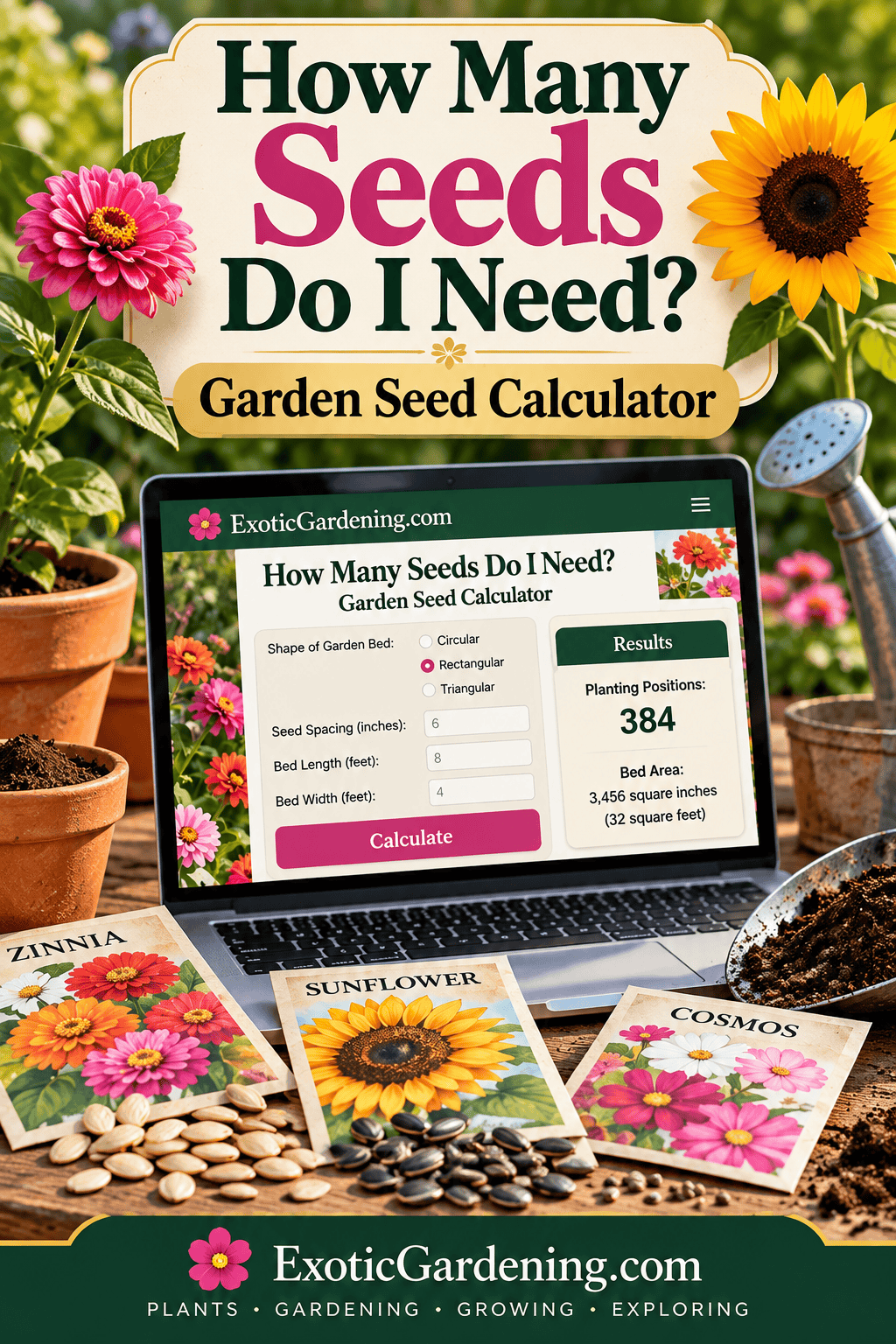
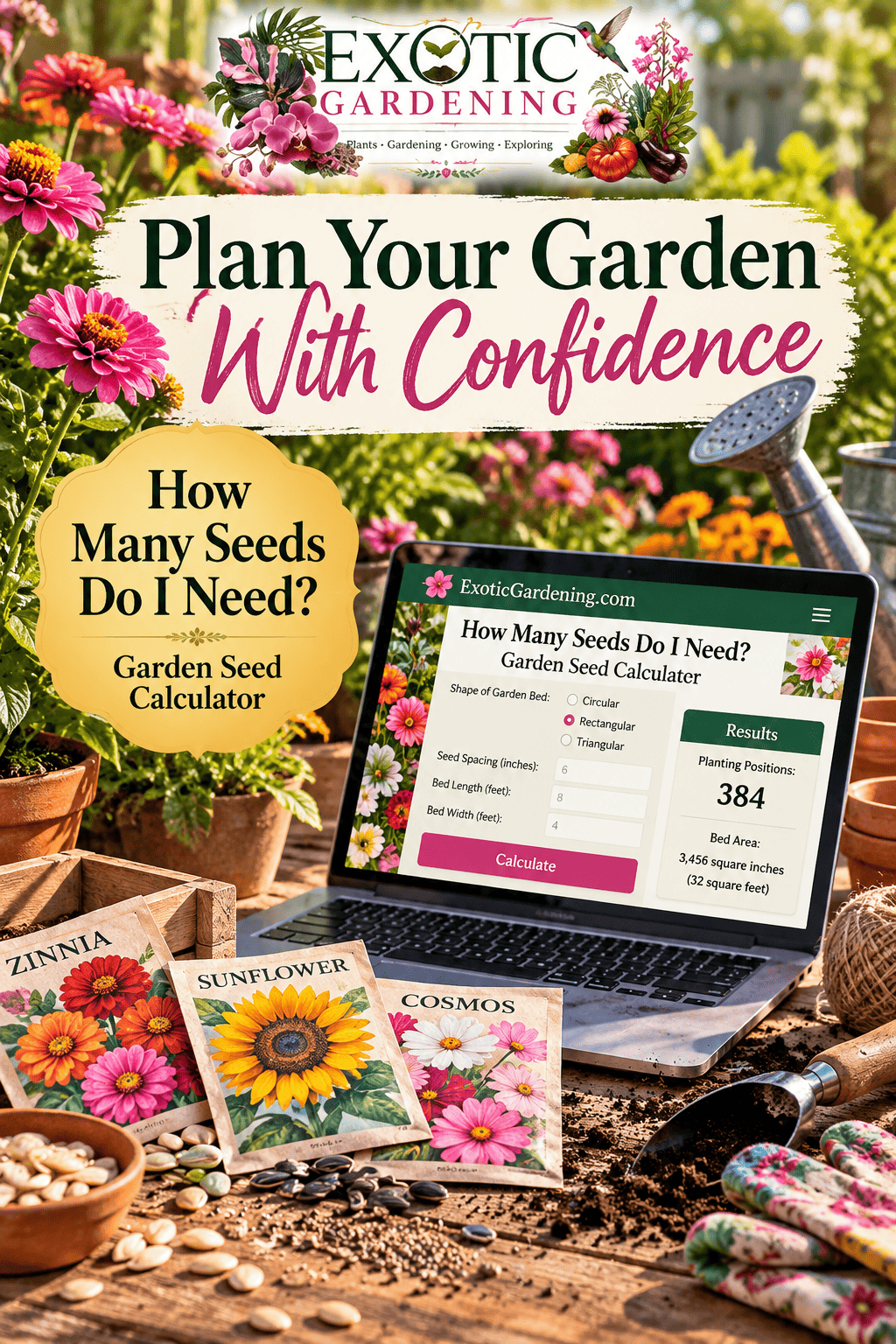
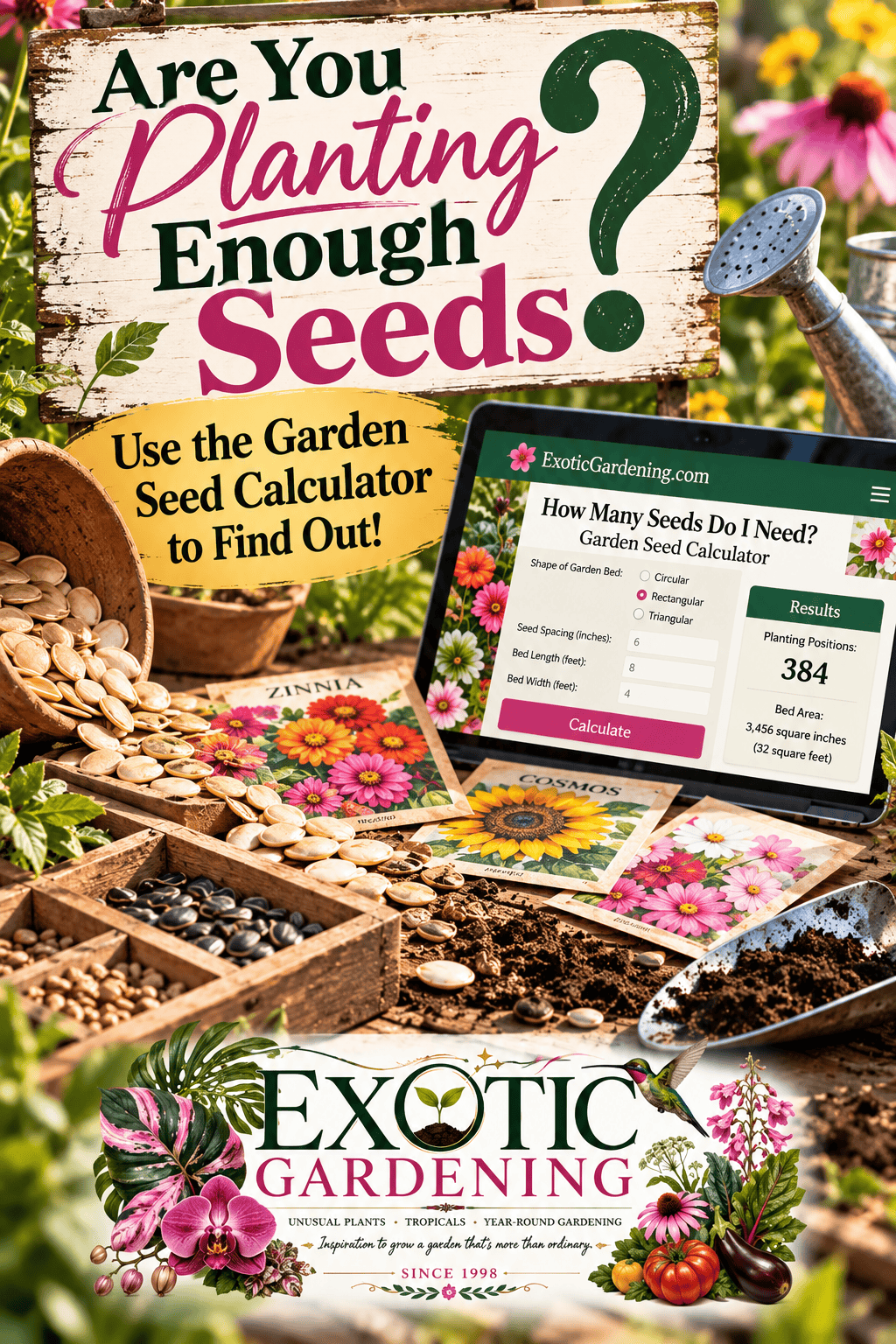
Planning a garden bed is easier when you know roughly how many planting spots will fit. Choose your bed shape, enter the recommended seed spacing and your garden dimensions, and the calculator will do the math for you.
Garden Seed Calculator
Calculate planting positions from your bed size and seed spacing.
This is a planning estimate based on evenly spaced planting positions. Always check the seed packet for the variety's recommended final spacing. Germination rate, thinning, paths, borders and your planting method can change the number of seeds you actually sow.
How the seed calculator works
Use this calculator when you know the final spacing your crop needs and want a quick estimate of how many planting positions will fit in a bed. It is especially handy when you are laying out a new garden, comparing bed sizes, ordering seed, or deciding whether the seed you already have is likely to be enough.
Start with the spacing recommended for the crop you plan to grow. Enter that spacing in inches, then enter the dimensions of the area you actually intend to plant. The calculator determines the bed's surface area and estimates how many evenly spaced planting positions fit within it.
For rectangular beds, enter the length and width. For a circular bed, enter the diameter. For a triangular bed, enter the base and perpendicular height. Keeping the dimensions tied to the shape makes the modern calculator clearer than trying to force every garden into the same set of boxes.
What seed spacing should I use?
Start with the final plant spacing recommended for the particular crop and variety you are growing. Seed packets and reliable growing instructions are the best place to begin because a lettuce plant, pole bean, tomato and pumpkin need very different amounts of room. If directions tell you to sow closely and thin later, use the final spacing when you are planning how many mature plants will fit.
Why the shape of your garden bed matters
A 4-foot-wide bed does not always contain the same planting area. A rectangle uses length × width, a circle uses its diameter to determine its area, and a triangle uses one-half of its base × height. That is why this calculator asks you to choose the actual bed shape before entering measurements.
Seeds needed versus planting positions
The result is best treated as a garden-planning number, not a promise that every seed will become a mature plant. Germination percentage, the age and storage history of your seed, whether you direct sow or transplant, thinning, succession planting, and unused areas such as paths can all change how much seed you actually need. Seed packets may recommend sowing more heavily and thinning later, and older seed or seed with a lower germination percentage may require extra seed. Paths, edging and areas occupied by other plants also reduce usable planting space.
Keep planning your garden
If you are working from seed, the Seed Starting & Seed Saving resource center brings together my seed-starting and seed-saving information. Once you know how many planting positions your bed can hold, use those resources to plan how and when to get those seeds growing.
Garden planning questions
How many seeds should I plant per hole?
This calculator estimates final planting positions, not the number of seeds you must drop into each position. Follow the directions for the crop and variety you are growing. Some gardeners sow more than one seed and thin later, while others transplant a single established seedling into each position.
Should I use seed packet spacing or row spacing?
Use the final spacing you want between individual plants. Row spacing may include room for walking, cultivating or harvesting and can produce a very different estimate. If your garden includes permanent paths, calculate only the area you will actually plant.
Do I need extra seed for poor germination?
Often, yes. The calculator tells you how many planting positions fit in the bed. The amount of seed you sow or buy may be higher because germination percentage, seed age, thinning and direct-sowing practices all affect the final number of plants.
From a seed count to a real planting plan
A calculator can give you a clean number, but gardens are rarely clean little mathematical exercises. Once you have your estimate, look at the bed itself. Are there stepping stones, irrigation lines, permanent herbs, bulbs you do not want to disturb, a trellis, a birdbath, or an awkward corner that will not actually be planted? Subtract those areas mentally before buying seed as though every square inch were available.
This is also where the way you garden matters. If you sow directly into the garden, you may intentionally plant more seed than the number of mature plants you expect to keep. Weather, birds, insects, soil crusting and uneven moisture can all affect emergence. If you start plants indoors and transplant established seedlings, your seed needs may be closer to the number of planting positions, although it is still sensible to start a few extras rather than assume every seedling will make it to transplanting day.
Seed spacing, thinning and what the packet is really telling you
Seed packets sometimes give more than one spacing number. You may see a sowing distance, instructions to plant several seeds together, and a final spacing after thinning. For this calculator, the most useful number is usually the final spacing between the plants you intend to grow to maturity. That tells you how many finished plants the bed can reasonably hold.
If the packet says to sow seeds close together and thin them later, do not mistake the close sowing distance for the amount of room mature plants need. The calculator is a planning tool for the finished garden. The extra seed used during sowing is a separate decision based on the crop, germination and your planting method.
Should you buy exactly the number of seeds the calculator gives you?
Usually, no. Think of the result as your starting point for deciding whether one packet is enough, whether you need several packets, or whether you already have far more seed than the bed can hold. Then read the packet quantity and germination information before you buy.
For example, if your bed has room for 40 mature plants, a packet containing 25 seeds clearly will not fill it. A packet containing 100 seeds may be plenty even after allowing for germination losses. Older seed deserves extra consideration because viability can decline during storage. This is one reason I would rather have the calculator give you a useful planting-position estimate than pretend it can predict exactly how many individual seeds will germinate in your particular conditions.
Planning for succession planting
Do not automatically multiply the calculator result by the number of times you hope to plant the bed. Succession gardening can mean several different things. You might sow another round of the same crop after the first is harvested, sow smaller batches every week or two for a longer harvest, or replace one crop with an entirely different crop later in the season.
Run the calculator for the planting you are planning now, then consider each later planting separately. This keeps you from buying seed based on a huge theoretical total when the second crop may use different spacing, a different portion of the bed, or different plants altogether.
Raised beds, containers and unusual garden spaces
You do not need a traditional in-ground vegetable garden to use the calculator. A rectangular raised bed works just like any other rectangle. A large round container can be treated as a circle, and a triangular corner bed can be calculated as a triangle. For irregular beds, divide the planting area into smaller rectangles, circles or triangles, calculate those sections separately, and add the estimates together.
Containers need an extra dose of common sense because root volume matters as much as surface spacing. Just because several planting positions fit across the top of a pot does not mean the container holds enough soil to support that many large mature plants. Use the calculator as one piece of the decision rather than overriding the growing requirements of the plant.
Common seed-calculator mistakes to avoid
The easiest mistake is entering seed-packet sowing spacing when you really need mature-plant spacing. Another is measuring the entire garden structure instead of the area that will actually be planted. Paths, borders and permanent features take away usable planting space. It is also easy to confuse the number of planting positions with the exact number of seeds you should sow.
And check your units. Seed spacing goes into this calculator in inches, while the garden dimensions are entered in feet. That conversion is handled for you, but the calculator can only work with the measurements you give it.
Why I brought this seed calculator back
This is not a brand-new idea added to Exotic Gardening because calculators happen to be useful for search. I originally had a seed planting calculator years ago, when Exotic Gardening and Experimental Homesteader content were connected. An archived November 2012 article introduced the tool as a way to enter the shape of the garden bed, seed spacing and bed dimensions and calculate how many seeds were needed. The old mobile app is still documented in the Internet Archive.
I missed having it. Interactive tools were part of what made the earlier site fun: you could come to learn something and actually do something while you were here. The technology behind that old version eventually stopped being practical, but the gardening problem it solved never disappeared. This rebuilt version keeps the useful idea while making the calculation work on the modern Exotic Gardening site.
Garden Seed Calculator FAQ
Is this the exact number of seeds I should sow?
No. It estimates evenly spaced planting positions based on the bed shape, dimensions and final plant spacing you enter. Germination, thinning, direct sowing, transplanting and the condition of your seed affect the number of seeds you may actually sow.
Should I use seed spacing or plant spacing?
Use the recommended final spacing for the crop or variety when your goal is to estimate how many mature plants will fit. If instructions tell you to sow more closely and thin later, account for those extra seeds separately.
Can I use this for flowers as well as vegetables?
Yes. The geometry does not care whether you are planting lettuce, zinnias, beans or another crop. What matters is choosing a realistic final spacing for the particular plant and variety.
Can I use the calculator for a raised bed?
Yes. Choose the shape that matches the planting surface and enter the usable dimensions of the bed. Do not include paths or areas you will not plant.
What if my garden bed is an odd shape?
Break it into smaller simple shapes. Calculate each rectangular, circular or triangular section and add the results. It will still be an estimate, but it is much more useful than pretending an irregular bed is a perfect rectangle.
Does my USDA Hardiness Zone change the calculation?
Your hardiness zone does not change the geometry of the bed, but it can help you choose plants suited to your climate. If you do not know your zone, visit the Exotic Gardening Hardiness Zone guide before planning what to grow.
Keep Growing: Visit the Seed Starting & Seed Saving Center
Knowing how many planting positions fit in your garden is only one part of growing from seed. If you are ready for the next step, the Exotic Gardening Seed Starting & Seed Saving Center brings together my seed-starting resources, germination guides, plant-specific tutorials, planning tools and seed-saving information in one place.
This tool is a modern restoration of the seed calculator I offered readers years ago. The original let gardeners choose circular, rectangular or triangular beds, enter seed spacing and bed dimensions, and calculate how many seeds they needed. I wanted to bring that genuinely useful interactive part of the old site back instead of leaving it behind in the archives.


