
Disclosure: This was a paid partnership with PetraMax. I received compensation and product for this project. All opinions are entirely my own based on my personal experience using the product in my garden.
Learning how to fix a loose pea gravel garden path became a bigger project than I originally intended, mostly because this pathway was tied to memories I did not want to lose.
At first glance, it just looks like a simple little garden walkway.
But to me, it is the path beside the pond where I slow down after a stressful day. The narrow space between two overflowing garden beds where plants lean into the walkway by midsummer. And those old concrete footsteps? They remind me so much of my Grandpa King’s yard when I was little. He had stepping stones like these leading from the back porch out to the shed, and I still remember walking on them as a child.
That sentimental feeling is exactly why I never wanted a formal concrete sidewalk here.
But over time, the pea gravel became a constant source of frustration. It shifted after every storm. Weeds crept in faster than I could pull them. The stepping stones settled unevenly. No matter how often I fixed it, the pathway always seemed to slide right back into looking untidy again. It even felt dangerous to walk through it because of the uneven terrain and weeds in the walkway.
And honestly, I finally reached the point where I was tired of make excuses to myself about why I never cleaned it up every time I walked past it.
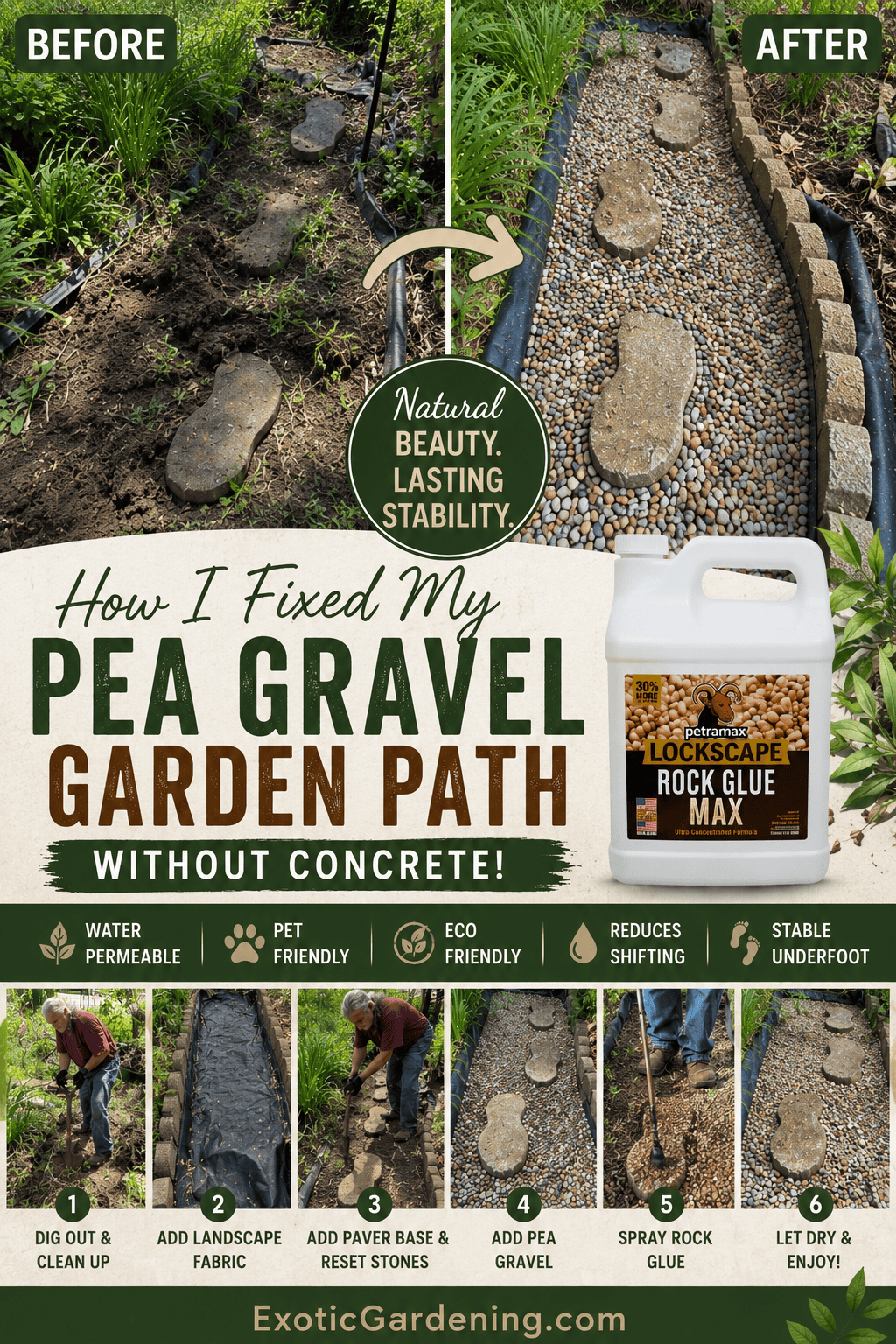
How do you stabilize a pea gravel garden path without concrete?
The best way I found to stabilize a pea gravel garden path without pouring concrete was to rebuild the pathway properly from the ground up - starting with a solid base, landscape fabric, and resetting the stepping stones before adding fresh gravel and a stabilizing product.
That combination helped the pathway keep its soft, natural garden feel while making it noticeably more stable underfoot.
In my case, I used PetraMax Lockscape Rock Glue because I wanted the gravel to stay in place without making the pathway look overly formal, glossy, or artificial.
I still wanted this space to feel like part of the garden - relaxed, sentimental, and a little imperfect in the way real gardens often are. And honestly, preserving that feeling mattered to me far more than creating something perfectly polished.
Why I Didn’t Want a Concrete Garden Walkway
I think sometimes gardeners feel pressure to make everything look polished and permanent.
But real gardens evolve constantly.
Plants reseed themselves where they were never supposed to grow. Pathways settle. Mulch shifts. Edges soften. Sometimes the slightly imperfect spaces are the ones that feel the most inviting.
That is especially true in cottage-style or informal gardens.
A rigid concrete path would have completely changed the feeling of this area. I wanted the pathway to blend into the surrounding plants instead of standing out as a hardscape feature.
Natural garden walkways feel softer visually. They invite you to slow down.
At least for me, they do.
And because this pathway sits beside the pond and threads through planting beds, I wanted it to feel like part of the garden itself instead of something put in beside it years after the garden was established.
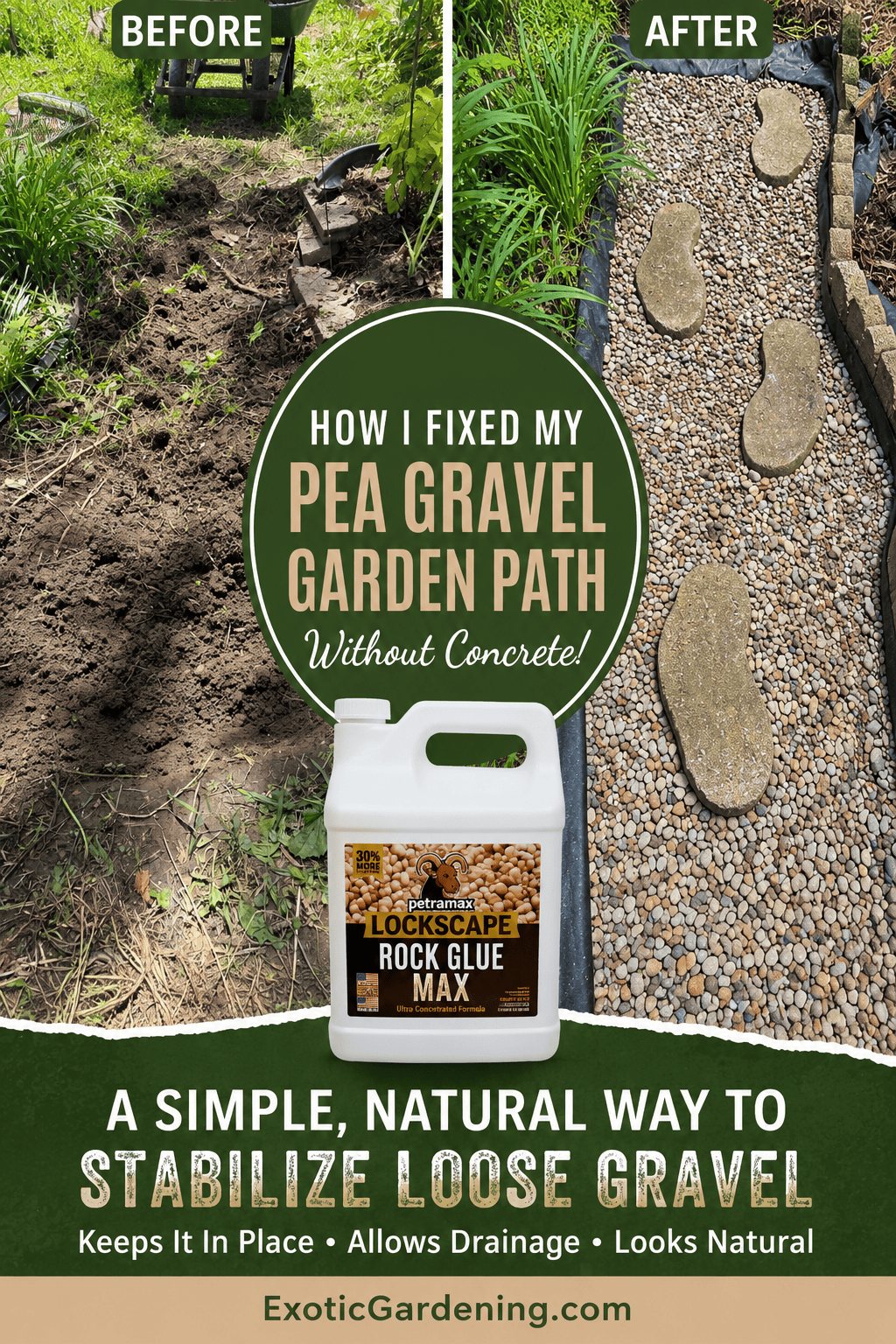
What Actually Happens With Loose Pea Gravel Paths
Pea gravel is beautiful in gardens. I still love the look of it.
But it also has a mind of its own.
It migrates everywhere.
After a while, I noticed:
- Gravel scattering into nearby flower beds
- Bare spots forming where people walked most often
- Weeds popping through the old pathway
- Stepping stones becoming uneven
- The path feeling unstable underfoot after rain
And the frustrating part is that even when you rake it smooth again, it rarely stays that way long.
That seems to be the reality with loose gravel pathways unless you stabilize them somehow.
One thing that surprised me, though, was how much the instability affected the feeling of the garden. Once the path started looking messy, the entire area felt less cared for, even though the plants themselves were doing beautifully.
Funny how that happens.
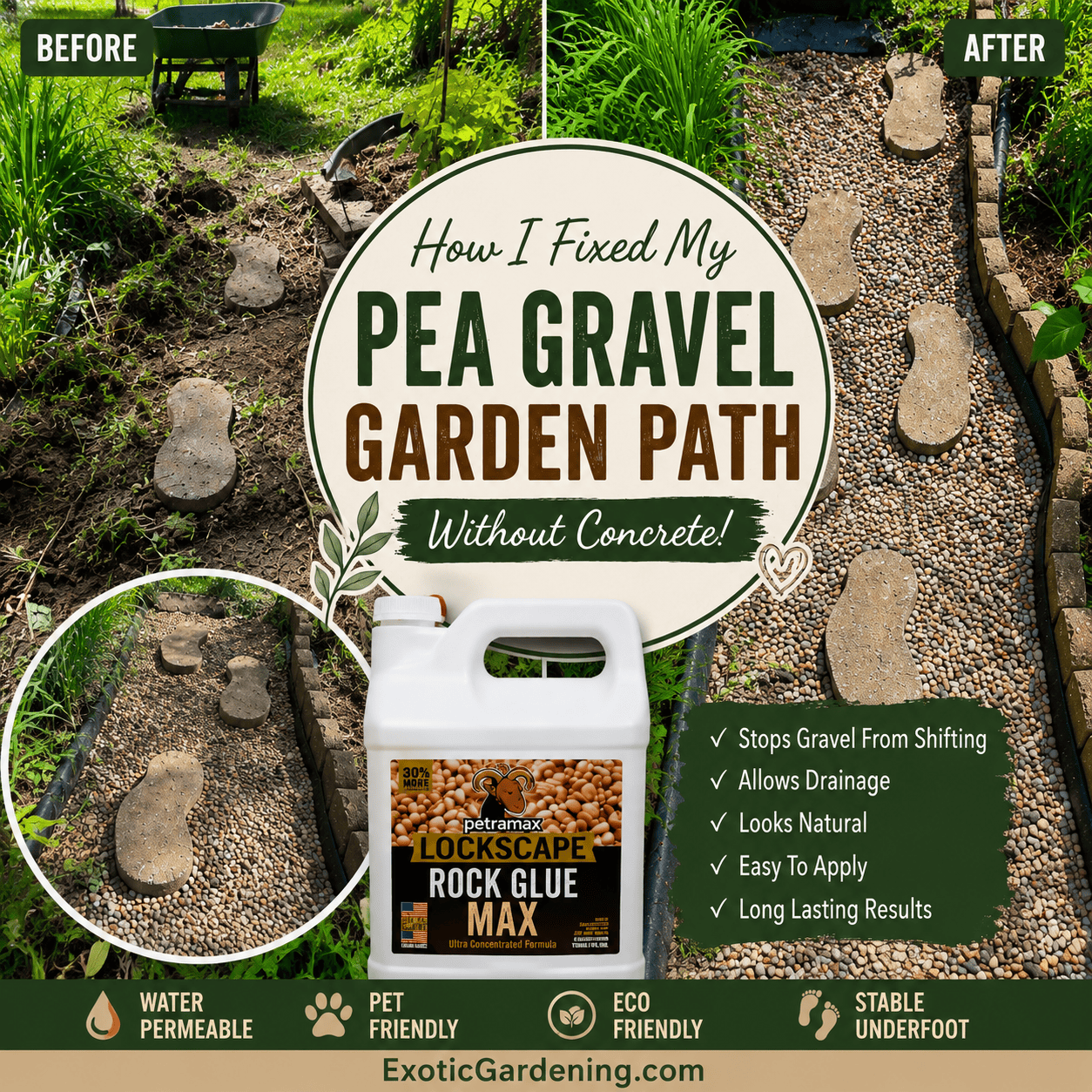
Refreshing the Garden Pathway
Before we even touched the PetraMax Lockscape Rock Glue, the pathway needed rebuilt properly.
We dug out the old area and removed over twenty years of weeds and buildup. Then we leveled everything out and installed three layers of premium heavy duty landscape fabric underneath to help reduce future weed growth.
After that, we added paver base and reset the stepping stones.
I intentionally kept the layout informal instead of perfectly symmetrical because that relaxed look fits the surrounding garden better. I actually think overly straight pathways can feel awkward in softer planting designs.
Especially in older gardens.
Once the stones were in place, we spread fresh pea gravel around them.
Even before applying the stabilizer, the pathway already looked refreshed. Cleaner. Defined again. Like it belonged there instead of being forgotten.
Applying PetraMax Lockscape Rock Glue
The actual application process of the PetraMax Lockscape Rock Glue was much easier than I expected.
PetraMax Lockscape Rock Glue mixes with water and gets sprayed directly onto the gravel using a pump sprayer. As soon as it hits the stone, the gravel darkens temporarily, which honestly would make for a really satisfying time-lapse video - and I wish I had taken one now.
I completely understand why people film this process.
One thing I noticed immediately was that the gravel still looked natural afterward. That was important to me because I did not want a shiny or heavily sealed appearance.
I wanted the path stabilized - not transformed into something artificial.
According to the product information, the formula is:
- Made in the USA
- VOC free
- PFAS free
- Water permeable
- Biodegradable
- Pet friendly
As someone who gardens organically, I appreciated that the pathway could still drain normally instead of creating a completely sealed surface.
That mattered to me quite a bit.
Does gravel glue actually work on garden pathways?
In my experience, PetraMax Lockscape Rock Glue works best for decorative garden pathways where you want to reduce movement without losing the natural appearance of loose stone.
It does not turn gravel into concrete.
Instead, it helps stabilize the surface so the stones move less under normal foot traffic and after rain.
For this pathway, that softer stabilization was exactly what I wanted.
And honestly, it already feels noticeably more stable underfoot than plain loose pea gravel alone.
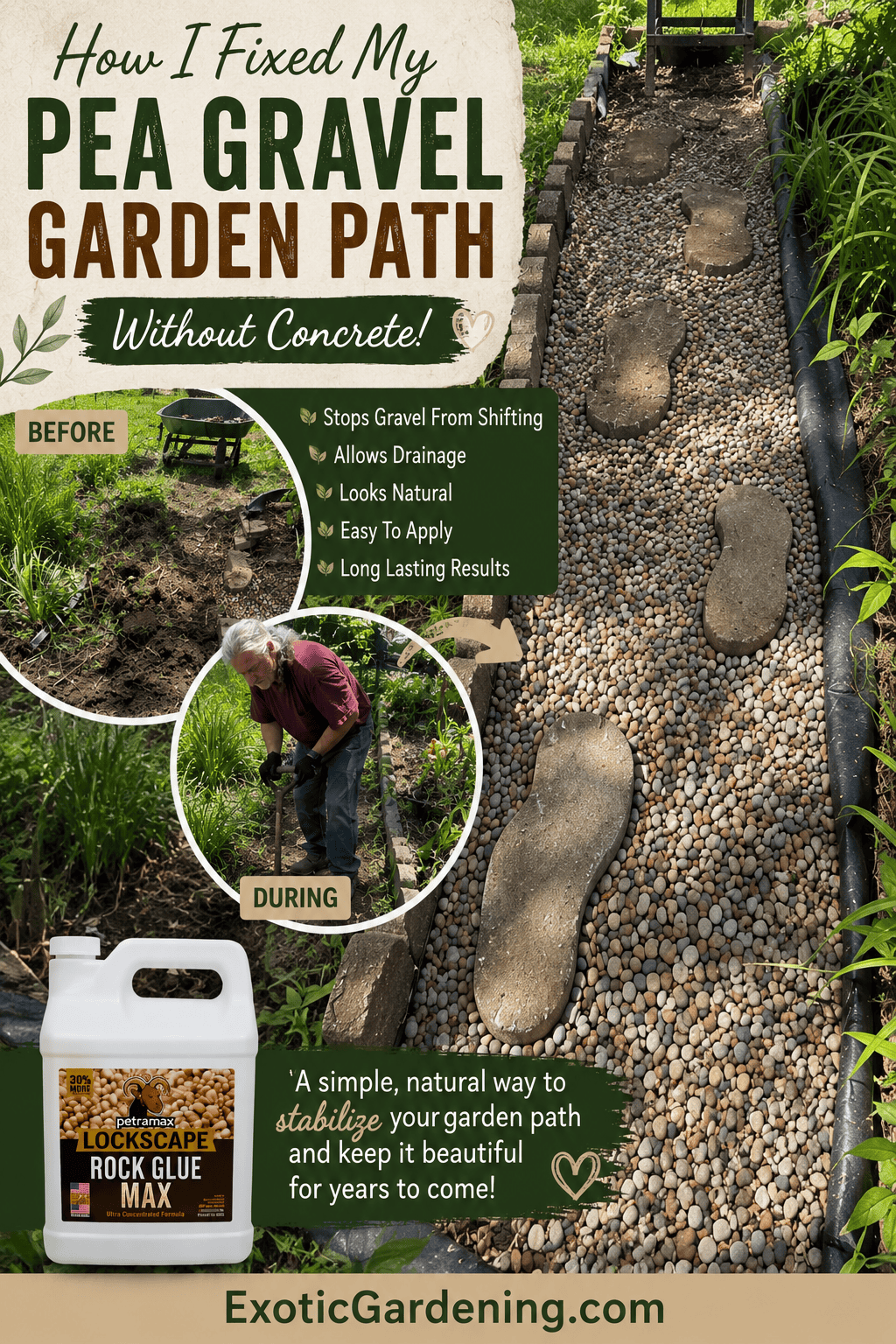
What I Liked Most About This Project
Sometimes it is the smaller garden projects that end up making the biggest difference.
This pathway is still simple. Still relaxed. Still imperfect in the way real gardens are imperfect.
But now it feels intentional again.
A few things I personally appreciated:
- The gravel maintained its natural appearance.
- The pathway still drains properly.
- The product was easy to apply.
- There was not an overpowering chemical odor.
- The path feels more secure to walk on.
- The sentimental stepping stones remain the focal point.
And maybe that last part matters most to me.
Because this path was never just about gravel.
It connects childhood memories too.
Do you have areas in your garden like that? Spaces that mean something beyond how they photograph or appear to other people?
I think most gardeners probably do.
Would I Use This Method Again?
Yes - especially for informal garden pathways where I want a more natural look without constantly fighting shifting gravel.
I would not personally use this approach for a heavily trafficked driveway. But for decorative garden walkways, winding paths, pond areas, and relaxed cottage-style gardens, I think it fits beautifully.
The biggest thing for me is that the pathway still feels like part of the garden.
Not separate from it.
That balance can be surprisingly hard to achieve.
Final Thoughts on Stabilizing a Pea Gravel Garden Path
Refreshing this pathway reminded me how much garden paths affect the overall feeling of a space.
They are not just practical.
They guide the experience of the garden itself.
And sometimes fixing a frustrating little pathway does more for your enjoyment of the garden than adding another flower bed ever could.
For me, this project was not about creating perfection. It was about making an older part of the garden feel cared for again while keeping the soft, sentimental feeling that made me love it in the first place.
Honestly, I am glad I finally tackled it, and using PetraMax Lockscape Rock Glue definitely made the process so much easier.
Because now when I walk beside the pond toward the deck, the pathway feels peaceful again instead of frustrating. And that is exactly what I wanted all along.





Leave a Reply