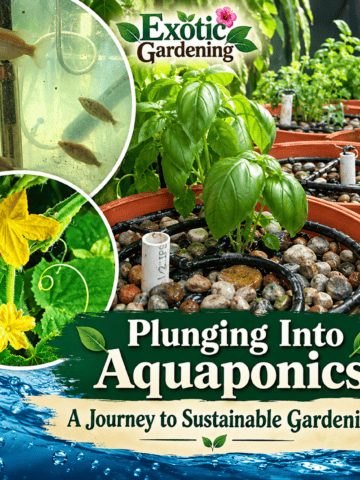
What happens when you combine a 29-gallon fish tank, a handful of salvaged hydroponic supplies and a gardener who can't resist trying something different? In our case, you end up with an aquaponics experiment in the living room, some surprisingly ambitious plants and more lessons about moving water than I ever expected!
I had wanted an aquaponics setup for Christmas because the idea fascinated me. Imagine growing tomatoes, cucumbers and herbs while fish and beneficial bacteria help create the nutrients the plants need. I wanted to see that relationship for myself, not just read about it, and I was curious about how much food we could actually grow in a small indoor system.
Of course, my vision and the practical business of making everything work were two very different things. Jerry started gathering what we already had - a 29-gallon aquarium, old hydroponic pots and clear storage containers - and figuring out how to turn those pieces into a working system.
I love repurposing useful equipment, especially when it lets me experiment without purchasing everything new, but an aquarium full of living fish is not the place to guess whether a pump is strong enough or the plumbing will behave. As we worked through the setup, I began to realize that the most interesting part of this project wasn't simply whether the plants would grow. It was learning how the fish, water, roots and equipment all had to work together. And wait until you see what happened with the tomatoes!
Why We Tried a 29-Gallon Aquaponics Tank in Our Living Room
If you are new to the difference between the two growing methods, my hydroponics for beginners guide explains how soil-free nutrient systems work, while my introduction to aquaponics explores what changes when fish become part of the growing system. What appealed to me most was the idea that the fish, plants and beneficial bacteria could be part of one connected growing system. With hydroponics I was accustomed to thinking about what the plants needed in their water. Aquaponics adds another living element to that picture: the fish must be cared for, their waste must be processed by beneficial bacteria, and the plants can then use some of the nutrients produced. That connection was what I wanted to explore firsthand. It also meant that the project had to succeed as a fishkeeping system, not simply as an interesting way to grow vegetables.
A living-room experiment also has its own practical challenges. We needed somewhere to put the tank and growing containers where we could observe the fish, reach the plumbing and manage splashes without making everyday life difficult. We had to think about how the plants would receive enough light, where their roots would grow and how to inspect the equipment without dismantling everything. Those details are easy to overlook when you're excited about getting started, but they make an enormous difference once a system is running day after day.
One thing I want to make clear is that this is our experience with a particular small system, not a claim that every 29-gallon aquarium can safely support the same number of fish or the same amount of plant growth. Stocking depends on the species, fish size, filtration, aeration, water quality and the system's actual capacity. If you are planning your own aquaponics setup, start with the needs of the fish rather than treating the tank as nothing more than a reservoir for the plants.
Repurposing Hydroponic Equipment Wasn't as Simple as It Sounded
Part of the appeal was using equipment we already had. Repurposing supplies can make an experiment more affordable, and I love finding another use for something instead of buying everything new. But hydroponic equipment is not automatically suitable for aquaponics simply because both methods move water around plant roots. Once fish enter the picture, water circulation, solids and biological filtration become part of the growing equation.
In a hydroponic setup, you generally manage a nutrient solution for the plants. In aquaponics, fish produce waste, beneficial microbes convert ammonia into forms plants can use, and the system has to support all of those living components at once.
That means a pump that seemed adequate for a small hydroponic project might not move enough water for the plumbing and growing containers you have connected. Narrow tubing can also become a frustration, especially when debris or biofilm builds up. We learned firsthand that small pumps and small tubing were not the shortcut we had hoped for.
For anyone adapting existing equipment, I would begin by sketching the actual water path. Where does water leave the aquarium? How does it reach the plants? Where does it return, and what happens if the pump stops or a line clogs? Consider the height the pump must lift the water, the flow it delivers at that height and how you will prevent leaks and overflows.
Keep electrical connections safely away from splashes, use appropriate ground-fault protection, and make sure any materials in contact with the water are suitable for an aquatic system. A little planning is much easier than cleaning up a living-room flood.
Tilapia Went Into The Aquaponic 29 Gallon Tank
Once we had the 29-gallon tank set up, we met a local couple who were running a much larger aquaponics operation and were able to purchase a dozen young tilapia, properly called fingerlings. I was excited to finally have fish for the system, but bringing them home raised an important question: how do you move fish from the water they have been living in into a completely different aquarium without shocking them?
I want to explain the process a new aquaponics keeper should understand, because the fish are living animals, not just a source of plant nutrients. I did not keep a detailed record of exactly how long we acclimated our fingerlings, so the following is practical guidance rather than a claim that I followed every step on that particular day.
Before introducing tilapia fingerlings to a new system, I would first make sure the tank is genuinely ready for fish. That means using water treated to remove chlorine or chloramine, checking that the temperature suits tilapia, providing dependable aeration and filtration, and confirming that the biological filter can process ammonia. A newly filled tank is not automatically a cycled tank.
The bacteria that convert toxic ammonia into nitrite and then nitrate need time to establish, and both ammonia and nitrite should be at safe levels before fish are added. A test kit is one of the most useful pieces of equipment you can own for an aquaponics system because clear water can still contain harmful compounds.
Transport and acclimation deserve just as much attention. Keep the fish in a secure, shaded, appropriately oxygenated transport container and get them home promptly. Check the temperature and, where practical, the pH of the transport water against the tank water. The goal is to avoid a sudden change. A closed transport bag can sometimes be floated briefly to equalize temperature, but opening a bag after a long journey can rapidly change its chemistry and make accumulated ammonia more toxic.
For that reason, I would follow the supplier's species-specific acclimation advice rather than assume that slowly dripping aquarium water into every bag is always the safest method. When it is time to transfer the fingerlings, use a clean, fish-safe net or other suitable transfer method and avoid pouring dirty transport water into the established system.
Once the fish are in their new home, watch them closely. Healthy fingerlings should gradually settle into normal swimming and breathing behavior, without prolonged gasping at the surface, rolling, frantic darting or gathering around the water return because they cannot get enough oxygen. Keep lighting and other disturbances low while they adjust, and do not overfeed.
Uneaten feed quickly becomes a water-quality problem in a small tank. Test ammonia and nitrite frequently during the early days, observe the fish before feeding, and make any necessary water-quality corrections with the needs of the fish in mind. A dozen fingerlings may look tiny at first, but tilapia grow, and a 29-gallon aquarium is not a suitable long-term home for a dozen mature tilapia. Any small-tank experiment needs a realistic plan for stocking density, filtration and moving or rehoming fish as they develop.
With the fish introduced, I could turn more attention to the growing containers. I started tomato and cucumber seeds in the pots and transplanted herbs from my AeroGarden because those herbs were outgrowing their original home. That is what made the experiment so interesting to me. I was bringing together fish care, water movement and plants that I already enjoyed growing, then watching to see how they responded.
Tomatoes and cucumbers are ambitious choices for a small indoor setup, though. Their eventual size, support needs and demand for light and nutrients are things I would encourage another gardener to think through before planting. A tiny seedling takes up almost no room; a productive tomato vine is another story entirely.
How I Watched the Plants Adjust to Aquaponics
Once everything was growing, I wanted to see more than whether a plant stayed green. I watched for fresh leaves, the firmness of new stems, and whether the roots were developing without becoming crowded or damaged. In an aquaponics unit, the water may be circulating properly while a particular plant still struggles because it needs more light, room or support. That made it important to judge each crop by its own growth rather than assume all the plants would respond the same way. I was especially interested in whether the seedlings would move beyond early leafy growth and develop into productive plants.
The established herbs gave me another useful comparison. Their roots were accustomed to a hydroponic environment, but I still needed to avoid crushing or tangling them when placing them in the new growing containers. Good contact with moving water, secure support at the crown and room for the roots to spread all matter when transferring a plant between soil-free systems. I would inspect the roots and new leaves during the adjustment period rather than make unnecessary changes at the first sign of a drooping leaf. A plant's response over several days tells you far more than a quick glance immediately after transplanting.
I was especially curious whether the tomatoes and cucumbers would receive enough nutrients to do more than simply produce leaves. Fruiting crops eventually need sustained light, space and a reliable nutrient supply, so the question is not just whether a seed sprouts. It is whether the system can support the plant as it grows larger and begins to flower and fruit.
As the plants grew, I knew I would need to watch for pale leaves, slow growth or problems with flowering and fruit set, while remembering that a symptom can have more than one cause. Any adjustments to nutrients or water chemistry must also be safe for the fish.
What a Small Aquaponics System Can Teach You About Growing Food
The most fascinating part of this experiment was seeing familiar plants behave in an unfamiliar growing environment. Tomatoes and cucumbers are crops I know from traditional gardening, but growing them in our aquaponics unit changes the questions I would ask.
Instead of worrying about whether the soil needs watering, I had to pay attention to water movement, root condition, light, nutrient availability and whether the growing containers can support increasingly large plants. When a tomato grows vigorously, that is exciting, but it also means you need to think about support, pruning, space and whether the rest of the system can keep up.
Herbs present another interesting possibility because many of them are harvested for leaves rather than large fruit. That does not make them effortless, but it can make their growth demands easier to manage in a modest setup. I would encourage anyone experimenting with aquaponics to choose crops thoughtfully rather than trying to fit an entire vegetable garden above a small tank. Pay attention to how each plant responds, and do not be afraid to change your plans when a plant outgrows the available space.
Another lesson is that clear water does not automatically mean healthy water. The fish may look fine while ammonia or nitrite is beginning to rise, especially in a new or heavily stocked system. Likewise, lush leaves do not prove that every part of the system is balanced. Regular testing, observation and good records tell you much more than appearance alone. Write down when you add fish, start seeds, move plants, change equipment or notice a problem. Those notes make it easier to connect a change in plant growth or fish behavior with something that happened days earlier.
Our Aquaponic 29 Gallon Tank Was A Learning Experience
We have learned a tremendous amount from this 29-gallon aquaponics experiment, and much of it came from finding out what did not work as well as we expected. That is how gardening goes, whether you are growing in soil, hydroponics or aquaponics. You can read about a method and make plans, but once you put plants into a working system, they have a way of teaching you things that no diagram can explain.
One of our biggest lessons involved the pump and tubing. The small pump and narrow tubing we tried were not up to the job of moving water through our particular setup the way we needed. It was frustrating, because using equipment we already had seemed like a sensible way to begin, but inadequate water movement is not something you can ignore when the system depends on circulation. If I were putting together another unit, I would pay much closer attention to the pump's actual flow at the required height, the diameter and length of the tubing, and how easily the plumbing can be checked and cleaned. Bigger is not automatically better, but everything needs to be sized for the system it is expected to serve.
We have also lost some plants along the way, while others have surprised us by thriving. That contrast is part of what makes an experiment like this so interesting to me. When one plant struggles and another grows vigorously in the same general setup, I want to know why. Was one plant already stressed when it was transplanted? Did its roots adapt differently to the water conditions? Was it getting enough light and support? There is rarely a useful lesson in simply saying a plant died and moving on. I want to look at the conditions, consider what I could change and use that experience when I try again. I cannot honestly assign a single cause to every plant we lost, but I can say that watching the differences between the plants made me more observant and more willing to adjust the setup rather than assume that every crop would respond alike.
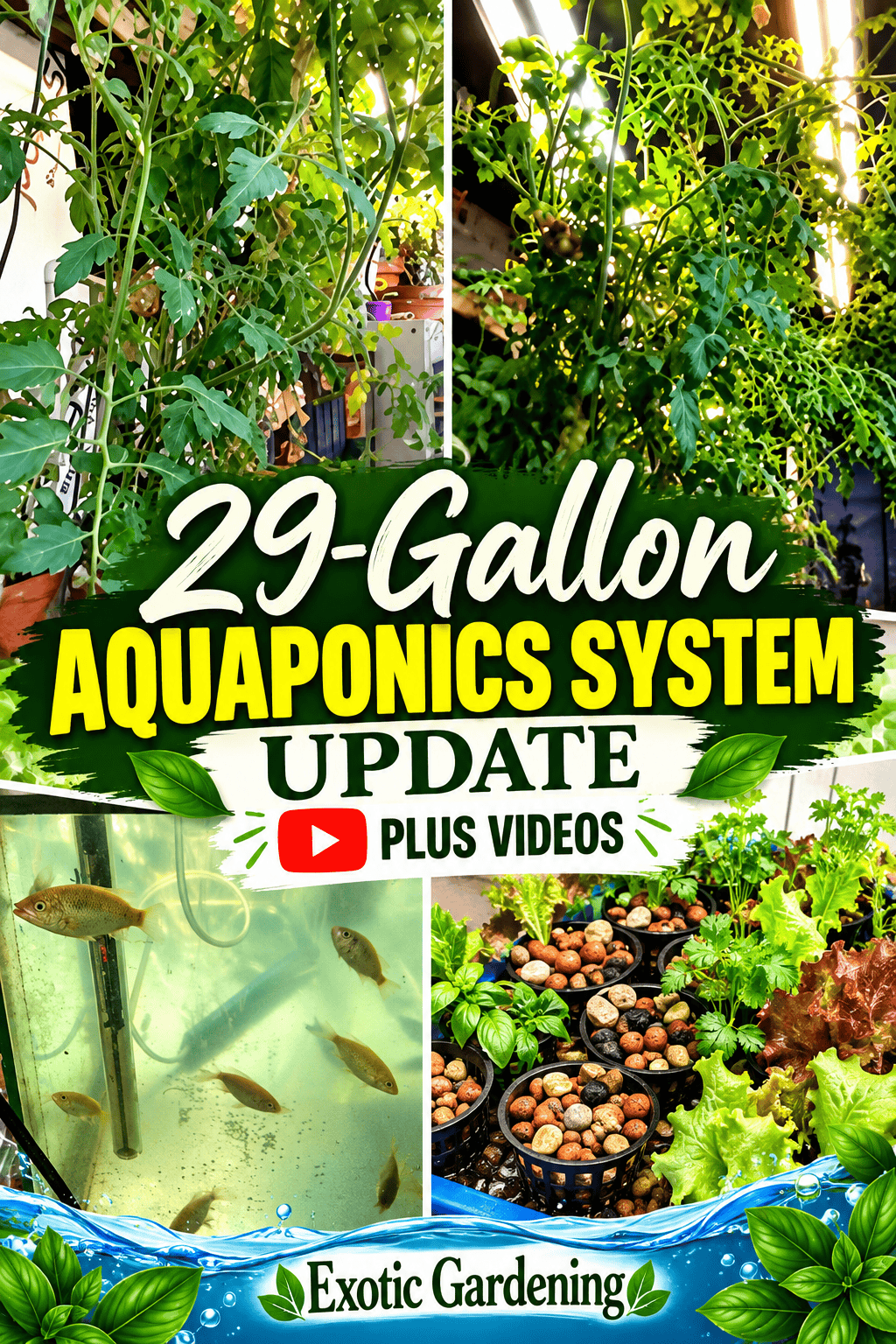
The basil and parsley have been some of the most satisfying parts of the whole experiment. We have harvested an abundance of both, and there is something wonderfully rewarding about walking over to a growing system inside your home and cutting fresh herbs for the kitchen. They are useful crops, too. Basil can go straight into sauces, pesto and other meals, while parsley is one of those herbs I appreciate having close at hand because I use it in so many dishes.
Harvesting them also gives you a chance to look closely at the plants, check the new growth and notice whether the leaves seem healthy. Those repeated harvests are a much more meaningful measure of success to me than simply being able to say the system grew something. Even with the plants we lost and the equipment problems we encountered, the basil and parsley reminded me why I wanted to try aquaponics in the first place: I love experimenting with different ways to grow food, especially when the results end up on our table.
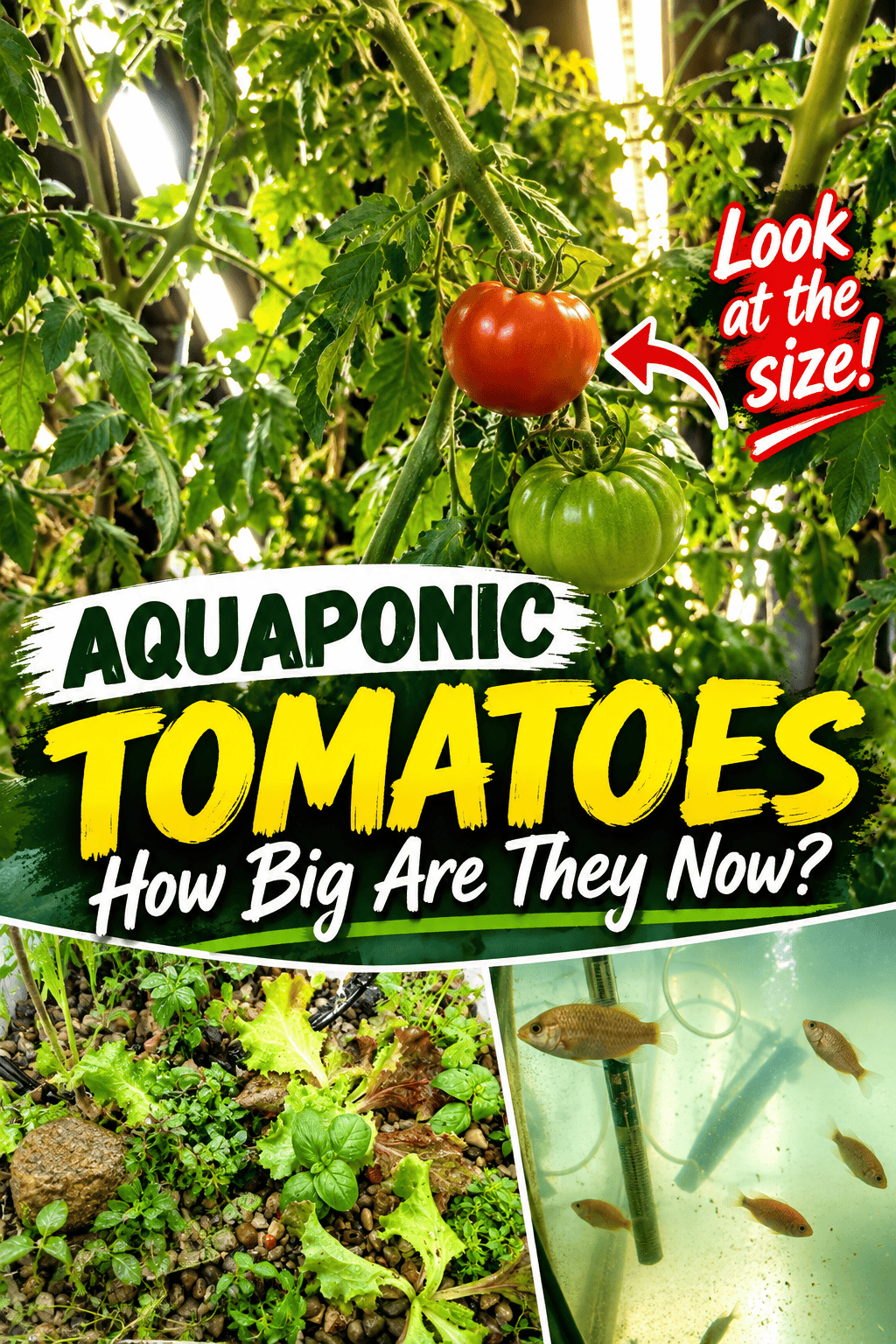
The tomato plant became one of the most memorable surprises. It grew into a gigantic plant in the greenhouse, larger than any tomato plant I had seen in my own growing experiments. That sort of vigorous growth is exciting, but it raises practical questions about supporting the stems, keeping the plant from shading its neighbors and providing enough room for roots and foliage.
The experiment also came with a loss: one of our fish died. I don't have enough information to say exactly why, and I don't want to invent an explanation. It was a reminder that this is a living system where a problem can affect animals as well as plants, and why observation and water testing matter so much.
What I appreciate about aquaponics is that it makes me look at food production as a whole system. Growing vegetables is only one part of it. Fish care, water quality, beneficial bacteria, circulation and plant health all connect. Some aquaponics operations also raise fish for food, but that requires an appropriate species, sufficient space and a responsible plan for growing the fish to harvest size. Our little tank was an experiment in learning those relationships, not a substitute for a properly sized food-fish operation.
We started with tilapia, and the possibility of someday trying catfish interested me as well. Different fish have different temperature, oxygen, feeding and space requirements, so changing species would mean planning a system for those needs rather than assuming that the same aquarium and equipment would work unchanged.
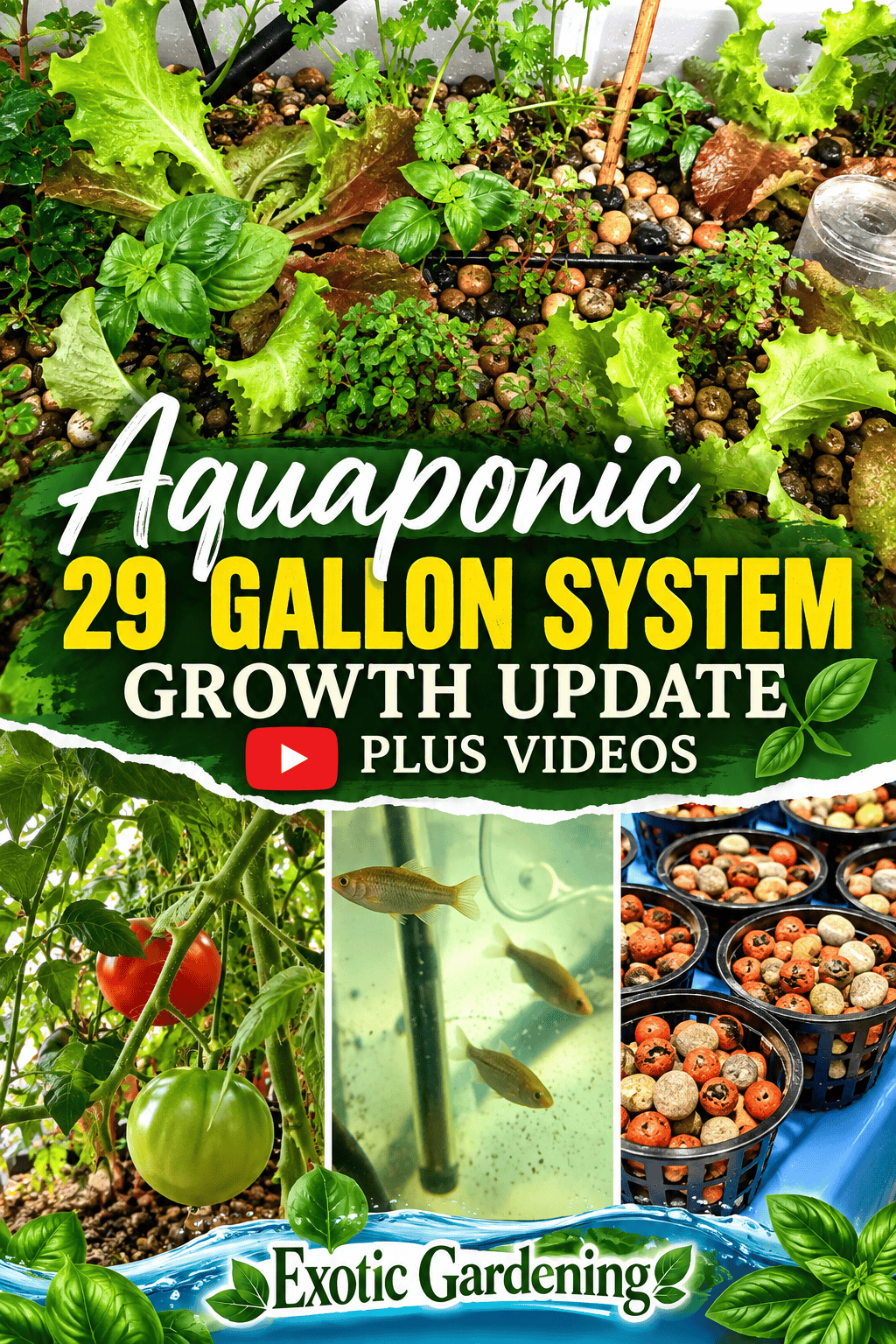
The videos farther down the page give you a closer look at the fish, the aquaponics setup and that remarkable tomato growth. Seeing the system in action helps explain why I found this experiment so fascinating, and why the details of circulation and plant support matter.
If you want to see how I approached the earliest growing stage, read my experiment starting pole beans, tomatoes and cucumbers for aquaponics. It covers soil-free starter blocks, transplanting seedlings and keeping fish-safe water conditions in mind.
What I Would Think About Before Setting Up Another Small Aquaponics Tank
If I were planning a small indoor aquaponics system, I would begin with a realistic understanding of what the aquarium can support, not a wish list of how many plants I want to grow. A 29-gallon tank may sound generous when you picture it as a planter's water source, but the fish still need appropriate space, oxygen and stable water quality. Tilapia are not a universal choice for a tank that size, especially as they grow. Their adult size, temperature requirements and local rules matter. Before stocking any aquarium, consult reliable fish-care and aquaculture guidance for the particular species and life stage, and plan for what happens as the fish get bigger.
I would also make sure the system can be maintained without taking the entire growing area apart. Can you reach the pump to clean it? Can you inspect the lines and remove a blockage? Is there room to test the water and observe the fish? Can you lift or move a growing container without pulling on the roots? These are not glamorous questions, but they become important very quickly when a project is part of your everyday living space.
Then I would consider the plants. A tomato seedling is small enough to make almost any system look spacious. A mature tomato plant is an entirely different matter. Cucumbers need support and room to spread, too. If you choose fruiting crops, plan their eventual size, lighting and nutrient demands from the beginning. If you are just learning how the fish, bacteria and plants interact, a modest number of suitable leafy crops or herbs may be a more manageable first experiment.
Finally, I would build in time for the system to establish rather than rushing to stock fish and plant everything at once. Biological filtration depends on living bacteria, and a new setup needs careful monitoring as it develops. A backup plan for pump failure, an appropriate source of aeration and a way to handle an unexpected water-quality problem are every bit as important as the growing containers. Aquaponics is rewarding precisely because it is a living system, but that is also why shortcuts can be costly.
Why I Still Love Experimenting With Aquaponics
I would experiment with aquaponics again because it brings together the parts of gardening I enjoy most: observing living things, figuring out practical problems and finding new ways to produce food. This project did not give us perfect results, but it gave us real harvests and specific lessons we can use. Next time, I would spend more time matching the pump, tubing, plant space and fish capacity before introducing anything living to the system.
For me, the reward is not being able to say that every plant survived or every piece of equipment worked the first time. It is being able to look back at the basil and parsley we harvested, the extraordinary tomato growth and the problems we learned to recognize, then put that knowledge to work. If you are planning your own aquaponics project, begin with the needs of the fish, build a system you can maintain and give yourself room to learn without risking the animals' welfare.
Watch Our Aquaponics System and Tomato Plant Videos
I have included three videos because they show different parts of the experiment that are difficult to capture in words alone. The tomato video shows the scale of the growth, the system video offers a closer look at the equipment and the original setup footage gives some perspective on how the project came together. As you watch, notice the relationship between the plant containers, the water movement and the space available for the fish. Those are the same details I would pay attention to when planning another system.
The first video concentrates on the tomato's growth, while the next two show more of the aquaponics equipment and the original setup. Watching them in that order makes it easier to connect what grew with the arrangement that supported it.
Aquaponic Tomato Plant - Short Video
Our Aquaponics System - Video
The final video shows the earlier arrangement of the equipment, which is useful context for the changes described above.